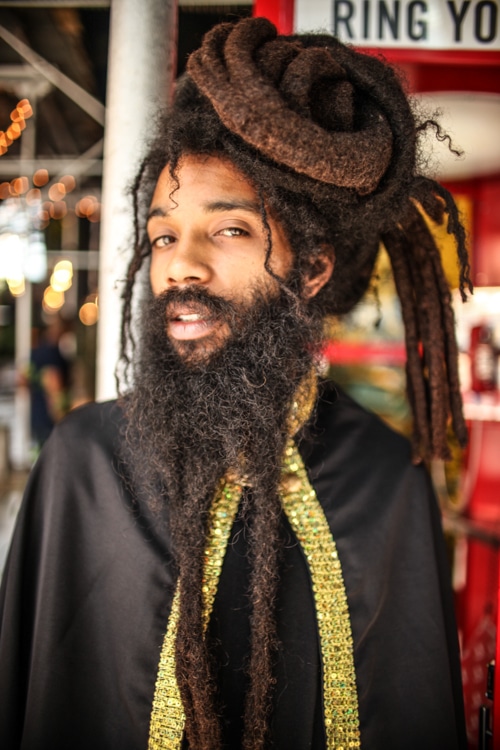
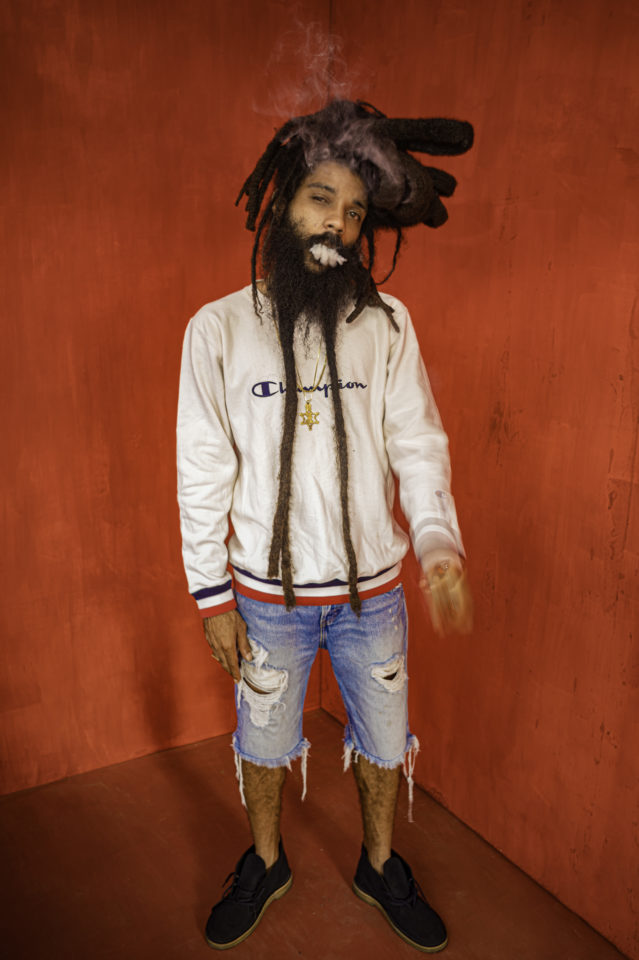
On Sunday, August 29, at the age of 85, famed Jamaican producer and artist Lee “Scratch” Perry passed away. Over the years, several High Times writers have caught up with the mysterious musician, providing a glimpse into his life.
Perry adopted many nicknames over the course of his career: the “Upsetter,” the “Super-Ape,” “Inspector Gadget,” “Pipecock Jackson” and the “Firmament Computer.” But he was mostly called “Scratch” from one of his early songs, “Chicken Scratch.” He loved and experimented with just about every new genre of music, and is credited with being a pioneer in dub.
Perry produced the best work to ever come out of Jamaica. He produced The Wailers’ albums Soul Rebels and Soul Revolution—the first time non-Jamaicans heard Bob Marley sing, also producing some of Jamaica’s most iconic artists.
Bob’s son Ziggy Marley provided a statement that was widely shared on various platforms. “It was always a unique experience being around him,” Marley toldRolling Stone. “He opened minds with his creativity and his personality. Some people thought it was madness, but I recognized it was genius, uniqueness, courage and freedom. He made no apology for being himself and you had to accept that and figure out the deeper meanings to his words and character.”
Lee “Scratch” Perry’s Legacy
Perry built his name working various jobs at Coxsone Dodd’s famed Studio One in Kingston, Jamaica. The sounds of Jamaica were constantly evolving from ska to rocksteady and reggae. Perry created the studio band the Upsetters in 1968. In 1973, Perry built his own Black Ark recording studio in his backyard. There, Perry produced for Jamaica’s best artists including Junior Byles, Junior Murvin, the Heptones, the Congos and Bob Marley.
“Scratch was a massive personality, he was a creator, a pioneer, a wizard, a shaman, a magician, a philosopher, a musical scientist,” Marley continued. “A man like him will never come this way again,” Marley said. “One of a kind. He will be missed a lot by those of us who had the time to experience him not just through music but through knowing him personally.”
In the late ’70s, Perry heard punk rock for the first time, and played an album of The Clash to Bob Marley. Perry loved their covers of Junior Murvin’s “Police and Thieves” and The Maytals’ “Pressure Drop,” so much so that he produced The Clash song “Complete Control.” It led Bob Marley to write “Punky Reggae Party”—his tribute to the punk rock bands they met.
In 1998, Perry appeared on Hello Nasty album by Beastie Boys.
In 2003, Perry won a Grammy Award for Best Reggae Album with the album Jamaican E.T. and the next year, Rolling Stone ranked Perry number 100 on its list of the 100 Greatest Artists of All Time.
Perry on Cannabis
Perry has always been there when friends like Bob Marley or Paul McCartney needed a puff.
In Tokyo, Japan in 1980, Paul McCartney was busted for a whopping 7.7 ounces of pot—facing serious consequences in a country that doesn’t tolerate drug use. Perry had previously worked with McCartney and his wife in 1977, when he produced Linda’s covers of “Sugartime” and “Mister Sandman” at Perry’s Black Ark studio in Jamaica.
When Perry heard that McCartney was arrested, he sprung into action, penning a letter to Tokyo’s Minister of Justice, demanding his release. “I LEE PIPECOCK JACKSON PERRY would LOVE to express my concern over your consideration of one quarter kilo to be an excessive amount of herbs in the case as it pertains to master PAUL McCARTNEY,” Perry wrote. “…I find the herbal powers of marijuana in its widely recognized abilities to relax, calm, and generate positive feeling a must.”
High Times has followed Perry for decades, and even managed to interview him at the precise moment when he quit smoking weed in his 70s: “Since 25, I have been smoking pot, and it overload the brain” Perry toldHigh Times in 2008. Marijuana, ganja, Lamb’s Bread—I don’t smoke anymore.” Perry even backtracked later on, suggesting that too much weed is a bad thing in a Fader interview.
Few people adored ganja as much as Perry did for over 50 years of near-continual use, and it shows in his work and legacy.
There is a not-so-quiet revolution going on in Switzerland at the moment. The country is getting ready for what is likely to be Europe’s most disruptive recreational trial.
In the meantime, all sorts of other consequential events are underway. Namely, the government is about to remove the requirement that prescribing cannabis doctors obtain special permission before prescribing cannabis.
Last Wednesday, the Swiss Federal Council (the seven-member executive council that serves as the collective head of state and federal government of the country) opened deliberation on changing the national Narcotics Act.
Cannabis of both the medical and recreational kind has been banned in the country since 1951. By amending the federal Narcotics Act in this way, Swiss physicians will be allowed to prescribe cannabis more or less freely and as they wish. Currently, there are about 3,000 authorizations issued every year to treat patients with cancer, neurological diseases and MS.
Cannabis will as a result, become “just” a “controlled narcotic” as it is across the DACH border with Germany (DACH is an acronym for Germany, Austria and Switzerland, who share a special trading alliance). Culturally, the three countries are also closely aligned, starting with a common language.
The Strange Swiss Twist
Since this is cannabis, no matter where the reform is happening, there is bound to be a twist in all of this.
On the positive side, the cultivation, manufacturing and selling of medical cannabis will be federally authorized, for the first time. Commercial export will be permitted. Less clear are the rules for imports (although it is highly unlikely anyone will ban imports of the EU-GMP medical kind).
Given that Switzerland’s immediate trading partner to the north (Germany) moved to do this four years ago, this is hardly revolutionary. Indeed, the first Deutsch-cultivated cannabis is just now reaching German pharmacies.
In the meantime, cultivation for personal use (of course) is still banned.
And here is the most unusual, if not cynical twist of all.
Within several months, Switzerland will also begin a unique recreational trial. Namely, pharmacies will be able to sell high-THC products to anyone who has the money to pay for them as long as they are over 21.
The Swiss solution is not as cynical as the Dutch (who allowed insurers to stop reimbursing domestic medical cannabis claims almost as soon as Germany changed the law to mandate that public insurers do so back in 2017).
That said, the experiment is certainly taking place at an interesting time, just across the border. At the recent ICBC in Berlin, one of the most avidly attended panels was the discussion, by federal German politicians, of which way the cannabis legalization winds will blow as a result of the late September election.
Cannabis reform is a sore point everywhere, including, if not especially Germany, Europe’s largest medical cannabis market (by far) as well as its most influential, is a hot topic just about everywhere.
It is also highly unlikely that any reformer in Germany will ignore the opportunity to point out to still highly reluctant German politicians, about what the Swiss are now doing.
See post-COVID tax revenue.
Easier Access…
One of the largest bug bears in the room, across the DACH region (which of course also includes Austria) is the continued, draconian response of authorities to any kind of cannabis reform. An example of this is the recent disaster suffered by Lidl, one of the world’s largest retailers, in Munich.
In fact, the lack of reform and the ridiculous prosecutions particularly in Germany of late (hemp tea is also a favourite subject), are likely to force at least some kind of reform in at least Germany. Add to the equation a general loosening of the restrictions in Switzerland, along with what seems already to be a smoother if not more sensible plan for cultivation and manufacture, and the Swiss looked primed to take the lead in Europe, if not the DACH on all things both medically and recreationally reform inclined if not minded.
According to Dr. Francis Scanlan, the CEO of Cloud 9 Switzerland, a Life Sciences company about to launch its own THC Swiss chocolate bar after pioneering the entry of his product as the first CBD edible to be starting sales in Dubai, the change is not only welcome, but also overdue.
“This is a very rational, albeit progressive, move in response to the acceptance by the majority of stakeholders in Swiss society that cannabis is a legitimate medicine that truly helps patients while potentially reducing healthcare costs as well as generating tax revenues,” Scanlan said. “What is happening in Switzerland for prescription medical cannabis and our new recreational Pilot Program is very admirable and should be seen as a pragmatic approach to regulating a far too long stigmatized plant across the world.”
Officials in the West African country of Nigeria discussed their thoughts regarding opposing cannabis legalization on Monday.
Abdullahi Ganduje, the governor of Kano State that’s located in the northern region of Nigeria, and National Drug Law Enforcement Agency (NDLEA) Chairman and retired Brigadier General Buba Marwa, spoke about their disapproval of cannabis legalization. Marwa and other officials were in Kano on an “advocacy visit” for the War Against Drug Abuse (WADA) effort.
During the discussion, Chairman Marwa stated that the NDLEA has already made significant headway in reducing illegal drug possession across the country.
“With over 8, 634 arrests; 2,776,000 kilogrammes of drugs worth over N100 billion seized; 1,630 convictions; 3,232 cases in court, and over 4,000 drug users counselled and rehabilitated between January and now, we are already making substantial progress in our drug supply reduction and drug demand reduction efforts,” Marwa stated, according to NDLEA spokesperson Femi Babafemi.
Marwa continued to share how he thinks that cannabis legalization would only set Nigeria back. “We are, however, convinced that the ongoing attempts by some of our elected officials to legalise cannabis, which is being abused by over 10.6 million Nigerians, will be a drawback for the achievements so far. This is why I want to implore your Excellency and Kano State not to support the attempt to legalise cannabis.”
In response, Kano Governor Ganduje assured Marwa that no political figures in Kano would support legalization. “Kano has the highest number of federal lawmakers in the National Assembly. I want to assure you that none of them will support any attempt to legalise cannabis. We will also grant your requests for land and accommodation for a zonal command in the state,” he said.
Opposition of Cannabis in Nigeria Has Roots
This isn’t the first time that Marwa has stated why he thinks cannabis shouldn’t be legalized. A Channels Television video shows Marwa speaking for 30 minutes about the topic in June, sharing facts about drugs and drug trafficking in the country. He states that it affects the rise of crime, destroys families, and the noteworthy headway that the NDLEA has made in preventing illegal drug trafficking this year so far.
Also in May, a press release was shared on the NDLEA NIGERIA Twitter account, with a headline stating that “Marwa warns against attempt to legalise cannabis. It’ll turn Nigeria to a nation of junkies.”
In the release, Marwa states that it’s a fact that substance abuse and crime are linked, and that historically the “use of drugs for perverted purposes” has been present in Nigeria for a longtime.
“So beyond speculations and armchair theories, there is ample evidence, from report statistics and from empirical data from the field, to conclude that the sue of illicit substances is a contributing factor to the worsening security situation in Nigeria. And I this is so, Nigeria should be the last country to consider a law to legalise marijuana in any shape or form,” he shared.
Kano is just one state out of 36 in the federal republic of Nigeria, which is home to approximately 150 million people, according to the Nigerian government website. The Guardian states that Nigeria is ranked as the eight highest consumer of cannabis in the world. The Nigerian state of Ondo is home to one of the largest cannabis farms in the country, which is also allegedly the second largest in the world.
Ondo State Governor Rotimi Akeredolu has a much different opinion on cannabis compared to Marwa or Ganduje. “Tell Nigerians that in 2019, the global market was put at 52.8 billion Dollars and that the market forecast is an average 14.5 percent increase from the year 2020 to reach 103.9 billion dollars by 2024,” he said, according to the Nigerian Tribute.
Akeredolu continued, “We have one of the best cannabis in the world in Ondo State. We need to research more on it. We need to save our forests from further plundering by cannabis cultivators. Climate change phenomenon is a reality with devastating effect on our ecology or environment. This approach will reduce the availability of cannabis in the underworld market because cultivators would like to sell in a more financially rewarding market.”
Back in May, we urged cannabis businesses to be mindful of the U.S. prohibition on the importation of goods produced by forced labor. Our concern stemmed from the growing interest on the part of our cannabis clients in establishing operations in countries where they can take advantage both of suitable climate conditions and low labor costs.
Unfortunately, however, there is no need to look past America’s borders to find instances of forced labor. And a recently uncovered example of this despicable practice touches the cannabis industry.
Earlier this month, authorities in Oregon raided a cannabis farm where it is suspected human trafficking and forced labor were taking place. For someone who tracks and advises on forced labor issues around the world, the language in the news reports has a familiar ring to it. Phrases like “threat of harm to your family,” “not paid,” and “living in squalid conditions” sound like they have been pulled out of an exposé on human rights violations in a faraway land, but instead describe what is happening a few miles away from the Oregon-California border.
To be sure, forced labor in the United States is not exclusively a agricultural problem, as a previous Oregon case involving restaurants demonstrates. That said, agricultural work can be labor-intensive and take place in isolated locations. Moreover, many agricultural workers are undocumented, making them particularly vulnerable to abuses.
As both an ethical and legal imperative, cannabis businesses should ensure that their supply chains are not tainted by forced labor. For businesses that depend on imports, compliance can prove daunting, with supplier audits a near impossibility. While not entirely free of challenges, auditing a domestic supply chain is much easier. When they do things right, companies can have a considerable degree of certainty that their supply chains are clean.
Former NBA star and ESPN basketball analyst Paul Pierce was in Boston over the weekend, stopping at a marijuana dispensary to promote his new line of “Truth Number 34” cannabis products. During his visit, the former Boston Celtics forward told fans and dispensary customers that the new brand’s products are as reliable as he was on the court with the clock ticking down to zero.
“I know we’re going to bring something you can depend on, something you can go to, something that’s clutch,” Pierce said at the promotional appearance on Sunday.
“Similar to my play,” he added. “That’s what my product is going to be.”
Pierce announced earlier this year that he would be launching his new brand in the capital of Massachusetts, where legal sales of adult-use cannabis began in 2018. Plans for the new venture include a line of cannabis edibles, topicals and concentrates sold under the brand name Truth, which was Pierce’s nickname as an NBA player. A signature strain of cannabis flower is slated to land on dispensary shelves next year.
“I have such a great connection with Boston,” Pierce told the Boston Globe in May, “so I’m excited to bring the brand there first and educate people on the plant—how it can help in everyday life and also in sports and recovery.”
Paul Pierce on Cannabis For Health
Pierce became a vocal cannabis advocate after surviving a brutal stabbing attack at a Boston nightclub in September 2000. He said that cannabis had saved his life after the assault, which nearly killed him and left him psychologically traumatized. Although Pierce recovered physically remarkably quickly, he struggled with paranoia, anxiety, depression and insomnia after the attack.
“I was dealing with a lot of depression and anxiety and sleep issues—a lot,” he said. “So I really leaned more on cannabis. But it was difficult, man.”
Pierce described how pharmaceuticals prescribed by the team doctors were ineffective and had undesirable if not dangerous side effects.
“Athletes don’t even know what’s in these pills. The league doctors just say, ‘Take this, take that, here’s a prescription,’” he said. “We get addicted to that stuff. It’s so harmful for your body. You don’t realize your liver and all your other organs are taking a pounding.”
“You really couldn’t do it while you were playing during the season because of the tests, but there were times I couldn’t even help it — I took an edible or smoked a joint just to get some sleep, and had to deal with the consequences,” he added. “It was really bad for me early on.”
Pierce Fired by ESPN After Posting Racy Weed Video
After retiring from the NBA in 2017, Pierce took a job as a basketball analyst for ESPN, working on the sports network’s shows The Jump and NBA Countdown. But after he posted an Instagram video earlier this year that showed him smoking marijuana with scantily clad women twerking in the background, Pierce was fired in April by ESPN, which is owned by family-oriented entertainment conglomerate Disney.
Pierce apparently took the job loss in stride, however, posting a video on Instagram the day after being fired in which he shared his positive attitude with the world.
“Yo, just want to thank all my supporters and thank my haters and everything,” Pierce said in the video. “Check it out, bigger and better things coming, baby. Don’t worry about it. You fall twice, you get up three times. Just always remember to smile, baby.”
Only three weeks later, he posted another video that showed him surrounded by cannabis plants in a cultivation facility, hinting at the upcoming business venture.
“We’re over in the lab, baby,” he said while panning the camera, adding “Coming soon, baby.”
Alex Berenson—author of Tell Your Children: The Truth About Marijuana, Mental Illness, and Violence—received a permanent suspension from microblogging platform Twitter for spreading misinformation. While Berenson is known for his vocal opposition to cannabis legalization, this time, he was punished for spreading false information about COVID-19.
On his Substack page, Berenson posted a brief message, titled, “Goodbye Twitter” with a screenshot of his original tweet that led to his suspension. Berenson’s tweet that triggered the ban claimed that COVID-19 vaccines do not work. “It doesn’t stop infection. Or transmission,” Berenson tweeted. “Don’t think of it as a vaccine.”
Twitter officials believe that Berenson can’t be trusted to tell the truth, and that the accumulation of misleading tweets justifies a suspension.
“The account you referenced has been permanently suspended for repeated violations of our COVID-19 misinformation rules,” a Twitter spokesperson told Fox News in response to an inquiry on August 28.
“The first four states to legalize—Alaska, Colorado, Oregon and Washington—have seen sharp increases in murders and aggravated assaults since 2014, according to reports from the Federal Bureau of Investigation,” Berenson wrote in a New York Times op-ed. “Police reports and news articles show a clear link to cannabis in many cases.” Berenson was a former employee of the New York Times several years prior.
Berenson’s op-ed was published at the time of the release of Tell Your Children, his book that attempts to link violence with cannabis use. One night, Berenson’s wife Jacqueline, remembered a case in which a man “cut up his grandmother or set fire to his apartment.” Later Jacqueline wrote, “Of course he was high, been smoking pot his whole life.”
Berenson’s New York Times op-ed and book were so misleading, that two leading psychologists felt compelled to debunk the article in The Guardian.
Carl L Hart is the chairman and Ziff professor of psychology and psychiatry at Columbia University and author of High Price: A Neuroscientist’s Journey of Self-Discovery that Challenges Everything You Know About Drugs and Society. Charles Ksir is professor emeritus of psychology and Neuroscience at the University of Wyoming and author of Drugs, Society and Human Behavior.
“Back in the 1930s, when there were virtually no scientific data on marijuana, ignorant and racist officials publicized exaggerated anecdotal accounts of its harms and were believed,” the authors wrote. “Almost 90 years and hundreds of studies later, there is no excuse for these exaggerations or the inappropriate conclusions drawn by Berenson.”
Alex Berenson on Censorship
This is by no means the first time a publisher or platform has banned Berenson for the spread of misinformation. Amazon denied taking part in a few of his booklets. Berenson’s former employer TheNew York Times declined to review his latest novel. In a December op-ed in the Wall Street Journal, Berenson warned that the COVID-19 pandemic had ushered in “a new age of censorship and suppression.”
In an op-ed in Reason, the writer explained that while Berenson tried to scare people from pot, and vastly underestimated the death toll of COVID-19, it was a mistake to ban Berenson permanently from Twitter. Banning him from Twitter may only make things worse. The implications of banning one person could be extended to another.
The writer explained that if anything, Berenson will just profit more from his “martydrom” from Twitter. “COVID-19 has allowed Berenson to fully embrace his role as a purveyor of delusions,” the article reads, but a ban will only fuel the fire of opposition to those opinions.
Berenson’s ban got political very quickly. “I don’t know Berenson,” Senator Ted Cruz (R-Texas) tweeted. “But all the Leftie Brown Shirts cheering his being banned—you are the problem. You’re supporting authoritarian billionaires’ arbitrary censorship. & you are contributing to so many people’s distrust of Covid info—by silencing dissent, many are skeptical.”
It’s important to note that there are vastly different opinions of Berenson. Senator Ron Johnson (R–Wisconsin) called him a “courageous voice of reason” and “a valuable counter-perspective.”
As Democrats in Congress appear eager to finally tackle comprehensive marijuana reform, Colorado Governor Jared Polis hopes they address one particular cannabis policy first.
In a letter to a trio of Democratic senators on Friday, Polis urged them to pursue legislation implementing new banking and taxation measures that would enable financial institutions to work with cannabis businesses.
“I am thrilled that you are bringing forward a long-term, comprehensive solution that deschedules cannabis while enhancing social equity pathways,” wrote Polis, a Democrat serving his first term as governor of Colorado. “I hope that you will first focus your efforts on the two biggest barriers to the success of the cannabis industry: banking and IRS Code Section 280E (280E).
He said that “the cannabis industry has been stymied by 280E, which prevents these businesses from taking business-related deductions associated with the sale of cannabis.
“Congress must swiftly act to pass any measure, a number of which have been introduced in past sessions, to make an exception for legal cannabis businesses from 280E,” he wrote. “While the CAOA would address this issue by descheduling cannabis, a narrow measure focused on relieving cannabis businesses from the detrimental effects of 280E would expeditiously solve this problem.”
Polis wrote the letter to Senate Majority Leader Chuck Schumer, Senator Cory Booker and Senator Ron Wyden, who have thrown their weight behind the Cannabis Administration and Opportunity Act (CAOA), legislation that would effectively legalize marijuana on the federal level.
The bill was introduced in draft form by the three Democratic senators last month.
But while members of Congress continue to wrangle out the details of that legislation, Polis believes there is a ready-made cannabis reform bill just waiting to be passed: the SAFE Banking Act, which Polis backed as a member of Congress representing Colorado’s second district.
“Legislation to address these issues has more bipartisan support than ever before and can be passed in the short-term as you continue to work on the details of the CAOA,” Polis wrote in the letter.
The SAFE Banking Act, Polis said, “has passed the U.S. House of Representatives four times but has never been taken up by the Senate.
“As a Congressman, I co-sponsored Representative Ed Perlmutter’s SAFE Banking Act because it is essential to bringing cannabis payments out of the shadows,” Polis wrote. “Medical and recreational cannabis sales in the U.S. were estimated to total $17.5 billion last year, but because of antiquated federal banking regulations, almost all cannabis transactions are cash-based. Not only are cash-only businesses targets for crime, cannabis businesses are further disadvantaged compared to other legal businesses by being unable to open bank accounts or obtain loans at reasonable rates.”
Polis continued to explain that it’s harmful for an industry as successful and large as cannabis industry to be forbidden from legitimate banking institutions. Polis continued, “The cannabis industry is simply too large to be prohibited from banking opportunities, and the Senate must remedy this harm by bringing this measure up for a vote in the Senate Committee on Banking, Housing, and Urban Affairs immediately.”
Polis, a longtime cannabis reform advocate, wrote the letter amid growing signs that Democrats are poised to deschedule marijuana under the Controlled Substances Act, a move that would finally put the federal government in line with states like Colorado that have already legalized pot.
Schumer said earlier this year that Democrats were ready to seriously tackle the issue––even as President Joe Biden remained wary of legalization.
“We will move forward,” Schumer said. “[Biden] said he’s studying the issue, so [I] obviously want to give him a little time to study it. I want to make my arguments to him, as many other advocates will. But at some point we’re going to move forward, period.”
On August 19, 2021, New Jersey’s Cannabis Regulatory Commission (CRC) released its “Initial Rules for Personal-Use of Cannabis” (Initial Rules). Th Initial Rules were much anticipated, more so given New Jersey’s proximity to New York and the potential impact these rules could have on New York’s pending program.
The Initial Rules cover all aspects of recreational cannabis in New Jersey, including the license application process, social equity, and the role of municipalities will have on shaping the practical effects of legalizing recreational cannabis. The CRC published a handy summary of the Initial Rules, broken down between overall goals and key provisions per chapter.
The Initial Rules contain a ton of information, so we will break our summary into two posts, the first on the stated goals of the Initial Rules and the second on the key provisions per chapter.
Equity
The stated goal is to increase opportunities in the cannabis industry for people from targeted communities. The Initial Rules establish three types of cannabis businesses that will receive priority review and approval:
Social Equity Businesses, which are owned by people who live in economically disadvantaged areas in New Jersey or who have past convictions for cannabis offenses;
Diversity Owned Businesses, which are minority-owned, woman-owned, or disabled veteran-owned and have been certified as such by the New Jersey Department of the Treasury; and
Impact Zone Businesses, which are located in an Impact Zone, owned by people from Impact Zones, or employ residents from Impact Zones. Impact Zones are defined as municipalities with a large population, high unemployment, or high numbers of crime or arrests for marijuana.
In terms of the practical impact of priority review, each category of equity applicants will have their applications reviewed before non-equity applications, regardless of when applications are submitted.
Another important note: the Initial Rules provide that the CRC is to establish a Social Equity Excise Fee, which is a fee on cultivation that may increase as consumer prices increase. The revenue generated from the Social Equity Excise Fee will be used to fund economic and social services in Impact Zones.
Safety
The Initial Rules focus on preventing cannabis use by those 21 and under. This includes advertising. There are also physical requirements regarding containing odors and mandating communication with neighbors. To that end, the Initial Rules require each business to have a staff member responsible for receiving neighbor complaints.
From an operations perspective, businesses will be required to have consumer education materials available, including information on substance abuse risks and side effects of cannabis use. Products must have meticulous labeling, including statements about potential health risks. Packaging must be “child proof” in both form (no cartoons, trademarks, etc.) and substance (physically).
A significant rule: cookies, brownies, and other edible products resembling food are prohibited.
Small Business Prioritization
Most noteworthy in the CRC summary is that the Initial Rules include a conditional licenses process. Small businesses will have the option of submitting a conditional application that only requires a background disclosure, a business plan, and a regulatory compliance plan. If approved, the conditional applicant will have 120 days to find an appropriate site, obtain municipal approval, and apply for a conversion to a full license. Small business will also not need to demonstrate past experience in a regulated cannabis industry.
Municipal Participation
The CRC has effectively codified participation of municipalities. Cannabis business will only be licensed if the applicant can demonstrate:
Support from the municipality in which they intend to operate;
Zoning approval; and
That they have been verified to operate in compliance with any municipal restriction.
Municipalities are empowered to determine hours of operation, the number and types of business allowed to operate, and whether to enact a 2% transfer tax on any sales between cannabis businesses. Municipalities can also enact any other restriction or requirement that applies to any other business type.
On balance, it is apparent that CRC is focusing on boosting the prospects of equity applicants and small businesses, while also engendering the support of local municipalities. Stay tuned for our breakdown of the Initial Rules’ key provision in Part 2.
Enough signatures were submitted by Colorado advocates to get Initiative 25 onto the ballot this November, which, if passed, would increase recreational cannabis tax percentages and fund “out-of-school learning opportunities” for children and youth.
The Office of the Colorado Secretary of State announced on August 25 that Initiative 25 will proceed on to the ballot this November because a portion of the submitted signatures were verified as legitimate. A total of 124,632 valid signatures were required to proceed, and advocates submitted 203,335.
“After reviewing a five-percent random sample of the submitted signatures, the Elections Division of the Secretary of State’s office projected the number of valid signatures to be greater than 110 percent of the total number of signatures required for placement on the ballot,” the agency wrote in its “Statement of Sufficiency.” The statement concluded that the approximate number of valid signatures was 116.40 percent, it would be green-lit for ballot certification.
Initiative 25 is also referred to as the “Learning Enrichment and Academic Progress Program,” or LEAP, and is proposing a three percent increase in recreational cannabis taxes starting in 2022. If approved, it would further increase the tax to five percent by 2024. According to state analysts, the tax hike would help the state bring in an extra $137.6 million per year.
The initiative would also take $22 million per year from the state Permanent Fund and transfer it to the State Public School Fund, as well as take the same amount from the General Fund and move it to the LEAP Fund. The movement of these funds would be used to help pay for extra learning opportunities for kids, such as tutoring options, mental health services or other services for special-needs students.
“These learning opportunities, during periods and timeframes outside of their regular school schedules provide essential academic and life skills for children and youth to thrive in school and life,” reads the final draft of Initiative 25. “These learning opportunities are critical to maintaining and enhancing academic performance and mental, physical and emotional health for all children.”
“Colorado kids who were struggling in school before the pandemic are even farther behind now,” said the Colorado Children’s Campaign Policy and Partnerships Manager Stephanie Perez-Carrillo. “The LEAP initiative will make Colorado the first state in the country to offer a statewide approach to helping kids recover from current COVID losses, while also creating a long-term plan to prevent opportunity gaps from developing in the future.”
There are many reported supporters of Initiative 25. This includes 10 Senators, 11 State Representatives and many educational leaders and organizations. Former Senate President Bill Cadman is one of many who believes it’s essential to invest in the state’s children.
“The LEAP initiative is an excellent opportunity to provide tutoring, test preparation, enrichment programs and more to Colorado students who often have the greatest needs, yet limited family resources,” said Cadman. “Providing every student in Colorado with out-of-school benefits which can be tailored to their specific needs should help them overcome academic setbacks exacerbated by COVID.”
However, tax increases of any kind are bound to be met with opposition as well. While funding youth services is worthwhile, organizations like the Colorado Freedom Force believe that Initiative 25 would only benefit the wealthy.
Colorado has garnered a strong history of cannabis sales revenue and tax data since the state’s legalization bill was passed in 2012. The most recent reports of the state’s collection reveal that Colorado has surpassed over $10 billion in total sales so far.
The same reports show that since 2012, 16.4 percent of the Marijuana Tax Cash Fund went toward education initiatives. In 2018, an estimated $20 million in grant funds was given to school health professionals, literacy programs and dropout/bullying prevention.
Trust in the U.S. Food and Drug Administration (FDA) declined after its approval of the controversial Alzheimer’s drug aducanumab. Three experts resigned amid allegations that the FDA had caved to industry pressure. Some argue that its credibility has reached a new low.
These events should have prompted the FDA to pause, reflect, and work to repair its reputation. Instead, the agency is forging ahead with actions that may further erode its credibility. A timely example is its position on Mitragyna speciosa, commonly called kratom, a tree related to coffee plants.
Kratom has long been consumed in Southeast Asia as a pain reliever and mild stimulant. Millions of Americans also use it, claiming it eases symptoms of chronic pain and addiction, important effects as drug overdose deaths continue to rise.
Last year, the Centers for Disease Control and Prevention (CDC) recorded a record number of overdose deaths, two-thirds of them caused by opioids. Meanwhile, restrictions on legitimate opioid prescriptions leave few alternatives for people with chronic pain. Some turn to illicit opioids. Others turn to suicide. But many rely on kratom, which fills an important niche in the public health ecosystem.
Kratom has dose-dependent effects. At low doses, it can act as a mild stimulant. In Southeast Asia, people chew the leaves of Mitragyna speciosa to maintain focus, much as one might drink a cup of coffee to remain alert. At higher doses, kratom acts as a sedative and pain reliever. Although this dose-dependent relationship is not well understood, what is well understood is that kratom’s active ingredients, mitragynine and 7-hydroxymitragynine, show affinity for what’s known as the mu-opioid receptor, which binds a variety of substances, including morphine and other opioids.
Through a phenomenon called biased agonism, the mu-opioid receptor causes different intracellular effects when it binds different molecules, allowing opioids and the mitragynines to have different physical effects. Specifically, opioids activate an intracellular signaling protein called beta-arrestin, while the mitragynines do not. This distinction is important because beta-arrestin activity is linked to dangerous side effects of opioids, including slowed, shallow breathing that cannot sustain life.
The FDA’s analysis lacks this level of detail.
Federal agencies have attempted to ban kratom for years. In 2016, the U.S. Drug Enforcement Administration (DEA) announced plans to classify kratom as a Schedule I controlled substance. Compounds in this category are said to have no currently accepted medical use and a high potential for abuse.
One year after the DEA announced its intention to prohibit kratom, the federal Department of Health and Human Services (HHS) responded with a letter supporting the proposed ban. These developments provoked public outcry from scientists, kratom advocates, and state and federal lawmakers. More than 130,000 Americans signed a White House petition opposing the ban, and 51 members of Congress sent a letter to the DEA urging it to listen to the public. Meanwhile, experts analyzed the abuse potential of kratom and concluded that prohibition was inappropriate.
In response, HHS rescinded its scheduling recommendation. But instead of following suit and reversing course on kratom policy, the FDA doubled down. Having failed to ban kratom domestically, the agency may soon recommend to the World Health Organization that it be prohibited internationally.
If the FDA secures a global kratom ban, countless people could die by suicide and unintentional overdose. Many Americans say kratom curbs cravings for opioids, which are frequently obtained on the illicit market and are often laced with synthetic opioids like fentanyl. According to the CDC, synthetic opioids are “the main driver of drug overdose deaths,” responsible for nearly three-quarters of opioid-related overdoses. A ban would criminalize people who use kratom, eliminate legitimate sources of the plant, and cause many users to resort to using more harmful substances.
Prohibition would also prevent researchers from studying the effects of kratom, which would be a costly mistake reminiscent of what happened when psychedelics research was banned in the 1970s and 1980s. When psychedelics became Schedule I controlled substances, it became illegal for scientists to produce and study them, and promising research on their therapeutic potential came to a halt. Now, decades later, there is a revival of psychedelics research.
The results of Phase 1 and 2 clinical trials reflect the promise of psychedelics to treat mental illness. But their Schedule 1 status continues to impede research: DEA permission is required but is not always granted, the agency imposes annual limits on production, and it is nearly impossible to obtain federal funding for psychedelics research. When suicide and overdose rates are rising, and innovative treatments for mental illness are few and far between, the harm caused by psychedelics prohibition is incalculable.
The FDA is poised to make the same mistake with kratom.
Scrutinizing the FDA’s arguments against kratom reveals many weaknesses. The agency relies on calls to poison control centers as evidence of kratom’s risks. However, people call poison control for many reasons, not all of them serious, and the calls regarding kratom pale in comparison to calls regarding common household products.
According to the CDC, there were 1,807 calls regarding kratom from the start of 2011 to the end of 2017, an average of 258 calls per year. By comparison, during the same period, single-use laundry pods generated 12,157 calls per year. Using annual reports of the American Association of Poison Control Centers, I calculated that antihistamines caused 94,977 annual calls and pain relievers generated 294,812.
Some people have died while kratom was in their systems. But a causal link between kratom and death has not been established. In 2019, the CDC analyzed 27,338 overdose deaths that occurred over an 18-month period. Kratom was detected in 152 (less than 1%) of these deaths, but in most of those cases tests also revealed the presence of drugs known to cause overdoses. Only seven tested positive for kratom alone, and the researchers concluded that “the presence of additional substances cannot be ruled out.”
Most kratom-associated deaths are attributable to other substances, including opioids and alcohol, which are each responsible for nearly 100,000 deaths a year. Yet the FDA acts as though people who died with kratom in their systems were harmed by kratom alone. The data don’t support that conclusion. Instead of prohibiting kratom, the FDA should encourage manufacturers to label it with contraindications such as active opioid or alcohol use.
A 2011 report describes nine people harmed by kratom products adulterated with a drug called O-desmethyltramadol. Others may be injured by contaminants such as heavy metals, which the FDA has identified in some kratom products. But these problems are associated with kratom production, rather than the plant itself. Consumers are often forced to buy from overseas suppliers who may not follow good manufacturing practices.
Instead of using this kind of information to fit its narrative that kratom is harmful, the FDA should regulate kratom to ensure that it is safely produced. The American Kratom Association has established good practices for kratom production, labeling, and safety verification. Though some states have banned kratom, it remains legal in most states, and four states have even passed a Kratom Consumer Protection Act to regulate its domestic production and sale. Others are considering similar legislation.
To further condemn use of the plant, the FDA has used what’s known as the Public Health Assessment via Structural Evaluation (PHASE) methodology, an experimental computer model, to predict kratom’s effects, concluding that it contains harmful opioids. Experts argue the FDA is wrong to rely on this oversimplified model. PHASE ignores the rate at which substances are absorbed in the gastrointestinal tract, how easily they cross the blood-brain barrier, and what happens inside cells after drugs bind to receptors on their surface. The system fails to account for biased agonism of the mu-opioid receptor and the lack of beta-arrestin activation by mitragynines. These factors influence kratom’s physical effects but they are not considered by the PHASE model, and the FDA ignores its limitations.
Why does the FDA vilify kratom when so many stakeholders identify deficiencies in its arguments? Could it be that drug companies are commercializing synthetic versions of kratom and banning the plant would protect their interests? Companies with a financial stake in Schedule I substances have benefitted from their prohibition. When drug makers gain DEA and FDA permission to commercialize drugs that are otherwise illegal, prohibition shields them from potential competition. It strengthens government-granted monopolies provided by patents and marketing exclusivity.
In July, the FDA sought comments on the proposed global kratom ban, leaving only two weeks for people to respond. The American Kratom Association sued the agency and HHS in federal court, and the deadline has been extended until August 24, 2021. I urge the FDA to listen to scientists and advocates who explain that kratom acts differently than opioids. A ban will only encourage people to consume more harmful illicit substances like heroin or fentanyl, and many will die by suicide or from unintentional overdose. Regulating kratom is preferable to prohibition because it creates a safer supply and will not impede research.
Kratom may not be the safest substance. But it is likely no more dangerous than many household products or over-the-counter medicines, and there are no data to support an outright ban. Prohibiting substances without good evidence can be just as harmful as approving them without it.
This article was first published in STAT on August 23, 2021.
California will have to wait at least another year before they can legally trip on mushrooms.
A Democratic lawmaker in the state who sponsored a bill to decriminalize certain hallucinogens said Thursday that he is tabling the legislation until 2022.
State Senator Scott Wiener, a Democratic legislator representing San Francisco, provided the update in a series of tweets, characterizing the development as “[g]ood news/bad news.”
The bill, Wiener said, is still “alive and well,” and he said that he and other supporters are “pausing its further consideration in the Assembly” until next year. The legislation is “now a two-year bill,” he said.
The bill, SB-519, would have permitted “possession, obtaining, giving away or transportation of specified quantities of psilocybin, psilocyn, dimethyltryptamine (DMT), ibogaine, mescaline, lysergic acid diethylamide (LSD) and… MDMA for personal use or facilitated or supported use, as defined, by and with persons 21 years of age or older.”
Psilocybin is the hallucinogenic component of psychedelic mushrooms.
“We’ll spend the next year continuing to build support in the Assembly,” Wiener said on Twitter on Thursday. “[The bill] advanced deep into the legislative process—honestly, way further than I anticipated, since it’s a new idea in the Legislature. It passed the full Senate and both Assembly policy committees. But we need more time to build support in the Assembly to achieve final passage.
“I’m deeply committed to #SB519’s passage, as is our coalition. Over the next year, our coalition of veterans, parents, healthcare professionals and others will continue to work hard to earn the support of Assemblymembers. This is a righteous bill,” he added. “The War on Drugs is a complete failure. We shouldn’t be arresting people for possessing or using drugs. And people should be able to access psychedelics and mental health and addiction challenges. #SB519 needs to pass, and California needs to lead on this issue.”
California Psychedelics
Wiener’s bill was first introduced in February, and underwent a number of tweaks in the months that followed. According to the Associated Press, “Wiener previously removed ketamine from his bill after opponents said it could be used as a date-rape drug,” while also stripping “out an allowance for ‘social sharing’ of the drugs on his list.”
Wiener has introduced a separate bill that would “authorize the City and County of San Francisco, the County of Los Angeles, the City of Los Angeles and the City of Oakland to approve entities to operate overdose prevention programs for persons that satisfy specified requirements, including, among other things, providing a hygienic space supervised by trained staff where people who use drugs can consume pre-obtained drugs, providing sterile consumption supplies, providing access or referrals to substance use disorder treatment and that program staff be authorized and trained to provide emergency administration of an opioid antagonist, as defined by existing law.”
His bill to decriminalize certain hallucinogenic substances attracted support from some of his legislative colleagues, but there was also plenty of opposition and concern. The Associated Press reported that “the California District Attorneys Association was among groups that remained opposed, arguing that ‘hallucinations can be dangerous to users and bystanders alike’ and that LSD has been linked to homicides.”
Of course, that a lawmaker in the country’s largest state introduced such a proposal at all is a sign of the changing attitudes surrounding drugs that have long been taboo (and illegal) in the United States.
Voters in Oregon last year passed a historic pair of ballot initiatives that would upend drug policy in the state. One of the measures legalized the therapeutic use of psilocybin, while the author decriminalized possession of a number of drugs, including psychedelics.
The District of Colorado recently dismissed a lawsuit against a Dutch cannabis company for lack of personal jurisdiction in a case that highlights two issues common to international litigation. Growcentia, Inc. v. Jemie B.V., Case No. 20-cv-2619-WJM-NYW (D. Colo. Aug. 10, 2021). The first concerns service of process (the complaint and summons) on foreign corporations under the Hague Convention. The second concerns whether a foreign cannabis corporation may be required to defend itself in the jurisdiction where plaintiff filed the lawsuit.
The lawsuit itself concerns trademark infringement. Plaintiff produces “science-based solutions for cannabis and hemp cultivators” under the MAMMOTH product line and recently introduced a fungicide and pesticide, CANNCONTROL. Plaintiff sells CANNCONTROL with the MAMMOTH mark. Defendant is a Dutch limited liability company with its principal place of business in the Netherlands. (For background on cannabis in the Netherlands, see here, here, and here).
According to Defendant, it does not manufacture, sell, advertise, distribute or market products to anyone in the United States. But Defendant claims to own several “CANNA” and “CANNA-formative” trademarks for goods and services in the cannabis industry. In July 2020, Defendant issued Plaintiff a letter demanding that Plaintiff abandon its “CANNCONTROL” trademark application and never seek to register or use the name or mark or any other mark or domain name using “CANN” or “CANNA” for goods or services related to see or plant cultivation, nutrition, growth, or care. After receiving the letter, Plaintiff filed an action seeking a declaratory judgment of non-infringement of trademark.
By virtue of its letter, Defendant apparently does not want Plaintiff selling products under the CANNCONTROL name. But rather than litigate the question, Defendant moved to dismiss the case for improper service and lack of personal jurisdiction.
Defendant first argued Plaintiff had not properly served the lawsuit as required by the Hague Convention on the Service Abroad of Judicial and Extrajudicial Documents in Civil or Commercial Matters (“Hague Convention”). Lawyers involved in international disputes regularly make use of the Hague Convention. (See here and here for a few of our articles on the Hague Convention). For our non-litigious readers, the Hague Convention is a treaty executed by many—but not all—countries that explains the rules and procedures of how to serve process of a foreign lawsuit within that country. What is important to know is that the rules are not the same for every country. Some countries adopted the Hague Convention in its entirety while others adopted only certain portions or impose different or additional procedures and restrictions. And some countries have not adopted it all.
The court disposed of the challenge to service under the Hague Convention by essentially avoiding analysis. The court explained that even if service were improper, its ruling would simply be to tell Plaintiff to go serve the summons and complaint again – and to do it right. And once that occurred, the court reasoned, it would have to wrestle with the other ground for dismissal (lack of personal jurisdiction). So judicial efficiency favored addressing the personal jurisdiction question first: if the court lacked jurisdiction over the Defendant, the service question would not matter.
Turning to personal jurisdiction, the standard “test,” used in virtually every question of specific jurisdiction, uses nebulous language. First, courts ask whether a defendant has “such minimum contacts” with forum (here the District of Colorado) that the defendant “should reasonably anticipated being haled int court” there. Next, if there are sufficient minimum contacts, courts consider whether exercising jurisdiction would “offend traditional notions of fair play and substantial justice.” This language derives from a long history of U.S. Supreme Court decisions. Although the language does not provide a bright-line rule, years of judicial decisions applying these principles offer guidance in most situations.
The personal jurisdiction analysis is heavily fact dependent. The court first noted that the only direct contact the Defendant has had with Colorado is the cease-and-desist letter it sent Plaintiff. Is this enough? No, said the court, relying on a Tenth Circuit case holding that a cease-and-desist letter, without more, is not enough for the court to exercise jurisdiction and compel the Dutch company to defend a lawsuit filed against it in Colorado federal court.
The court next considered whether Defendant had other indirect contacts with Colorado that—together with the letter—might make it fair to require Defendant to appear and defend against Plaintiff’s claims. Plaintiff pointed to Defendant’s trademark licensee, Hortisol USA, and argued that Defendant may be haled into Colorado because Hortisol advertises, markets, and sells products across the United States. This was not enough, said the court, because the record before it did not reflect any corporate relationship between the two companies. Instead, there existed only an arms-length confidential and exclusive trademark license and sales agreement governed by Dutch law. And the companies maintained separate corporate identities and independent business operations. Based on these facts, the court could not find that Hortisol was the Defendant’s “domestic counterpart” or Defendant’s “U.S. based extension”.
Plaintiff further argued that Hortisol’s advertising and sales linked Defendant to Colorado. The court did not agree because such advertising targeted the U.S. as a whole and not Colorado specifically. Plaintiff also argued a “stream of commerce” theory in which exercising jurisdiction is proper because Defendant placed its CANNA products into the stream of commerce with the expectation they would be sold in Colorado. (Sidenote: The stream of commerce theory derives from a decades-old U.S. Supreme Court case). The court did not agree and cited a recent Tenth Circuit opinion holding that there must be a “particular focus” by the Defendant on the forum state to satisfy the purposeful-availment requirement of the stream of commerce theory. It is not enough that a defendant “might have predicted” its good would end up in Colorado.
Finally, Plaintiff argued that enforcement actions brought by Defendant in other jurisdictions outside of Colorado. The problem, however, is that none of those actions established Defendant’s ties to this dispute or to the State of Colorado.
So the court dismissed the lawsuit for lack of personal jurisdiction. Although perhaps too bad for the Plaintiff, let’s remember that it brought the suit seeking a declaration of non-infringement. So if Defendant is serious about protecting its alleged intellectual property, it is going to have file a lawsuit to do so.
For more coverage of cannabis trademark and other intellectual property litigation, check out a few recent posts:
Demi Lovato posted a video of themself smoking a blunt while in a car on their Instagram story, and revealed their recent visit to a pot farm. The pop star visited Los Angeles, California-based Ball Family Farms, a Black-operated premium cannabis company.
Lovato was excited to share the news to their fans. “@ballfamilyfarms Left w some goodies aka MIYAGI DO [heart emoji],” they wrote on the August 25 video on their Instagram story. In the video, you could see Lovato in front of a large healthy crop of cannabis plants.
Lovato decided to take home some goodies from Ball Family Farms and share them as well. Miyagi-Do is one of Ball Family Farms’ favored indica-dominant strains, named after Mr. Miyagi from Karate Kid and Karate Kid 2. It’s described as being minty and fresh on the inhale with a full-body high, producing a rich floral and deep earthy aroma with spearmint notes.
Ball Family Farms is 100 percent Black-owned, and obtained a Social Equity license through the California Department of Cannabis Regulation’s Social Equity Program. The company also claims to be the first vertically integrated Social Equity company in Los Angeles. The company is family operated, including roles under Michael, Chris and Charles Ball.
In 2020, Founder Chris Ball said business was booming, but his team couldn’t keep up with the demand, which ended up being a problem. “The Social Equity Program and the DCR [Department of Cannabis Regulation]—this program is a step in the right direction,” Chris told KRCW last year. “But there needs to be some sort of assistance. … There needs to be some direction to help these social equity applicants, and get to where they need to be and teach them how to run their cannabis business. And they just don’t have it right now.”
A year later, things appear to still be booming at Ball Family Farms. Lovato’s shout-out to their 114 million Instagram followers was a nice gesture to Ball Family Farms—an established California cannabis company truly deserving of praise.
Demi Lovato Goes “California Sober”
Earlier this year, Lovato, 29, announced that they’re “California sober,” meaning they quit hard drugs, but moderate amounts of weed and alcohol are acceptable. Last March, Lovato told Glamour that they don’t restrict themself from marijuana or alcohol after their near-fatal overdose in July 2018. Why? Because they said that setting up unrealistic standards would set them up for failure.
Lovato admitted in their documentary, “Dancing With the Devil,” that they stay successful in their addiction battle by receiving monthly shots of Vivitrol, a medication used as part of a treatment program for drug or alcohol dependence.
In May, Lovato came out as non-binary—the umbrella term for people who don’t identify their gender as a man or a woman—during an interview with CBS Sunday Morning and reiterated their stance on drug and alcohol.
“I am cautious to say that, just like, I feel the complete abstinent method isn’t a one-size-fits-all solution for everybody,” they said. “I don’t think that this journey of moderation is a one-size-fits-all solution for everybody, too.”
Lovato explained on numerous occasions that people who aren’t ready to be 100 percent sober shouldn’t have to, and that there is merit to omitting hard drugs from the picture.
Lovato was a Disney star by the time they were 17, and like most teen stars who gained fame on Disney, Lovato struggled with drug dependency. Lovato represents the people who quit hard drugs, but are able to function at a reasonable pace, only smoking weed and consuming moderate amounts of alcohol in social settings.
An Australian cultivator claims that his growing of cannabis should be allowed for research purposes.
It is a topic familiar with any advocate if not caretaker in every jurisdiction where cannabis is on the edge of becoming legit (and for any purpose). What role does the “informal” researcher play in advancing knowledge about the drug—particularly if the investigation is not tied to any kind of formal program?
Australian Advocate
This idea has been put to the test lately in Queensland, Australia. Joshua James Waldron, caught with 18kg of cannabis in his property when searched by the police a year ago last September, pleaded for leniency as well as guilty at his recent sentencing.
Waldron told the Brisbane court that he cultivated his stash for medical purposes, gave it away to patients rather than selling it and was engaged in “phenotype-selection process” to create stable plants.
Despite the noble intent, Waldron pleaded guilty to one count each of producing and possessing dangerous drugs at trial. The crown prosecutor not only referred to the “sophisticated” property and setup, but the defendants decided lack of remorse in breaking the law—he admitted to continuing to supply medical cannabis to literally hundreds of people despite prior convictions for similar offenses.
The Fate of Advocate Growers During Legalization
This is not a story that is heard as often in North America anymore, particularly as the industry mainstreams at minimum at a state level, but it is not that long since there have been similar cases. Perhaps the best-known recent, national case in the U.S. is the Harvey family, who is facing down federal drug charges. Washington State legalized in 2014, which ended up splitting the legalizing industry away from patient growers.
In Europe, such advocates are still also facing jail—the most recent, high-profile case being Albert Tio, who was prosecuted in Spain for organizing the club movement and lost his appeal at the European level. In Germany, patient growers are also still being prosecuted, including with jail time.
The idea of the advocate-cultivator-investigative cannabis scientist is not one that has so far caught on in any legalizing market. Certainly not officially.
The Need for More Cannabis Trials
Despite the home-grown nature of Waldron’s scientific efforts, the reality driving such activism is that there have not been enough medical cannabis trials—anywhere. Furthermore, patient access, just about everywhere, is one of the biggest issues in every country where cannabis is becoming legal, even for medical reasons.
What is further complicating the overall picture is that formal medical trials, accepted and developed by the pharmaceutical industry, are expensive and largely out of the purview of the “average” sick person seeking such treatment on a regular basis—particularly for people with rare conditions. Cannabis has largely been left out of the development of the formal pharma industry, which developed, largely as the plant was being demonized during the 1930s.
In the meantime, patients are being largely left out of the equation, particularly if they are poor or have rare conditions, and cannot get formal medical care.
The Role of the Advocate-Cultivator
One of the most intriguing aspects of modernizing the cannabis trial equation is the use of technology to create hybrid programs. In the past (for example during the AIDS crisis) the legality of cannabis as a medicine drove compassionate programs and the experimentation that existed out of the rare formal medical trial.
In the legalizing medical and hybridizing markets of Europe (see Germany, France, Switzerland, Luxembourg and Portugal) as well as the UK, governments are beginning to set the parameters of the trials that have existed here since 2017.
These, however, resemble more traditional pharmaceutical trials—namely because they must.
One of the more interesting national experiments beyond Europe may create a more open paradigm, depending on how successful the program is. In Thailand, alone of legalizing countries, local farmers are cultivating crops for medical dispensation in local hospitals. This appears to be the first and only country trial where this is the case.
Until the idea of this paradigm spreads, or is allowed to, there will continue to be experimentation by patient advocates. And until there is either recognition of the legitimacy of this model, potentially with accepted procedures which create a scientific basis for the same, the fate of such informal experimenters very much hangs in the balance of the flavour and acceptance of cannabis by the legal system.
As a DJ, Yaadcore helped break acts like Chronixx and Protoje, ushering in the conscious, reggae revival movement that swept Jamaica over the last decade. These days, he’s focused on making his own tunes, dropping postmodern island bangers like “Ready Now” and “The Calling” through his 12 Yaad label and California’s Delicious Vinyl Island.
With his debut album, Reggae Land, primed for a January 2022 release, his transformation from DJ to artist is set to be complete.
No matter which musical cap Yaadcore is wearing, advocating for the herb is a part of his DNA. Whether blazing chalice in the DJ booth, reviewing strains for Jamaican dispensary Itopia Life, or remaking John Holt’s classic ganja farmer anthem “Police in Helicopter” (alongside Jah9 and Subatomic Sound), he’s one of Jamaica’s most visible and authentic ambassadors for the lifestyle. This is Jamaica we’re talking about, so that’s really saying something.
Originally released in 2020, Yaadcore’s “Nyquill” draws on reggae’s holy history of marijuana protest tunes to highlight cannabis’ medicinal properties, and the ways Babylon continues to fight the plant even as dispensaries proliferate from Kingston to MoBay. A new remix of the track, re-branded with the additional title “Spliff A Light Spliff,” is out today featuring reggae legend Richie Spice, and we’ve got an exclusive premiere of the video right here.
High Times spoke to Yaadcore about “Nyquill,” making the transition from DJ to artist, and the ways legalization has and hasn’t changed Jamaica’s celebrated ganja business.
What was the inspiration for “Nyquill”?
Really and truly, this is what the riddim spoke to me. Most times, songs just come to me. [Reggae artist] Micah Shemiah had [an instrumental] riddim called Lion of Judah he was gonna voice up a few more songs on, and I said I wanna try something on it. There is the popular Big Pharma brand, NyQuil, and I used that to show that marijuana is our medication and compare the medicinal values that marijuana has.
Why did you add “Spliff A Light Spliff” to the title?
“Spliff A Light Spliff” was already a part of the hook. Being that we are remixing the song with a herbalist legend, Richie Spice, I emphasized the chorus more. After the original dropped, I did a “Spliff a Light Spliff” strain review series on YouTube with Itopia Life, a dispensary here in Kingston, which we want to continue.
You’ve got “Spliff a Light Spliff” merch drops with Diamond Supply Co. and Blazy Susan, two American companies. Do you see yourself becoming a global spokesman for Jamaican ganja?
Jamaica has a big reputation where marijuana is concerned… for having the best. That goes along with reggae music [being] an avenue for advocating for marijuana to be free. With these collaborations, we see where we can cross market to different people who are not as familiar with reggae culture but share the same sentiment when it comes to the advocacy of marijuana.
I am definitely a voice advocating not only for Brand Jamaica where herb is concerned, but a global voice, you know. As [I say] in the song, “Babylon should never wah lock up anyone for just a little draw.” There are still people around the world faced with jail time just because [of] a little spliff.
In 2015, the Jamaican governmentsignificantly amendedits cannabis laws. How have attitudes towards ganja in Jamaica changed since then?
Before 2015, there was more tension between police and smokers. [Now] you can smoke freely without thinking about getting arrested. That is a big improvement we have to give thanks for. [At] the same time, farmers are still faced with high licensing fees.
Small farmers are not able to gather the right documents to be a part of this industry, and they are faced with penalties if they continue to grow. They don’t really get to benefit after how many years of maintaining the industry, and being oppressed for it. People with criminal records just for possession of marijuana are still faced with their criminal charges affecting their status in society.
Photo Credit: Tizzy Tokyo
Talk about why you set the “Nyquill (Spliff A Light Spliff)” video in a greenhouse.
A typical ganja video is in a ganja field, breeze blowing. I always want to be different. It was my intention to showcase the level of farming that has developed in Jamaica. I was scouting different farms for the video, and when Blaine from Itopia Life sent me a pic of his farm, the setup was very impressive for Jamaica. [The choice of location] was aesthetic and political.
Growers in Jamaica have always done their own thing and left well enough alone, and it’s served their reputation well. How is the island beginning to embrace the technological advances that have revolutionized the industry overseas?
America is blessed with a lot of resources. Scientists and farmers are way more educated in a technological sense. Whereas a Jamaican farmer, being we are a country of nature, we more deal with that kind of farming. As technology develops in farming all over, not just in marijuana, dem start use techniques to identify what strain is in each herb, and modify the seeds to be more specific as far as strain is concerned.
Since the whole legalization in Jamaica now, naturally we see some development in how we plant the herb. Naturally, we’re learning from what we see abroad as well as applying our own Jamaican knowledge. A farmer from California may come to Jamaica and not be able to plant the same crop as he could in California. You have to get used to the different climate and humidity, [whether] you’re growing outdoors or in a greenhouse.
How we now start to develop our thing is by importing seeds and learning to crossbreed different strains. The mere fact that it has become legal now, people can experiment more freely in the industry.
You were a DJ for a long time, touring with Protoje, making mixtapes, and platforming the reggae revival with your event,Dubwise Jamaica.How did your journey to becoming an artist begin?
There is a style in reggae where they play the song and then the [instrumental] riddim version. I remember one night, I was DJing in Bergamo, Italy, with Protoje, and I played a song, and the riddim as well, and people were saying, “Sing a song, sing a song!” I was really unable at that time.
I wanted to be able to toast as well when playing a rhythm live, so that was my first inspiration to become an artist. Then I discovered Mikey Dread. I knew of him already, but he resonated in my mind after that. He was the first DJ to have a reggae radio show in Jamaica; he was a producer and an artist as well. I saw that I don’t have to limit myself.
“Ready Now” was the first song I put out. That song was not planned. It was mystical. A producer sent me the riddim to co-produce, and probably voice some other artist. It was playing one day at the studio and man dem said, Ready Now—they were ready to start—and immediately mi start sing, “Say mi Ready Now…” I wrote the hook in five minutes and, a couple months after, I released it.
That’s how the journey started. It was the third song I ever wrote, but I released it first, to send a statement that I’m ready now. I was already sure of what I wanted to do by that time.
Photo Credit: Tizzy Tokyo
How does the herb unleash your creativity?
It unleashes creativity by making me feel relaxed. Once the nerves are relaxed, you are able to channel what the mind is really focused on.
What are you looking forward to sharing with your debut album?
Mi want people to see the energy mi have set out for the world, transitioning from a DJ to an artist. To make the people know it’s not a joke ting. I’m not really a DJ anymore. I have a whole heap of material to share with the world.
How would you describe your music? There’s a lot of hip-hop influence. It’s definitely not your father’s reggae sound.
There are some fusions in it, but the foundation of what mi a deal wid [is] reggae music. From you hear I and I ‘pon it, then you know it ah go bring Jamaican flavor.