Sunday, October 31, 2021

Remember Cannabis and Forfeiture? It’s Baaaaack

Some readers may be surprised to realize that a lot of cannabis stakeholders actually don’t want broadsweeping federal legalization. Why? Becuase they know it means that they’ll instantly be competing with well-established companies that are already masters of economies of scale, branding, marketing, and consumer sales, and their market share will shrink or be eliminated completely. At the same time, even those protectionist stakeholders are still hurting for certain aspects of federal legalization to go through, the top two being I.R.C. 280E and banking reform.

Banking reform is much more likely to happen before Congress decides to mess with 280E (despite the fact that certain law firms continue to try to pull off Hail Marys in tax court litigation to eliminate or reduce the draconian effect of 280E). Access to banking and reducing or eliminating federal penalties for financial institutions dealing with cannabis businesses has been on the horizon for sometime now in Congress. Political back channeling, inside baseball, and overarching legalization policy concerns have ultimately kept such reform from passing. Still, we have the 2014 FinCEN guidance to help the industry along where state-licensed, law abiding cannabis businesses can try to secure bank accounts with financial institutions that follow that guidance. That guidance though remains a band-aid for a much bigger issue, which is that all cannabis investment dollars, financial proceeds, etc. remain federally illegal despite state law otherwise allowing licensed commercial cannabis activity.

Point and case, this cautionary tale out of Kansas City, Missouri in which the Feds reared their ugly heads to forfeit a sizeable amount of cash derived from state-legal cannabis sales. We’ve written before about the looming danger of asset forfeiture because of state legal cannabis (the ancient Harborside case comes to mind, too). Ten years ago when I first started in this practice, it was landlords and their real property that were the main targets of civil and administrative federal asset forfeiture when it came to leasing to medical cannabis businesses (see here, too). And over time it seemed like the Feds weren’t going to put a target on interstate or intrastate money trafficking regarding dollars used in or derived from commercial cannabis activity. But they certainly always could have and they definitely still can, given that the federal Controlled Substances Act makes no exception for state-licensed cannabis businesses.

Missouri is relatively new to the state-legal cannabis game, but talk to anyone in the industry on the west coast and what happened to Empyreal Logistics isn’t really anything new in the industry. The reason why this instance of surveillance and forfeiture is jarring is because it’s in the wake of the rescinded Cole Memo and during a time where, seemingly, the Feds haven’t cared about state-legal cannabis since 2013 or so, and where the democrats (who are now in control of Congress and the White House) time and again have generally taken the position that they’re in favor of medicalization/legalization.

People shouldn’t be shocked that the Feds took their time to engage in their old tricks when it comes to forfeiture. For me, the takeaways from Kansas City are:

  1. Financial institutions in Missouri need to step up and take advantage of the 2014 FinCEN guidance so that licensees there can bank directly rather than having to cross state lines to do that. Things like cash transport vans over state lines aren’t exactly the best way to avoid the attention of the Feds (even if the cash transporter is top notch, and I’ve dealt with many over the years that are).
  2. The Feds are still paying attention and will continue to do so unless and until there’s federal reform. Just because you have a state license doesn’t mean a thing when it comes to the federal government, and each U.S. Attorney has prosecutorial discretion to pursue these cases (TIP: get to know the U.S. Attorney’s record in your district when it comes to forfeiture cases and cannabis prosecutions).
  3. Understand the ins and outs of forfeiture given federal illegality. Any piece of property (personal or real, meaning homes, cash, boats, cars, commercial real estate, etc.) is subject to forfeiture if it’s used in or derived from commercial cannabis activity. That’s true whether the activity is licensed or not, and no matter how far the property gets away from the crime (i.e., cannabis investors can have all of their cannabis dollars taken even if they’ve never trafficked in cannabis at any time). Bottom line is that the property itself is the defendant and the owner of that property is just a third party claimant. Plus, forfeiture can be civil or administrative (as well as criminal). In civil and/or administrative proceedings, no criminal charges need to be brought for the case to proceed.
  4. Have a contingency plan in your commercial cannabis agreements for forfeiture. We have pretty much always exercised this practice, from leases to other commercial transactions where the parties must deal with the commercial fall out from forfeiture. If your current agreements are missing such contingencies, you’re behind the power curve.

None of this lives in a gray area. A state cannabis license won’t stop the Feds from enforcing federal cannabis laws at any given time, and there’s no cover from the Cole Memo anymore to tell the public what the Feds prioritize when it comes to enforcement. Cannabis, as a result, remains risky business in the U.S., and licensees must (still) be prepared to deal with the reality of the federal conflict at all times.

The post Remember Cannabis and Forfeiture? It’s Baaaaack appeared first on Harris Bricken.


from Canna Law Blog – Harris Bricken https://ift.tt/3bqYFNI
via IFTTT

Saturday, October 30, 2021

Come Meet Us in NYC at The CWCB Expo, Nov. 4

For those of you who weren’t able to meet the team in Las Vegas, link up with Canna Law Blog writers and cannabis attorneys, Nathalie Bougenies and Simon Malinowski in New York City. Nathalie and Simon will be speaking at the CWCBExpo and will be available to meet you on Thursday, November 4th from 5:30pm – 7:30pm ET at The Churchill Tavern.

If you are interested in meeting Nathalie and Simon, please email your name and company to events@harrisbricken.com.

The Churchill Tavern*
45 East 28th Street
NYC, NY 10016
Between Madison and Park Avenue

*No-Host Bar

The post Come Meet Us in NYC at The CWCB Expo, Nov. 4 appeared first on Harris Bricken.


from Canna Law Blog – Harris Bricken https://ift.tt/3bnvs6D
via IFTTT

Friday, October 29, 2021

Give your pets the LUXEARI they deserve with Pet Drops

With the same standards that you’d have for yourself, LUXEARI extends its quality products to our furry friends with Pet Drops.

The post Give your pets the LUXEARI they deserve with Pet Drops appeared first on Leafly.


from Leafly https://ift.tt/3vYnLwQ
via IFTTT

The Roll-up #215: Halloweed special: Origin of the ‘poisoned candy’ myth

The myth of the evil neighbor originated long before today's edibles scare stories.

The post The Roll-up #215: Halloweed special: Origin of the ‘poisoned candy’ myth appeared first on Leafly.


from Leafly https://ift.tt/3nGoKOH
via IFTTT

Afroman Launches Tours in Mississippi and Oklahoma, With New Single on Cosmic Wire

Today Grammy Award-nominated artist Afroman announced tours in Mississippi and Oklahoma, and a new single to boot. Be on the lookout for Afroman Cannabis at dispensaries dispersed throughout Oklahoma.

Last year, Palmdale, California-based star Afroman appeared on the single “WHOLEthing” for his Cosmic Wire debut with BLAZAR. This year, the duo is back with the funk-driven track, “Step it UP” on Cosmic Wire. Jerad Finck aka BLAZAR is an electronic music producer currently signed to AntiFragile Music. BLAZAR produced Afroman, Daxsen and Corey Feldman, while working alongside production team members of the Pixies, U2, Collective Soul and Pink.

Afroman’s recent 2021 tour was appropriately named “This Ain’t No Joke, This Ain’t No Gimmick, I Got to Get Paid in the Middle of a Pandemic” Tour—sharing the frustrations of many Americans. He also recently released the music video for the single, “Cuz I’m High,” the official remix of his classic “Because I Got High” that brought the rapper Kid Lennon into the public eye, also featuring YHK Destin. 

Before rapping about smoking, Afroman was rapping about sagging. “The first tape I made was about my eighth-grade teacher,” Afroman said. “She got me kicked out of school for sagging my pants, which was a big deal back then. So I wrote this song about her and it sold about 400 copies: it was selling to teachers, students, just about everybody. And I realized that, even though I wasn’t at school, my song was at school, so in a way I was still there. All these people would come by my house just to give me comments about how cool they thought the song was.”

Afroman’s classic “Because I Got High” was a smash hit, and gained notoriety after its appearance on The Howard Stern Show and the Jay & Silent Bob soundtrack. Not long after, Afroman joined the lineup of Cypress Hill’s “Smoke Out” festival with the Deftones, Method Man and others, not to mention his gig headlining The Gathering of the Juggalos in 2010. 

Photo courtesy of Afroman.

He made numerous appearances at festivals like the Pacific Festival with Calvin Harris and Steve Aoki,  and the Snowball Music Festival 2014 alongside Pretty Lights, Griz, Rüfüs Du Sol, Busta Rhymes and J. Phlip. During 2018 Afroman shared the stage with Snoop Dogg and Bone Thugs ‘n’ Harmony on the notorious PUFF PUFF Pass tour, which also included legends such as E-40 and Warren G. Snoop Dogg is a frequent guest on Afroman tracks, and also frequently in the smoke circle.

Alongside the tours in Mississippi and Oklahoma, Afroman also is behind numerous strains and various other cannabis-related events and projects.

Afroman Cannabis is on the market, notably in dispensaries found throughout Oklahoma. In the past, Palmdale Purp is a cannabis strain brought to the market by Afroman. His strains Fro-G Kush and Blue Magic were released earlier. He also put his name behind a malt liquor beer  “Cold Fro T5.”

After launching Afroman Cannabis he will tour, beginning in Mississippi and Oklahoma, aka “Smokelahoma”.   

Afroman Tour Dates: 

  • 10/31: Martin’s – Jackson, MS 
  • 11/1: Harrison’s – Oxford, MS
  • 11/2: Dave’s Dark Horse – Starkville, MS
  • 11/3: Brewski’s – Hattiesburg, MS
  • 11/4: Locust Alley – Nanchez, MS
  • 11/5: Specator’s Pub -Greenville, MS
  • 11/6: Country Trails RV Park – Wikerson, MS
  • 11/15: Vice’s Nightclub – Reno, OK
  • 11/16: Red Brick Bar – Norman, OK
  • 11/17: Castle Row Studios – Del City, OK
  • 11/18: Platinum Nights – Oklahoma City, OK
  • 11/19: The Shrine – Tulsa, OK

The post Afroman Launches Tours in Mississippi and Oklahoma, With New Single on Cosmic Wire appeared first on High Times.


from News – High Times https://ift.tt/2XY0KxN
via IFTTT

If You Love Pre-rolls, Stock Up Ahead of the Shortage

Lovers of pre-rolls and stuff-your-own cones, beware: an international shortage of cones is imminent, according to several paper and cone manufacturers and supply chain managers.

According to Alen Nguyen, CEO of supply chain management platform MainStem, the majority of the world’s cones, regardless of what company ends up sticking their labels on them, are assembled by hand in “less than 10” factories in Indonesia. The rest are handmade in India, for the most part, with just a few exceptions. 

Rolling papers, in general, are mainly produced in factories in Europe, India and China, with the majority coming from European countries like Spain, France, Czech Republic and other continental nations. 

Regardless of where cones are produced, Nguyen explained that a crucial aspect of their manufacturing process—the actual construction—relies on human labor. The actual rolling paper production process is “pretty automated,” and there are currently no wrinkles in that corner of the supply chain. But cones require careful assembly to preserve shape and structure without wrinkles, tears or creases while the paper is rolled and glued. The process simply hasn’t been able to be automated yet.

Being the COVID era, this means that in Indonesia, specifically, there have been factory closures and work stoppages since the beginning of the pandemic. This has led to a backlog in production and order fulfillment at a time when demand for cones has rapidly increased. Add to that a global shipping slowdown, and cones intended for weed stuffing have become the latest casualty of the current supply chain meltdown.

“Cones were invented about 20 to 30 years ago by this Dutch guy who opened one of the first facilities in Indonesia,” said Bryan Gerber, co-founder and CEO of Hemper, which also owns Hara Supply. Gerber called Hara “the largest pre-rolled cone manufacturer in the world.” He explained that, over time, someone from the original factory split off and opened another, and so on and so forth, which has resulted in the large handful of factories making cones that now exist in Indonesia. 

Gerber, along with everyone else interviewed for this story, said that Indonesia remains one of the main hubs for cones because labor is cheaper there. But strict unionization laws and previous labor stoppages have inspired cone manufacturers to look elsewhere in recent years.

Labor is also inexpensive in India, where Hara constructs its cones—Gerber says that Hara’s output accounts for about 20 percent of the world’s cone supply. For manufacturers, India also has the benefit of “basically being open, COVID-wise,” Gerber said.

He added that pandemic-related shutdowns are no longer occurring, especially not in factories, so while his company is not experiencing a backlog in production like those that rely on Indonesian labor, they are weathering shipping delays, along with the rest of the world. Technically, Gerber said, they could handle overflow for cone suppliers interested in making the switch to Indian assembly, but they would all be hamstrung by the same shipping woes the rest of the world is facing.

Either way it’s sliced, this will result in a noticeable shortage of cones, which will see some brands temporarily removed from the market while things level out. There are also likely to be price increases for what does make it onto shelves, Nguyen said.

Demand for Cones is at its Highest

The shortage comes at a particularly crunched time for an already pressured market. “The demand for cones is infinite,” Gerber said. “Literally infinite.” Gerber says Hara is currently producing 16 million cones a month, which he hopes will increase to 100 million cones a month by January. He bases this on the demand he has seen from the marketplace, which both he and Nguyen commented are heavily multi-state operator-driven.

Concerning MainStem, Nguyen says that from 2019 to 2020, there was a 51 percent increase in average order size. From 2020 to 2021, so far, there was a 43 percent increase in average order size from the previous year. This means that, since the pandemic started, average customer order size is up 116 percent for MainStem’s wholesale shoppers, who are the companies that either stuff pre-rolls or sell cones under their own brands.

The size of the market bears this out. According to a study performed by Custom Cones USA and Headset, a cannabis industry data company, from 2019 to 2020, pre-roll sales grew 59 percent—from $704 million to $1.12 billion. In 2020, pre-rolls made up 10 percent of overall cannabis sales, up from 9.5 percent in 2019. Full 2021 data isn’t available yet, but it’s safe to say the market is steadily growing. Even if 2021 doesn’t see more growth, what already exists is big.

“Overall, we’re experiencing a two to three multiplier on manufacturing lead time in the last couple of months and at least three to five multiplier on shipping time by sea due to the back up at the ports,” Nguyen said. “This is from the manufacturer shipping to the distributors in the U.S., as well as larger clients with which we work directly with the manufacturers. This results in anywhere between 13-18 weeks for product delivery,” he predicted. He added that this is all subject to change, which means delivery times could also increase. 

Several retailers—all of whom sell either pre-rolled joints, cones or both—all confirmed they were battling delays and shortages of their own stock as a result of the problems with Indonesian cone production. 

“The paper and cone shortage has been a major factor in Blazy Susan’s growth over the last year. Many of the larger brands have had trouble keeping up with demand thanks to huge increases in port congestion and shipping rates,” said Colorado-based Blazy Susan CEO Will Breakell. 

Breakell also mentioned another factor, which was also echoed by Gerber: production hiccups for rolling papers in China, where some of paper production has shifted over the years. Breakell said “major” power shortages have been happening across the country, resulting in some regions only being able to produce two days a week or less. 

Gerber said that rising labor costs have caused rolling paper companies to look further afield. Some papers produced in China have also tested positive for heavy metals in several instances over the last decades, which has also scared off manufacturers.

The CEOs from Space Coyote, Fuzzies, Daily High Club Greenlane and Snail also confirmed they have seen disruptions in inventory due to the cone shortage. Nguyen, from MainStem, said that he has several multi-state operator clients who regularly place large orders, and that their supply will be affected. 

Not every brand will see a shortage, per se, but even individual brands with more solid supply chains won’t be able to make up the difference with their own inventory. Overall, there will be fewer cones for sale, period. 

“Our team has heard our competitors are having issues sourcing paper and assembling cones, thereby causing inventory shortages on their end,” Paul Marobella, president and chief marketing officer at Republic Brands, said. Republic owns OCB, E-Z Wider and Job. He explained that Republic owns its entire supply chain, including paper manufacturing and booklet assembly, and therefore will not see any shortages in its brands for either papers or cones.

Nick Kovacevich, CEO of Greenlane, which owns rolling paper brand Vibes, said that they are also seeing increased demand for paper products, including cones. Vibes’ papers are made in France, he said, and he offered consumers a reminder. “Keep in mind this will only affect pre-rolled cones and not flat paper which still allows consumers to roll their own joints,” he said. “We cannot get enough cones, but we are expanding production in two different regions to meet demand.”

Don’t know how to roll? It seems like there’s never been a better time to learn. 

The post If You Love Pre-rolls, Stock Up Ahead of the Shortage appeared first on High Times.


from News – High Times https://ift.tt/3msA2H4
via IFTTT

Pakistan Vows Cannabis Reform by End of Year

Pakistan appears to be the latest country to succumb to the cannabis legalization wave that has gripped the planet with increasing speed (and in a strange twist to all of this as the world struggles toward a pandemic-free future).

During a recent meeting of the National Assembly’s Standing Committee on Science and Technology, the Pakistan Minister of Science and Technology, Shibli Faraz, specifically discussed not only the worth of the global cannabis market in just a few short years, but also the place of Pakistan in it.

Beyond this, the government has already moved to begin cultivation of hemp for industrial purposes. Initially such supplies will be imported—but beyond this, greenhouses will be constructed in Lahore, Karachi and Islamabad. Hemp production has been legal since September 2020 as has medical use.

Experiments on cannabis oil have already begun (much like in Germany, in fact) and the government has now approved four sites for growing cannabis, with plans for tight control of the same so such materials are not exported except per the mandate of strict international control mechanisms.

With so many irons in the works, it is unsurprising that the government intends to formalize the nascent industry by legislative framework by the end of the year. 

A History of Cannabis in Pakistan

While the recent moves by the government to formally legalize the plant and create an industry behind it are clearly being influenced by modern global cannabis reform, there is a long history of cannabis use in the country (and of course India, from which Pakistan was separated after the end of WWII).

Hashish is widely consumed in both smoked form (charas) or in liquid form (bhang).

During the 1980s, criminal laws were put in place around drugs including cannabis, in part due to pressure by then-U.S. President Ronald Reagan. Ever since then, until the new legalization and reform wave of the last decade, the country’s politicians have not changed their stance.

Some have even suggested (falsely) that legalization is against Muslim beliefs, perhaps because the use of cannabis is well-documented in early and ancient Hindu and Sufi texts. Indeed, Sufis still use the drug as a part of religious worship, believing that its use provides both relaxation and an opening of the mind. 

During the 1960s and 1970s, the country was a must-stop on the Hippie Highway—including the hashish market in Peshawar. This is one of the reasons that many of the most popular commercialized strains hail originally from this part of the world. See Hindu Kush as just one example.

Cannabis grown in this part of the world also has a very distinctive purple and grey color and can grow to an exceptionally tall height.

Pakistan is now ahead of India in formalizing its cannabis market (although India is almost sure to follow).

Why is this Development so Intriguing?

Pakistan is home to landrace strains of cannabis. This is cannabis that occurs naturally in the wild. This generally means that strains are more stable. It also means such plants have characteristics that may add to the overall scientific inquiry about cannabis as reform continues to march across the world.

Pakistan, in fact, may become a valuable export market for the rest of the world just from a seed perspective, for this reason. Indeed, seeds for export are already on the planning board and will be produced initially near Rawat.

Beyond this of course, there are multiple ways that the cannabis plant can be used—and it is clear that Pakistan is looking at many of them. 

Cannabis, particularly when it is native to an area, is a highly sustainable crop. It is also beginning to turn into a must-grow crop for overall economic development (in both developed and emerging economies).

The post Pakistan Vows Cannabis Reform by End of Year appeared first on High Times.


from News – High Times https://ift.tt/3moGRZY
via IFTTT

Psychedelics, Cannabis and the Stock Exchanges

Last week, I came across an article surveying the 50 (!) psychedelics companies that are now publicly traded on U.S. exchanges— a handful of which we are proud to call our clients. Of these, 41 are listed on over the counter (OTC) markets, while the remaining nine outfits are traded on either the Nasdaq or the New York Stock Exchange (NYSE). Cannabis, of course, has many, many more public companies. Some of these companies are tiny, with market caps of a few hundred thousand dollars; others are relative giants, with market caps into the billions.

Some of the companies referenced in the articles linked above are cross-listed. Cross-listing occurs when a company is able to meet the requirements of two or more exchanges, and lists its securities on each of them. For instance, a company based in Canada that lists on the Canadian Stock Exchange (CSE) may choose to cross-list on a U.S. OTC exchange, or maybe even a European or Asian market. Companies cross-list because selling on multiple exchanges increases the number of investors exposed to the stock, promoting liquidity and increased share prices.

Both cannabis and most psychedelics — especially the classic psychedelic drugs — are Schedule I controlled substances under U.S. federal law. This means that the senior U.S. exchanges (the NYSE and the Nasdaq) won’t list any company “trafficking” in those substances. The prohibition exists even though the chances of federal enforcement are vanishingly remote (at least on the cannabis side), and even if the company faithfully complies with state and local laws. An exception exists with the decentralized OTC markets, but many businesses don’t want to be there and for good reason. As a result, you see U.S. psychedelics and cannabis companies headed up to Canada to list their shares. But you also see cannabis and psychedelics companies listed on the Nasdaq and the NYSE. Why is that?

The reason is that most senior exchanges worldwide hold that if a business is lawful in all of its markets of operation (and meets various other criteria), the exchange will issue a ticker symbol. That’s why you see Canadian cannabis companies like Canopy Growth and Tilray listed on the Nasdaq– doing strange things like acquiring options (and only options) on U.S. cannabis companies to boot. These companies’ operations in Canada are lawful, but they would only be allowed to acquire U.S. cannabis outfits and maintain their U.S. senior listings once our federal laws change. The other way to do it, of course, is to stay in the R&D lane. Compass Pathways, a psilocybin pharma company we’ve written about for years, is based in England but lists on the Nasdaq. Compass can do this because its sole U.S. activity has been FDA-approved research and patent acquisition.

You might say: “wait, if a business has to be lawful in all of its markets to be listed on an exchange, how are all of these U.S. cannabis companies listed in Canada?” The answer is that these companies are listing on junior exchanges which have relatively lax requirements. We have helped quite a few U.S. cannabis companies roll up into the Canadian Stock Exchange (CSE), for example, but none of these companies are eligible for the Toronto Stock Exchange (TSX) or the NEO Exchange. U.S. hemp business are another story. After the 2018 Farm Bill passed, the TSX made clear it was open to hemp company businesses. This is because those businesses complied with U.S. federal law.

It’s worth noting, too, that many companies cannabis businesses directly rely upon have full access to senior U.S. and Canadian exchanges. For example, Scott Miracle-Gro trades on the NYSE, even though its wholly owned subsidiary, Hawthorne Gardening Company, focuses on the cannabis production market. Another NYSE outfit, Innovative Industrial Properties, is a REIT focused solely on cannabis. Beyond that, you have a myriad of companies (basically, the whole economy) another half-step out from the plant. It starts to get nonsensical. From a tax policy perspective, it also seems foolish to push so many domestic U.S. companies offshore. Once U.S. federal law changes, those companies may never repatriate their assets or earnings.

Where we are going with all of this is pretty clear. Cannabis and psychedelics companies will continue to go wherever they can to raise money at scale. In the public markets context, this means that any U.S. company that is a “trafficker” and not a research outfit will tend toward the U.S. OTC or Canadian exchanges. A few of the big Canadian outfits will continue to list down here, but operate only in Canada or wherever they can ship. I expect that by this time next year, we will see another 50 psychedelics companies publicly listed, countless additional cannabis companies, and still more cannabis companies moving over to the psychedelics space.

The post Psychedelics, Cannabis and the Stock Exchanges appeared first on Harris Bricken.


from Canna Law Blog – Harris Bricken https://ift.tt/3BlnDc4
via IFTTT

Thursday, October 28, 2021

How a Georgia medical marijuana card changed my life

Cops stopped harassing me for smelling like weed.

The post How a Georgia medical marijuana card changed my life appeared first on Leafly.


from Leafly https://ift.tt/3pKImUz
via IFTTT

Cannabis deconstructed: Create your own custom blend with Rare Cannabinoid Company’s apothecary

Rare Cannabinoid Company’s apothecary lets you to build your own blend from the base up so you can fine-tune your cannabinoid intake to meet your needs.

The post Cannabis deconstructed: Create your own custom blend with Rare Cannabinoid Company’s apothecary appeared first on Leafly.


from Leafly https://ift.tt/3Gz2xum
via IFTTT

Meet The Parent Company’s Social Equity Corporate Venture Josephine & Billie’s

Josephine & Billie’s is celebrating its grand opening as the first social equity investment of The Parent Company by embracing minority brands and creating a retail store that welcomes all demographics.

On October 28, The Parent Company’s first social equity corporate venture fund investment, Josephine & Billie’s, announced it will be opening its doors to the public on Friday, October 29. The brand claims to be the first of its kind, with a unique “speakeasy-style” concept inspired by “tea pads” that were commonly found in Black communities during the 1920s and 1930s. The name is inspired by entertainer Josephine Baker and singer Billie Holiday—two prominent figures in Black history.

Headed by CEO Whitney Beatty and COO Ebony Andersen, this duo’s main goal was to create a welcoming dispensary experience for women of color. “Most stores are designed and built by white people, with one perspective,” Andersen said in a press release. “And women of color rarely get the opportunity to feel comfortable in those spaces. But Josephine & Billie’s was designed and built by, and for, women of color with that in mind.”

Beatty also added a statement about the need to rethink dispensary experiences for many types of consumers. “Research shows that women are more anxious than men, and data shows that black women are facing the most anxiety—and yet we have not seen a dispensary focusing on this demographic,” shared Beatty. “Josephine & Billie’s is committed to being an educational space and community where women of color, and allies, feel safe and welcomed to learn about the healing benefits of cannabis.”

Josephine & Billie’s will carry a variety of well-known cannabis products such as Monogram, Cann, Select and Kiva Confections—but with also a focus on people of color-owned, queer-owned and female-owned brands such as Ball Family Farms, Leune and California Rolls, to name a few. What makes this brand stand out isn’t just its goal for inclusivity or its unique theme. Its layout has been broken up into desired terpene profiles, such as “relief” or “focus,” to make it easier for consumers to find products that are best for them.

On June 3, Josephine & Billie’s was announced as The Parent Company’s first social equity corporate venture fund investment. Barely two weeks later, The Parent Company also announced The Peakz Company as its second social equity investment.

The Parent Company CEO, Troy Datcher, echoed the pride of contributing to the expansion of cannabis dispensaries run by minority business leaders and supporting minority-owned cannabis businesses. 

“The Parent Company is committed to leveraging our financial, social, and cultural capital to create a more inclusive cannabis community,” said Datcher in a press statement. “Josephine & Billie’s unique and necessary mission to develop a welcoming and educational retail experience, particularly for women of color, exemplifies why Whitney and Ebony are the exact types of entrepreneurs that we want to stand up and stand behind with our social equity fund as we focus on shaping this industry’s future and uplifting all communities.”

Josephine & Billie’s is located in Los Angeles, California (located on Martin Luther King Boulevard), and will be hosting its grand opening Teapad event on October 28 from 4 p.m. to 8 p.m. 

The brand welcomes people from all walks of life, and, according to its website, strives to make it welcoming for all. “We love helping women of color learn about cannabis. From THC percentages, strain types, terpene profiles, there is no question not worth asking. In our space, we are [effect-focused], an aim to help you heal, ease tension or uplift. Our M.O. is, we got you, sis. We’re here to encourage self-care and joy and to educate every woman that walks in the door, giving her a little more than she came in with.”

The post Meet The Parent Company’s Social Equity Corporate Venture Josephine & Billie’s appeared first on High Times.


from News – High Times https://ift.tt/3bpmyoQ
via IFTTT

Switzerland Proceeds with Regulation of Cannabis Industry

According to Switzerland’s government agency in charge of public health and welfare, cannabis should no longer be banned but rather comprehensively regulated. As a result, the National Council now has the task of creating said framework and for an integrated medical and recreational infrastructure. The first city to kick off this enchilada of cannabis will be the country’s largest and its capital of Zurich.

There are several issues at play here beyond regulating the industry at a national leve—a task in truth that has only been achieved by two countries to date (Uruguay and Canada). Switzerland is backing into all of this with a country-wide trial. 

This is deliberately limited to 5,000 study participants per canton, but it will begin to create a “state-by-state” organization for the industry to grow. Such participants will have to show that they are already cannabis users. This should not be hard to do. About a third of the Swiss population has admitted that they have smoked cannabis at some point. About 200,000 admit to smoking regularly.

Cities will be able to conduct scientific studies—both on the economic impacts of a new industry as well as the impact of recreational cannabis sales (and accessibility) on a local level.

Local manufacturers must obtain a production permit from the Federal Office of Public Health to ensure quality standards.

Participants will be able to purchase cannabis from both pharmacies and social clubs.

Switzerland
Shutterstock

What is the Significance of this Development for Switzerland?

Right now, there are three pending adult use markets in Europe. This includes Luxembourg, which has now decided to move forward more or less on schedule to create the same and Portugal, which is still in the process of deciding how to do that at a legislative level. Then there is Holland, which is also a different animal at this point, with a regulatory schema that is federal, even if the coffee shops in the larger cities are still largely an independent force.

The Swiss trial, however, is intriguing for several reasons.

The first is that it is designed to promote a domestic cultivation market, and further one that includes recreational (high THC) cannabis. Beyond this, the Swiss market will begin to feature products not much seen in Europe to date—namely extracts and edibles. This is a massive next step in the discussion, even if it will take the EU itself a little while to adjust on a regulatory front. 

Regardless, the relative freedom from EU regulations will create an interesting outlier in the middle of the entire European conversation that will not be ignored. This includes the other legalizing states. It will also, certainly, include the other two trade partners in the DACH trading region (Austria and of course the big cannabis Kahuna in this entire conversation, Germany).

After the national election here, there has certainly been an injection of renewed optimism about change on the horizon. There are now multiple legal challenges floating around the discussion, starting with the CBD front

Beyond that, there is also a new hope that at least decriminalization if not a German recreational trial is in the works.

The Swiss trial, in other words, may move a lot of levers on the reform front—and not just domestically.

There is also another discussion in the room, however. Namely, if cannabis can be sold in pharmacies without a prescription, where does the line between “medical” and “recreational” cannabis lie?

The GACP vs GMP Discussion

Beyond extracts and edibles, perhaps the greatest impact the Swiss trial will have is to begin to define the line—starting with cultivation—between pharma grade cannabis and that bound for recreational markets.

The first place this will show up is cannabis sourced from indoor vs. outdoor cultivation sites. GMP cannabis must be grown indoors (for starters). Given that Switzerland has a short natural growing season, the likelihood is that most of the domestic cultivation bound for either market will be grown indoors.

Beyond this, however, cannabis in Switzerland will be routed through existing pharma, food, beverage and cosmetics channels. Novel Food is going to be waived (for the purposes of the trial at least).

This means that for the first time, there will be a fully baked cannabis market, leaving no part of the plant, by cannabinoid, or use, or product, out of the mix.

This is very different from anything else seen in Europe right now, and it is going to start to make a difference just beyond Swiss borders. Namely, it is very likely that the “recreational,” high-THC market here may also finally defeat the Novel Food genie—and for all cannabinoids grown in the region, if not extracted in a way that is recognized as “normal” here too.

For all these reasons, the pending national trial in Switzerland is likely to upset the cannabis (apple) cart just by showing what is possible.

The states who border the country and are poised on the verge of more reform themselves, are absolutely watching.

The post Switzerland Proceeds with Regulation of Cannabis Industry appeared first on High Times.


from News – High Times https://ift.tt/3BsqP5A
via IFTTT

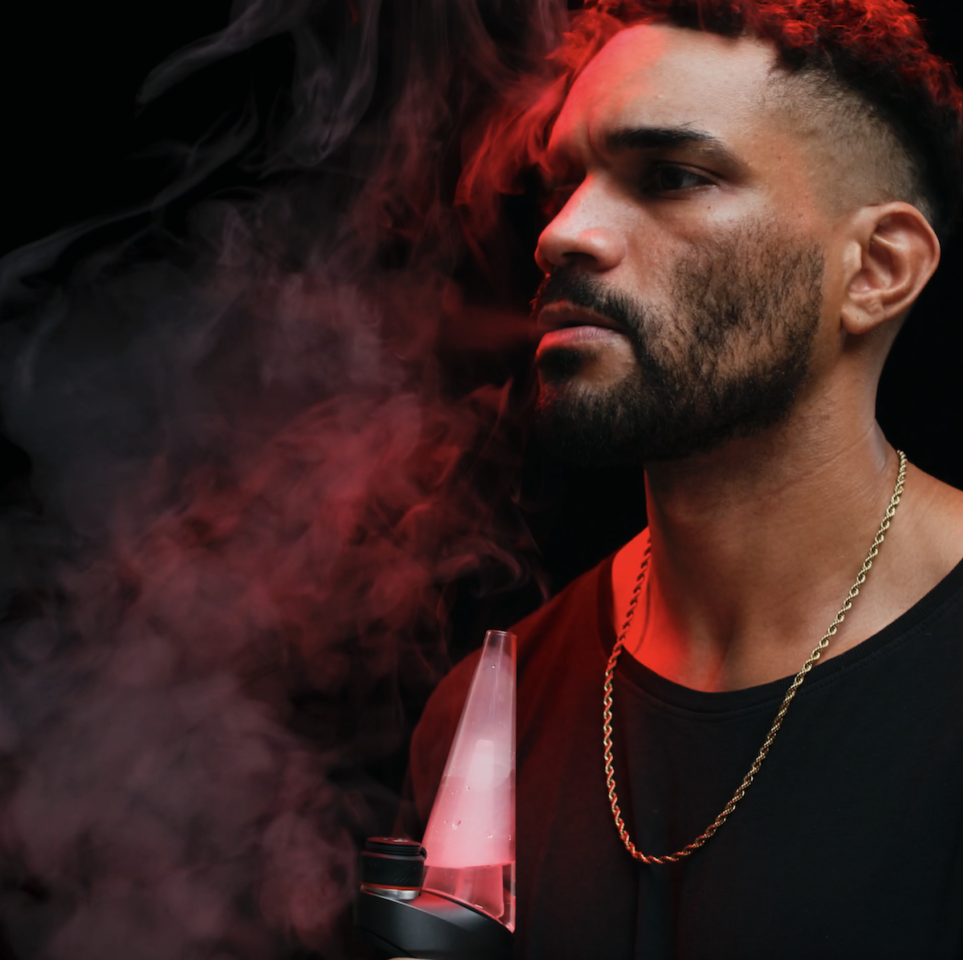
Puffco Unveils 3D Chamber for Maximum Experience on Peak Pro

Today Puffco announced the release of its latest product, a 3D Chamber designed to optimize user experience of the award-winning Puffco Peak Pro. 

The 3D chamber heats on all sides, fully enveloping the dab material evenly. Bringing the heat into the bowl itself—where the oil sits—results in bigger clouds, better flavor, more efficiency and a faster heat-up time, the company promises. 

The 3D chamber uses 30 percent less battery power and produces more vaporous dabs at a lower temperature, optimizing the experience for the dabber. Additional heat sensing capabilities also provide more accuracy, keeping the bowl at its pre-set temperature. 

Photo courtesy of Puffco

Connoisseurs and dabbers already know about the cutting-edge torchless design of the Puffco Peak Pro—providing electronic heating accuracy without losing any quality. It’s the “best and first” smart rig design, capable of next-level customization and control. The company plans on doing the same with its new chamber technology.

“Puffco created the Peak to make the best experience in cannabis accessible to everyone, designing it to evolve along with its users’ needs and wants,” Puffco CEO and Founder Roger Volodarsky explains. “The 3D chamber delivers on that evolution with better flavor, improved battery efficiency, and more vapor—even from such delicate materials as water hash. It levels up the entire experience instantly.” Puffco was originally founded by Volodarsky in 2013 and is still held privately, with headquarters in Los Angeles, California. 

Fans of the standard chamber need not worry: The 3D Chamber is capable of the same four pre-set heat settings as the Peak Pro Standard Chamber, and can be customized on the Peak Pro Platform. Keep in mind that any firmware updates are required to use the 3D chamber. 

The 3D Chamber will be available in late October through www.puffco.com.

The company manufactures devices for cannabis concentrate connoisseurs including the Puffco Peak, Peak Pro and the easy-to-carry portable Puffco Plus. The company is known throughout the industry for its award-winning product designs and advanced cannabis concentrate technology. 

The company has sold over one million orders of the Puffco Plus since first launching the product in 2016. The company’s recent products are selling at an ever faster pace. The company released The Puffco Hot Knife, an innovative battery-powered dabbing tool earlier this year. You don’t even have to wipe off concentrates with the tool, because it features a ceramic tip that heats rapidly, thus allowing the concentrate to slide off on its own.

Puffco Peak Pro at Puffcon

Puffco is all about meeting its consumers face-to-face, showing appreciation, which was highlighted recently at a local event.

The 3D Chamber made its debut earlier this month at the inaugural Puffcon Block Party. Puffco fans, including High Times representatives, attended the first-ever Puffcon Block Party event on October 2 and had a chance to try out the 3D Chamber’s capabilities first-hand, prior to its public release and on-sale date.

The event transformed approximately four blocks of Downtown Los Angeles, located near the 110 freeway. 

The inaugural Puffcon Block Party even featured performances from Flatbush Zombies, Action Bronson and Buddy, and an all-star line up of vendors ranging from Talking Terps and Trove SF to All My Hats Are Dead and Elbo. Puffcon Block Party was free to any vaccinated consumer over the age of 21 who owned a Puffco Peak Pro or Peak OG, or who bought one of the items before the registration closed.

The event featured vendors ranging from, as the event’s “shakedown street” was filled with unique merch and creative wares.

The addition of the 3D Chamber provides better vapor clouds and better flavor, among other perks to the Puffco Peak Pro family of products.

The post Puffco Unveils 3D Chamber for Maximum Experience on Peak Pro appeared first on High Times.


from News – High Times https://ift.tt/3GvHI39
via IFTTT

Texas outlawed delta-8 THC, but the fight ain’t over

State officials declared delta-8 illegal, but industry officials are pushing back in court. Stay tuned.

The post Texas outlawed delta-8 THC, but the fight ain’t over appeared first on Leafly.


from Leafly https://ift.tt/3bi5AJl
via IFTTT

Top Misconceptions About Cannabis in Mexico, Part 3

In this multipart series, we debunk various incorrect ideas, impressions and rumors we continue to hear about the Mexico cannabis industry and the road to legalization. Here are Part 1 and Part 2. Are you getting something wrong about cannabis in Mexico? Keep reading!

Legalization is only about allowing people to grow/smoke weed.

Nothing could be further from the truth! Legalization is about creating a full-fledged industry that will span everything from industrial hemp to medical cannabis to adult use. It is meant to regulate every link in the cannabis production and distribution chains so as to ensure quality and traceability of the products consumers will have access to– whether for medical, industrial or adult purposes. Much of this misconception is due to media coverage that, until VERY recently, has associated legalization with those who advocate for adult use without restrictions. Granted, adult use activists have been very vocal about their rights, but they are just a fraction of those pushing for the development of an industry for both domestic and international participants.

Legalization will corrupt youth.

This is a misconception commonly associated with the Mexican Catholic Church, which perhaps understandably still exerts strong influence in a predominantly Roman Catholic country. However, the Church’s position has been manipulated by some media outlets. The Church has never said that legalization will corrupt youth. The Church is not even against legalization as a whole, but against legalization of adult use without a debate that encompasses views from across the spectrum of society. The Church argues that the lack of a broad public debate has prioritized the interests of a few stakeholders over public health and safety issues, and that placing limits on the production, distribution, marketing and consumption of a plant that “health professionals and … consumers testify that their use, in any quantity and presentation, significantly reduces the control over one’s actions, and puts the consumer at serious risk to himself and others” does not address the real problem. The Church believes that problem to be “the effects on families, by young people who use drugs, nor does it contribute to inhibiting and reducing exposure to narcotic substances.” As a result, the Church urges both the Government and Church members throughout Mexico not to support legalization without putting campaigns in place on addictions and the consequences of narcotics consumption on human health. The Church has also urged all stakeholders (especially youth) to inform themselves and take responsible action, to avoid “getting carried away by the permissiveness raised by these norms that allow the drugging of citizens.”

One of the tasks of the National Commission Against Addictions to be created by the upcoming Cannabis Law will be monitoring the effects of legalization, while creating and supporting education and health promotion policies. Education will help people understand that legalization will not only provide important healthcare support but also boost the Mexican economy.

Only companies can apply for permits/licenses.

Not true. Both individuals and legal entities can apply for cannabis permits/licenses and there is no legal requirement to act through intermediaries. The real issue here is that permits/licenses are non-transferrable, so if for any reason you wish to sell your cannabis business, you will be unable to do so unless the license holder is a company, which can be sold along with the license. Companies are advised to set up a Mexican entity that can apply for the licenses; the application requirements for the various cannabis permits/licenses, particularly for medical use, are applicable/can best be fulfilled by entities created under Mexican law.

Now that the Medical Regulations are official, I can smoke marijuana, make or consume edibles, or use any kind of ointments or supplements.

Growing and smoking marijuana for individual adult use is indeed legal thanks to a Supreme Court Declaration of Unconstitutionality, but you still need to file for an amparo action to obtain the permits to exercise those rights. The Medical Regulations did not change anything in this regard. As for edibles, ointments, supplements, etc., no cannabis product that fails to qualify as medicine (medicamento) as defined by the General Health Law can be imported into Mexico. At this point, under the Medical Regulations, vapes or anything that involves smoking cannabis cannot be imported into Mexico either, and we do not expect the Cannabis Law to regulate otherwise. The only exception would be devices that enable smoking/inhaling for medical use. The Cannabis Law will also regulate manufacturing, sale (and therefore consumption) of edibles and drinks with CBD/THC content, but we do not expect those containing THC to be legalized. Per the transition provisions contained in the Cannabis Law bill, prohibition on edibles containing THC might be lifted in three years, once there are more studies on their effect on human health, but as with many other things, we will have to wait for implementation of the law (and existence of those studies) to be certain.

IMPI, the Mexican Patent and Trademark Office, denies registration of cannabis trademarks.

There is no absolute bar on cannabis trademark registration in Mexico. The legal prohibition was that no trademark was to be granted “when its contents or form are contrary to public order or contravene any legal provision.” Now that the Medical Regulations have entered into force and a General Declaration of Unconstitutionality allowing for individual adult cannabis use has been issued, we believe that prohibition has lost much of its power. True, very few cannabis trademark registrations have been granted to date, but that is more the result of businesses abandoning their applications due to genericity or similarity issues, as well as the COVID pandemic slowing government response times. We expect some examiners to continue to pay extra attention to cannabis trademarks, but now that cannabis is fully legal for medical use, if/when full legalization becomes a reality it will be easier to contest any application objections. There will be a marked increase in trademark registrations granted to cannabis companies at that point.

In upcoming posts we will continue debunking misconceptions that continue to propagate as the legalization process comes to a close. We also firmly believe that the time is now to prepare to launch or expand a cannabis business in Mexico. When the Cannabis Law is finally enacted, you want to be ready to go. To learn more, we also urge you to follow us for the next webinar or contact us at firm@harrisbricken.com or MX@harrisbricken.com!

The post Top Misconceptions About Cannabis in Mexico, Part 3 appeared first on Harris Bricken.


from Canna Law Blog – Harris Bricken https://ift.tt/3Gu8qt0
via IFTTT

Wednesday, October 27, 2021

Former Arkansas Lawmaker Launches Cannabis Legalization Campaign

A group headed by a former Arkansas lawmaker has joined the charge to reform cannabis policy in the state by organizing a group to campaign for a constitutional amendment to legalize recreational marijuana. Eddie Armstrong, a former Democratic state representative from North Little Rock, is listed as the chair of the organization Responsible Growth Arkansas in a filing with the Arkansas Ethics Commission submitted on October 15.

The text of the proposed constitutional amendment had not yet been filed with the office of the Arkansas Secretary of State as of the beginning of the week. The group’s statement of organization, however, notes that the organization will “advocate for the passage of an amendment to the Arkansas Constitution to allow the regulated sale of adult-use cannabis in the state,” according to media reports. 

In an email to reporters, Armstrong wrote that more details of the proposed constitutional amendment to legalize recreational cannabis will be released in the upcoming weeks.

Armstrong is a former minority leader of the Arkansas State House of Representatives, where he served as a legislator from 2013 to 2019. He is also a founder of Cannabis Capital Corp., a Chicago-based consulting firm serving the medical marijuana industry, according to a 2019 article in the Arkansas Democrat-Gazette.

Medical Marijuana Legalized in 2016

Arkansas voters legalized medical marijuana in 2016 with the passage of Issue 6, a constitutional amendment ballot measure that received 53 percent of the vote. Under the Arkansas Medical Marijuana Amendment, patients can receive a doctor’s recommendation to possess up to 2.5 ounces of cannabis for the treatment of one or more qualifying medical conditions.

Medical marijuana dispensaries began serving patients in 2019. However, statutory limits on the number of cannabis cultivators and retailers could soon leave patients with an inadequate supply of medicine, says medical marijuana advocate Melissa Fults.

“There can only be a maximum of 40 dispensaries and that is not enough to cover the state of Arkansas,” said Fults. “They kept spouting that it was only going to 30,000 patients. We’re about to hit 80,000.”

Separate Cannabis Legalization Amendment Also Proposed

Responsible Growth Arkansas is not the only organization campaigning to legalize adult-use cannabis in the state. Under a separate ballot measure from Arkansas True Grass known as the Arkansas Recreational Marijuana Amendment of 2022, cannabis would be legalized for adults ages 21 and older, including provisions to cultivate up to 12 cannabis plants at home. The measure would also release nonviolent marijuana offenders from incarceration, probation and parole and expunge records of past marijuana convictions. 

The proposed constitutional amendment would also establish a regulatory structure for the production and sale of recreational marijuana. Sales of adult-use cannabis would be subject to an eight percent marijuana excise tax in addition to the state sales tax. Local jurisdictions would also be permitted to levy a five percent tax on recreational marijuana sales.

Jesse Raphael, a spokesperson for Arkansas True Grass, said that the adult-use cannabis measure would also support the state’s medical marijuana program.

“Medicine in Arkansas is very good but very expensive for the patients. We’d like to see that changed with patients also able to grow their own,” Raphael told local media earlier this month.

For either cannabis legalization measure to qualify for the ballot under state law, supporters must collect at least 89,151 signatures of registered voters, a figure equal to 10 percent of the ballots cast for governor in the 2018 general election. Under legislation signed into law this year, canvassers collecting signatures for proposed ballot measures must be residents of Arkansas and may not be paid on a per-signature basis. The deadline for gathering signatures is July 8, 2022.

The post Former Arkansas Lawmaker Launches Cannabis Legalization Campaign appeared first on High Times.


from News – High Times https://ift.tt/311P7a1
via IFTTT

Montana Issues Proposed Rules for Future Cannabis Marketplace

Regulators in Montana last week issued a slate of proposed rules for the state’s coming recreational marijuana marketplace, and cannabis advocates are excited to get started. 

Pot sales for adults aged 21 and older are scheduled to get underway on New Year’s Day in Big Sky Country, which means the clock is ticking for the Montana Department of Revenue to lay out regulations for the would-be cannabis businesses. 

“The deadlines are aggressive,” said Kristan Barbour, administrator of the Department of Revenue’s Cannabis Control Division, as quoted by local television station KTVH. “Really, the rules are our biggest challenge.”

The Department of Revenue will hold a public hearing in the capital city of Helena on November 16 to consider adoption of the proposed rules.

“Our focus was really to be business-friendly and to try to work with the industry in a fashion that makes the rules adaptable to their current business structure and that they’ll be able to evolve into without a whole lot of pain,” Barbour told KTVH.

Voters in Montana passed a proposal at the ballot last year to legalize adult-use marijuana, one of four states to vote to end pot prohibition in the 2020 election. (Arizona, New Jersey and South Dakota were the others).

In the spring, lawmakers in Montana passed a bill to implement the voter-approved legal pot program, which Republican Governor Greg Gianforte signed into law in mid-May.

The legislation, known as House Bill 701, “implements and regulates the recreational marijuana program that voters approved in a ballot initiative last year and funds a substance abuse prevention program that the new governor has championed since his first days in office,” the Daily Montanan reported at the time. 

In a statement after signing the bill, Gianforte touted the HEART Fund, which will take revenue from the adult-use weed program to help fund substance abuse treatment. He stands behind this organization and feels they play a big part in the future of legalization in the state. 

“From the start, I’ve been clear that we need to bring more resources to bear to combat the drug epidemic that’s devastating our communities,” Gianforte said at the time. “Funding a full continuum of substance abuse prevention and treatment programs for communities, the HEART Fund will offer new support to Montanans who want to get clean, sober and healthy.”

The proposed rules unveiled by the state’s Department of Revenue last week cover 15 different sections related to the implementation of the program: license, application and renewal fees; marijuana manufacturer licenses; marijuana cultivator licenses; marijuana dispensary licenses; marijuana transporter licenses; combined use licenses; marijuana testing laboratory licenses; marijuana storage facility endorsement; worker permits; general labeling requirements; labeling requirements for marijuana flower; labeling of ingestible marijuana-infused products; labeling of non-ingestible marijuana-infused products; labeling requirements for marijuana concentrates and extracts and packaging requirements. 

Montana voters initially legalized medical marijuana treatment back in 2004. They approved the recreational pot measure in 2020 with 57 percent support.

And there are yet more pot-related questions on the ballot this year for certain Montana voters. According to KTVH, “voters in Missoula and Yellowstone Counties could endorse a 3 percent, local option tax on recreational sales, medical sales or both,” while voters “in Billings will vote whether to allow or prohibit adult-use marijuana dispensaries within city limits.”

As reported by the Daily Montanan, the new law allows the one-half of state counties that approved last year’s ballot initiative to “have recreational in their borders by default, while voters in the the other half of counties will have to take an affirmative action to bring recreational marijuana in their boundaries if so desired.”

The post Montana Issues Proposed Rules for Future Cannabis Marketplace appeared first on High Times.


from News – High Times https://ift.tt/3jKfOXj
via IFTTT

5 creeper weed strains that’ll trick you into getting really stoned

With delayed effects, the high from a creeper strain seems to come out of nowhere. Be careful how much you smoke, because they’ll get you.

The post 5 creeper weed strains that’ll trick you into getting really stoned appeared first on Leafly.


from Leafly https://ift.tt/317m8BT
via IFTTT

This delta-8 is built for party vibes

Delta-8 syrups from Activ-8 bring feel-good flavors and chill effects to help turn up any function. See what syrup & soda combos have us in party heaven.

The post This delta-8 is built for party vibes appeared first on Leafly.


from Leafly https://ift.tt/2ZuonhT
via IFTTT

Kansas Sheriff Seizes Cash from Legal Marijuana Sales

A Colorado logistics company is seeking the return of nearly $165,000 in cash seized by a Kansas sheriff’s department, arguing that the money is from legal marijuana sales and should not have been taken by law enforcement officers. The cash was seized from an employee of Empyreal Logistics during a traffic stop on May 18 in Dickinson County, Kansas after being collected by the employee from medical marijuana dispensaries in Missouri.

The U.S. Attorney’s office for Kansas filed a civil asset forfeiture case in the matter, claiming in court documents that the cash is subject to seizure because of alleged violations of federal laws against manufacturing and distributing drugs, according to media reports. The unidentified driver of the vehicle has not been charged with a crime, however.

Drug Enforcement Administration Special Agent Bryson Wheeler wrote in an affidavit filed in the forfeiture case that the approximately $165,620 was seized from a Ford Transit van owned by Denver-based Empyreal Logistics by Dickinson County Sheriff’s Deputy Kalen Robison during a traffic stop along I-70. Robison had also pulled the van over the day before for a minor traffic violation. 

During the first traffic stop, the driver told the deputy that she was collecting money from cannabis dispensaries in Kansas City, Missouri, and transporting the cash through Kansas to a credit union in Colorado. Missouri legalized medical marijuana in 2018 through a voter-approved constitutional amendment, but Kansas is one of the few remaining states that have no provisions for legal cannabis. 

The driver was released and put under surveillance by DEA agents, who observed her “stopping at and entering multiple state marijuana dispensaries” in Missouri. The day after the initial traffic stop, Robison pulled the van over again along the interstate. The reason for the second traffic stop is not included in the affidavit, according to the Topeka Capital-Journal.

During the traffic stop on May 18, law enforcement officers seized five bags of cash, which the driver claimed were from cannabis dispensaries in Missouri. A police canine unit later “alerted to the odor of marijuana coming from the currency,” the DEA agent wrote, and “marijuana is a controlled substance and illegal under both federal and Kansas state law.”

Attorneys for Empyreal Logistics argued in court documents that the seized cash should be returned to the company, disputing claims from federal prosecutors that the money was related to drug trafficking and subject to forfeiture.

“Plaintiff’s claims should be barred as the conduct which generated the Defendant property was lawful under Missouri state law and tacitly or affirmatively allowed by the action of the United States Federal Government,” the company’s lawyers wrote.

Perils of a Cash-Based Industry

The Empyreal case illustrates the difficulties faced by state-legal cannabis businesses, which are forced to operate mainly in cash because of federal drug and money-laundering laws. On its website, the firm promises to address the challenges of operating in a cash-only industry with solutions including “low-profile, eco-conscious, armored vehicles.”

“With our state-of-the-art facilities, secure currency processing, and management services, we safely and securely manage the cash assets of hundreds of enterprises across multiple industries so they can concentrate on managing their operations,” the company wrote in a press release unrelated to the asset forfeiture case. “Empyreal uses data and intelligence tools to help maximize our cash solution, with the goal of changing the way clients think of secured transport.”

Arshad Lasi, the CEO of cannabis dispensary operator the Nirvana Group, says that many of the cash-handling issues faced by the cannabis industry could be solved with passage of the SAFE Banking Act, legislation that would allow financial institutions to provide traditional banking services to state-legal marijuana businesses. Provisions of the bill were included in a military spending bill passed by the House of Representatives in September, but the Senate has not yet approved the legislation.

“Providing licensed cannabis businesses with the opportunity to bank in a traditional manner and not be limited to dealing in cash is crucial,” Lasi wrote in an email. “Banking allows companies to remain compliant, helps them avoid liabilities, among other benefits including safety and security.”

“I’m hopeful that the SAFE Banking Act will pass in the Senate, as its passage will also boost the cannabis industry’s reputation as a legitimate and major player in states’ economies,” Lasi added.

Lex Corwin, founder and CEO of California cannabis cultivator Stone Road, said that forcing legal cannabis companies to operate on a cash-only basis is “ridiculous and harmful” and called on lawmakers to pass the legislation.

“The SAFE Banking Act would give an already legal industry the legitimacy it needs and that it’s honestly due, especially since the government has no issues collecting said cannabis businesses’ money in cash,” Corwin told High Times. “Cash dealings are also a huge liability and personal safety issue––the biggest instances of injury and death are around cash pickups and dropoffs, ultimately putting people trying to play within the legal system in harm’s way.” 

U.S. Magistrate Judge Kenneth Gale has set a scheduling hearing in the Empyreal asset forfeiture case for January 4. The DEA national public affairs office and a spokesperson for the U.S. Attorney’s Office for Kansas declined to comment on the case to local media, citing the pending litigation.

The post Kansas Sheriff Seizes Cash from Legal Marijuana Sales appeared first on High Times.


from News – High Times https://ift.tt/3ns1zr6
via IFTTT

The Myth of Cannabis-Infused Halloween Candy—Debunked

With every Halloween that passes, articles and news coverage warning parents about finding cannabis-infused edibles in their kid’s candy bags are revived. The fact is that these warnings and tall tales, while issued with good intentions, are simply not rooted in truth.

A new Snopes article dug into the myths and origin of this annual charade. While the first state to legalize medical cannabis was California in 1996, cannabis-infused edibles were largely produced as baked goods. At the time, perfecting the art of an infused gummy bear or other recognizable candy was not yet the norm. Snopes ascertains that the topic began to gain attention around 2010, when medical cannabis candies were being advertised in newspapers and other print media. 

Scare-tactic stories have real-life consequences. The Los Angeles Times reported that law enforcement confiscated cannabis-infused candies from dispensaries on October 30, 2010. 

“Investigators have confiscated candies and snacks containing pot from marijuana dispensaries, and they are concerned such items could wind up in children’s trick-or-treat bags… The warning comes days before Californians vote on Proposition 19, the marijuana legalization measure.” The result was a defeated legalization effort, with 53.46 percent of votes not in favor of the Proposition, and 46.54 percent voting in favor.

University of Delaware Professor of Sociology and Criminal Justice Joel Best recently spoke with Fox News regarding his thorough research on the topic. 

“My research stretches back to 1958,” Best shared with Fox News. “I have been unable to find any evidence that any child has been killed or seriously injured by a contaminated treat picked up in the course of trick-or-treating.” 

Best authored one study in 1985 entitled “The Razor Blade in the Apple: The Social Construction of Urban Legends,” which explored the history of adults giving harmful items to kids on Halloween. His conclusion was that even these events were greatly exaggerated. 

“A review of news stories about Halloween sadism from 1958-1983 suggests that the threat has been greatly exaggerated. Halloween sadism can be viewed as an urban legend which emerged during the early 1970s to give expression to growing fears about the safety of children, the danger of crime and other sources of social strain.” Best is also the author of a sociology book called Threatened Children: Rhetoric and Concern about Child-Victims.

The Real Threats to Children

Of course, we can’t ignore that a small number of children accidentally consume infused candies. However, this fear may stem from a tragic incident in which a father put cyanide into his son’s Halloween candy in 1974. Since then, there have been numerous articles sensationalizing the fear of unsuspecting children being harmed by their Halloween candy. Drug-laced suckers were a concern in 2000. Ecstasy-laced candies were the urban legend craze of 2015. Just two years ago in 2019, heroin-infused SweeTARTS were the topic of discussion. Not one of these examples are confirmed as factual, according to Snopes research.

Every year, online articles continue to exaggerate the fear of cannabis making its way into the hands of children on Halloween. Headlines such as “Colorado parents are freaking out about marijuana in Halloween candy,” “Watch out for cannabis candies this Halloween” or “Pot candy and Halloween: A dangerous mix?” perpetuate the urban legend—hijacking people’s existing fears about child safety. 

Ultimately, on the topic of cannabis being intentionally placed in kids’ trick-or-treat bags, there is very little evidence of this happening. Snopes does mention an incident that occurred in Nova Scotia in 2019 in which parents found a cannabis edible in their children’s trick-or-treat bags, but there was no evidence of it being intentionally placed there, nor was it consumed by the child. In reality, there is a very real problem with vehicular-related accidents on Halloween. According to a Washington Post analysis, Halloween is one of the deadliest days of the year for children pedestrians.

Throughout the rest of the year there has been an increase in accidental consumption of infused edibles by children, which is largely due to 1.) parents not properly securing their edibles away from their children and 2.) the ongoing issue with illegal edibles resembling famous candy brands. Parents should seek out a way to secure their cannabis products, such as something that is tamper- and child-resistant. 

Prevention is key in keeping cannabis out of the hands of minors. The MedTainer, Qube Child Resistant Concentrate Jar, or the Aviator Series by Chubby Gorilla are great for general child-resistant containers. To prevent teenagers from accessing your cannabis products, check out the Sneak Guard, The Cannador or Herb Guard Extra Large. If you’re looking for something fancier or high-tech, try high-end stash boxes such as The Apothecarry Case or Keep Labs’ KEEP box.

In regards to the topic of child access to cannabis, and the appeal of illegal cannabis brands advertising under the logo similarities of Hershey or Sour Patch Kids, the situation is ongoing. Parents are the first line of defense in keeping their kids away from cannabis, but lawmakers have also enacted legislation over the years to further prevent cannabis edibles from appealing to kids. In Colorado in 2017, the state approved House Bill 1436, which banned edibles from being made in shapes that might entice kids.

The post The Myth of Cannabis-Infused Halloween Candy—Debunked appeared first on High Times.


from News – High Times https://ift.tt/3nykmBf
via IFTTT

Cannabis in Uruguay and Latin America: Global Law and Business Podcast with Marco Algorta

Listen HERE or stream on SpotifyApple PodcastsAmazon MusicStitcher, or Soundcloud!

At Harris Bricken, we keep close tabs on what is happening around the world, and we know that our friends and clients do, as well. We are happy to provide this podcast series: Global Law and Business, hosted by international attorneys Fred Rocafort and Jonathan Bench, where we look at the world by talking with business leaders, innovators, service providers, manufacturers, and government leaders around the world.

In Episode #79, we are joined by Marco Algorta, Public Relations Manager at Khiron Life Sciences and a cannabis activist in Uruguay. We discuss:

  • Why Marco is less bullish about Uruguay’s cannabis sector than he was a few years ago.
  • Uruguay’s strengths and weaknesses as a cannabis actor.
  • What Uruguay needs to do to get its canna mojo back.
  • Uruguay’s broader political and economic environment.
  • Colombia and other countries to watch in Latam when it comes to cannabis.
  • Marco’s experience setting up CannaPur and selling it to Khiron.
  • What makes canna startups thrive (or fail).
  • Regional differences in Marco’s native Brazil.
  • Uruguay’s outsized role in world football/soccer.
  • Listening, and watching recommendations from:

We’ll see you next week for another exciting and informative episode when we sit down with Gregory Schaffer, author of Emerging Powers and the World Trading System.

The post Cannabis in Uruguay and Latin America: Global Law and Business Podcast with Marco Algorta appeared first on Harris Bricken.


from Canna Law Blog – Harris Bricken https://ift.tt/3pGRLwh
via IFTTT

Autumn strains to kick off cuffing season

What weed pairs well with pumpkin spice lattes?

The post Autumn strains to kick off cuffing season appeared first on Leafly.


from Leafly https://ift.tt/3bfFJ4D
via IFTTT

Tuesday, October 26, 2021

Florida judge rules in favor of Leafly and online cannabis ordering

Online orders were halted statewide in February. The ruling allows patients to order through Leafly again.

The post Florida judge rules in favor of Leafly and online cannabis ordering appeared first on Leafly.


from Leafly https://ift.tt/3GpJcvP
via IFTTT

HHC is your new favorite hemp-derived high

Delta Extrax is on the frontier of new hemp highs. Find out what you need to know about hemp-derived HHC and try it for yourself with the Hydro vape collection.

The post HHC is your new favorite hemp-derived high appeared first on Leafly.


from Leafly https://ift.tt/3vUAT6j
via IFTTT

How does delta-10 compare to delta-8 and THC?

Contributing writer Danté Jordan tries some new delta-10 products to see what they're all about. See how they stack up to THC and delta-8.

The post How does delta-10 compare to delta-8 and THC? appeared first on Leafly.


from Leafly https://ift.tt/3pEHkt3
via IFTTT

Florida to Resume Online Purchasing of Cannabis Products

A ruling handed down on Monday by an administrative law judge in Florida means that medical cannabis patients in the Sunshine State will soon be able to resume purchasing such products online. 

The decision from Judge Suzanne Van Wyk comes after state regulators in Florida had brought an end to patients using online services such as Leafly, which contracted with medical cannabis providers in the state to help patients complete their orders digitally.

According to local television station CBS12, state officials said “the arrangements violated a state law banning operators from contracting for services ‘directly related to the cultivation, processing and dispensing’ of cannabis.”

Those third-party, online companies saw Florida-based medical marijuana operators sever ties after the state’s Department of Health admonished them and threatened a $500,000 fine if the practice persisted.

CBS12 reported that the Department of Health handed down a memo saying that “the services were prohibited under a 2017 law that set up a structure for the Florida cannabis industry,” and that the law “requires medical marijuana operators to control all aspects of the business from seed to sale — including cultivation, processing and dispensing of products — rather than allowing companies to handle individual components of the trade.”

But Leafly, the station reported, “argued that it is not engaging in activity related to the dispensing of cannabis products because the company does not accept payment for or distribute cannabis products to patients,” and the company “filed a petition asking an administrative law judge to find that the Florida Department of Health employed an ‘unadopted and invalid rule’ to conclude that the online services violated the law.”

According to the station, Leafly had contracted with 277 medical marijuana retailers in Florida. 

Judge Van Wyk “didn’t go as far Monday as Leafly requested,” according to CBS12, “but she found that the ban on the use of the third-party sites amounted to an unadopted rule and ordered the state agency to ‘immediately discontinue reliance on its policy regarding online ordering of medical marijuana through third-party websites.’”

Online orders and curbside pickups have become commonplace for cannabis operators since the outset of the COVID-19 pandemic, with policymakers in various states and cities relaxing restrictions in order to allow patients to acquire their products safely.

Last year, officials in Florida set forth emergency rules to allow physicians in the state to visit patients and issue prescriptions remotely, an option that was also extended to medical cannabis patients.

Voters in Florida passed a ballot measure in 2016 that legalized medical marijuana treatment, and the law has broadened its scope in the years that have followed.

Last year, the Florida Department of Health announced new rules that allowed medical cannabis patients to acquire edible products such as brownies and other candies.

In 2019, Florida Governor Ron DeSantis, a Republican, signed a bill allowing medical cannabis patients to receive the treatment in smokable form.

Efforts to legalized recreational pot use in Florida have yet to materialize—though there are clear signs of budding political support. 

Democrats currently vying for the party’s gubernatorial nomination in Florida have even traded barbs recently over who is more determined to end pot prohibition.

Charlie Crist, a former governor in the state who is currently serving in Congress and vying to be governor again, said earlier this month that he will “legalize marijuana in the Sunshine State” if he were elected next year.

“This is the first part of the Crist contract with Florida,” said Crist, who previously served as a Republican governor before leaving the party.

That drew a strong response from Nikki Fried, the state’s agriculture commissioner who is also aiming to win the Democratic nomination for governor and was quick to note Crist’s previous enforcement of anti-pot laws.

“Imitation is flattery, but records are records,” Fried said on Twitter earlier this month. “People went to jail because Republicans like @CharlieCrist supported and enforced racist marijuana crime bills. Glad he’s changed his mind, but none of those people get those years back. Legalize marijuana.”

The post Florida to Resume Online Purchasing of Cannabis Products appeared first on High Times.


from News – High Times https://ift.tt/3BepBe9
via IFTTT