With so many rolling papers out there, we rolled dozens of joints, cones, and blunts to find the best ones for weed.
The post Buyer’s guide to weed rolling papers appeared first on Leafly.
from Leafly https://ift.tt/PZlEdwm
via IFTTT
With so many rolling papers out there, we rolled dozens of joints, cones, and blunts to find the best ones for weed.
The post Buyer’s guide to weed rolling papers appeared first on Leafly.
What adventures loom on the April horizon? Get your April guidance from the stars and learn what cannabis strains to smoke to stay celestial.
The post Star signs and cannabis strains: April 2022 horoscopes appeared first on Leafly.
Not all weed puts people to sleep. These energizing strains pair perfectly with spring cleaning.
The post Energizing strains to make spring cleaning a breeze appeared first on Leafly.
Researchers at Kansas State University have found that livestock feed containing industrial hemp can reduce stress levels in cattle, according to a recently released study.
The 2018 Farm Bill’s legalization of hemp has led to a flurry of research across the country as scientists work to discover novel ways to make use of a valuable new agricultural commodity. Previous research at Kansas State has shown that plant matter from industrial hemp has favorable crude protein and digestibility profiles, potentially making the crop suitable for inclusion in cattle feed.
Another study revealed that cattle readily absorbed cannabidiolic acid (CBDA) after being fed hemp flowers produced for CBD production. Michael Kleinhenz, assistant professor of beef production at the Kansas State University College of Veterinary Medicine, says that the previous research has implications for the viability of industrial hemp as a livestock feed.
“If hemp is to be utilized as an ingredient in the ration of cattle, it is prudent to know and understand the pharmacokinetics and potential biological effects of cattle exposed to repeated doses of cannabinoids present in industrial hemp,” Kleinhenz said in a statement from the university.
Kleinhenz and a team of researchers decided to study whether the cannabinoids present in industrial hemp would have an effect on the stress and activity levels of cattle that were given feed containing hemp.
“Cattle experience a variety of stress and inflammation,” Kleinhenz explained, noting that animals that are being transported or weaned are particularly vulnerable.
To conduct the study, the researchers fed industrial hemp to a group of 8 Holstein steers. The hemp was mixed into grain that was given to each animal individually to ensure a complete and consistent dose. A control group of 8 steers was given feed that did not contain hemp. The animals were monitored for cannabinoid levels, blood stress markers and activity levels including the number of steps taken per day and the amount of time spent lying down. The researchers then analyzed the data to compare the results between the two groups of animals.
“Our most recent data shows how cannabinoids via industrial hemp decreased the stress hormone cortisol as well as the inflammatory biomarker prostaglandin E2,” Kleinhenz said. “This shows that hemp containing cannabidiolic acid, or CBDA, may decrease stress and inflammation in cattle. Thus, hemp may be a natural way to decrease stress and inflammation related to production practices such as transportation and weaning.”
The researchers also determined that the group of cattle given feed containing industrial hemp spent more time lying, which can aid digestion by helping the animals produce saliva and chew their cud. The study revealed that while cannabinoids could be detected in the animals that had been fed industrial hemp, the level did not increase over time.
“Our new research helps us better understand how cannabinoids present in industrial hemp interact with bovine physiology and pharmacology,” Kleinhenz said. “For instance, we now know that repeated daily doses of CBDA via feeding hemp does not result in accumulation of cannabinoids in the blood. Additionally, it solidified previous research and shows that each cannabinoid has its own absorption and elimination profile.”
Kleinhenz said that the initial data collected by the team is essential if the U.S. Food and Drug Administration and the Association of American Feed Control Officials are going to approve industrial hemp as a feed for livestock. He also noted that more study will be needed to learn if the same effect on stress levels is observed in animals undergoing stressful situations.
“Further work is needed to determine if cannabinoids can alter the stress response in cattle during stressful times such as transportation and weaning, but we hope this research is a step forward in the right direction.”
Funding for the research was provided by a grant from the Agriculture and Food Research Initiative of the U.S. Department of Agriculture’s National Institute of Food and Agriculture. The full study, “Short term feeding of industrial hemp with a high cannabidiolic acid (CBDA) content increases lying behavior and reduces biomarkers of stress and inflammation in Holstein steers,” was published online this month by the journal Scientific Reports.
The post Study Finds Hemp Feed Can Reduce Stress in Cattle appeared first on High Times.
With an effort to give cannabis businesses access to financial institutions stalling in Congress, some lawmakers in Pennsylvania are taking matters into their own hands.
A committee in the state Senate on Wednesday approved bipartisan legislation to “afford state-legal cannabis better access to banking and insurance services,” according to local television station WHTM. This would help with the overwhelming problem in legal cannabis of the lack of access to safe banking resources.
Per the station, the bill “authorizes but does not require financial institutions to provide services to state-legal cannabis businesses,” while also permitting “Pennsylvania’s medical cannabis industry the ability to take out ordinary business expenses when filing state taxes.”
According to Local 21 News, the “bill puts safeguards in place so banks and insurers can do business with the medical cannabis industry without fear of penalty.”
The bill was written by two state senators: Republican John DiSanto and Democrat Sharif Street. It was then approved by the State Senate Banking and Insurance Committee.
“Access to financial and insurance services is essential for operating any business, and it is against the public interest to relegate a multi-billion-dollar industry to deal in piles of cash,” DiSanto said, as quoted by WHTM. “Banking this cash safely in Pennsylvania provides certainty for businesses, is a huge opportunity to grow our economy and should ultimately lower costs for medical cannabis consumers.”
“This is a huge step in the right direction making it easier for banks to do something because right now, most banks are scared to do anything,” said Street, as quoted by Local 21 News. “The law is set up in a way where we are treating these folks like they are involved in illegal drug trafficking.”
The bill represents an effort to bring state-level reform in an area of cannabis policy where Congress has fallen short. It could mean more access to basic financial resources for local businesses.
Earlier this year, the House of Representatives once again passed the SAFE Banking Act, which would enable banks to provide financial services to cannabis businesses. It was the sixth time that the House passed the legislation, which was first introduced in 2013 by Democratic Congressman Ed Perlmutter of Colorado.
“Cannabis-related businesses—big and small—and their employees are in desperate need of access to the banking system and access to capital in order to operate in an efficient, safe manner and compete in the growing global cannabis marketplace,” Perlmutter said in a statement at the time.
Street said that he is confident the bill will be approved in both the state House and Senate. And there is cautious optimism among advocates that the SAFE Banking Act will finally clear both houses of the Democratic-controlled Congress this year.
There is growing urgency to get something done. In Washington state, a series of armed robberies at cannabis dispensaries has underscored the dangers that accompany having so much cash on hand.
The Seattle Times reported earlier this month that “there have been around 67 armed robberies so far in 2022,” up from 34 in 2021 and 27 in 2020.
That worrisome trend has prompted officials in Washington to take action when it comes to banking access.
A Republican state senator in Washington introduced a bill last month that would tack on an additional year of prison time for any individual convicted of robbing a cannabis store.
And earlier this month, the state treasurer, Mike Pellicciotti, traveled to Washington, D.C. to urge passage of the SAFE Banking Act.
“You rob the places where the cash is,” Pellicciotti said, as quoted by local television station KING5. “These robberies are tragic. But these robberies are also preventable.”
The post Pennsylvania Lawmakers Advance Their Own Cannabis Banking Bill appeared first on High Times.
An unknown protester sowed cannabis seeds throughout the rose gardens of New Zealand’s Parliament in Wellington, most likely as an act of defiance. The guerilla grower may have splintered off a violent anti-vaxxer occupation that took place weeks earlier.
New Zealand Herald reports that half a dozen of the weed plants were promptly destroyed by Parliament grounds staff as they continue to sift through the rubble of the occupation.
According to New Zealand’s 1 News, an unnamed protester returned to Parliament grounds on Thursday claiming the seeds had been sown during the chaos, alongside a range of other plants that are always there, such as coriander, brassica and marigolds.
Many of the cannabis seeds had been scattered throughout Parliament rose gardens, the protester told 1 News in anonymity, and “many more will likely germinate for years to come.” It is not immediately clear if the protester was involved in or liable for any of the violence that took place weeks prior.
With a few weeks’ head start, nature takes over and it can spread like a weed. A Parliament groundskeeper agreed that more seeds will inevitably sprout. “There were a few cannabis seedlings,” the groundskeeper said. “A lot of seeds had been scattered around, amongst other things left from the protesters.”
Parliament grounds Speaker Trevor Mallard told 1 News, “I’ve asked for the weed to be weeded.”
This comes after a 23-day occupation of New Zealand’s Parliament grounds and surrounding streets by protesters against the country’s vaccine mandate—eerily similar to the insurrection at the United States Capitol building in Washington, D.C. The copycat insurrectionists torched areas, threw flammable objects, and in some cases, tried to ram into law enforcement with cars.
The occupation began as a “convoy” that kicked off in Wellington on February 8, and was very similar to the Canadian convoy that took place in Ottawa in Canada. The convoy first camped in front of the Parliament building before things went South and they began to blockade most streets.
According to John Pratt from Victoria University of Wellington, the police did nothing to prevent the occupation from taking place, nor did they enforce a complaint from nearby Victoria University against the protestors. So by the stretches of imagination, the weed scattered throughout Parliament grounds could have been prevented as well if they had chosen to do so. Protesters attempted to burn the Law School building at the university.
Opposition National Party leader Christopher Luxon repeatedly extends sympathy for the protesters. Amid the vaccine mandate protesters, other issues are also at play.
Random roadside drug testing will kick off in New Zealand in 2023 as part of an effort to deter drug-impaired driving, after the Land Transport (Drug Driving) Amendment legislation on March 29. The Māori Party is the only party to have voted against the bill.
“In July 2020 the Government introduced legislation that would introduce a compulsory random roadside drug testing scheme in New Zealand,” the Ministry of Transport wrote in an announcement. “Under the proposed drug driving regime, oral fluid tests will detect the most prevalent impairing illicit and prescription drugs at the roadside. The proposed change allows police to test drivers for the presence of drugs anywhere, any time, just as they can for alcohol.”
There are blood limits for 25 different street drugs, including THC. The problem with that is the fact that THC lingers in the bloodstream for much longer than most street drugs.
Drivers who test positive for drugs will be fined and stopped from driving for a minimum of 12 hours. On a positive note, drivers will not be criminally charged if they are simply high and not in possession of controlled substances.
A flurry of medical organizations in New Zealand slammed the roadside drug testing plan. The framework for oral fluid and blood tests is “not supported by reliable scientific evidence”, the Royal NZ College of General Practitioners said. The Royal Australian and New Zealand College of Psychiatrists said “the presence of drugs … does not directly relate to impairment.” The NZ Medical Association also said that the science is “not quite sufficiently adequate.”
The post Weed Sprouts Across New Zealand Parliament Grounds Weeks After Occupation appeared first on High Times.
Rally-goers this week “called for a fairer process to get a marijuana dispensary license in Illinois,” according to local news reports.
Local television station WLS reported that a group gathered Tuesday at the Thompson Center in Chicago to raise objections after Illinois Gov. J.B. Pritzker announced a lottery earlier this month to award 50 new adult-use cannabis licenses in the state in an effort to “expand opportunities targeted to the communities most impacted by the failed War on Drugs.”
The station reported that the group that organized the rally, known as True Social Equity in Cannabis, “don’t want a lottery to decide who can create a cannabis business in their neighborhood.”
“We are tired of waiting. No more caps, no more lotteries, no more games,” said Jose Lumbreras, one of the rally-goers, as quoted by WLS.
Pritzker’s office announced the forthcoming lottery earlier this month, saying that the state’s Department of Financial and Professional Regulation (IDFPR) would be “filing rules to simplify the cannabis dispensary license application process, remove barriers for social equity applicants, and expand opportunities targeted to the communities most impacted by the failed War on Drugs.”
The department, the governor’s office said at the time, is required by the state’s new cannabis law to “to issue at least 50 new adult use cannabis dispensary licenses by the end of 2022.”
“From day one, Illinois has been dedicated to leading the nation in an equity-centric approach to legalizing cannabis, and these proposed changes to the application process will make it much easier for social equity applicants to pursue licenses.” Pritzker, a Democrat, said in a statement at the time. “I appreciate all the feedback we have received from stakeholders since the start of the cannabis program, whose work informed this proposal and is continuing to make Illinois’ growing cannabis industry the most equitable in the nation.”
In the press release earlier this month, the Pritzker administration touted that “the new legal cannabis industry reflects the diversity of the state,” saying that: “100% of craft grow, infuser, and transporter licensee applicants managed by the Illinois Department of Agriculture qualified as social equity applicants”; “67% of said applicants live in areas disproportionately impacted by the failed War on Drugs”; “15% have been personally involved with the justice system”; and “five percent have a family member involved with the justice system.”
“We are committed to an inclusive and equitable cannabis program that continues to build on its successes while also recognizing and taking steps to improve it further,” Mario Treto, Jr., the acting secretary of the state’s Department of Financial and Professional Regulation, said earlier this month. “We look forward to introducing even more participants to Illinois’ adult-use cannabis program and encourage all feedback to help ensure we continue to grow the program together.”
But Juan Aguirre, one of the organizers for True Social Equity in Cannabis, said that applicants “have been devastated by what should have been a solution from the legacy market to the legal market. Instead, their life savings have been devastated; their time, their hop, their efforts have been in vain.”
Under the new rules proposed by Priztker, “applicants will be able to apply online with certain basic information (such as the name of the organization, list of principal officers, contact information, and a $250 fee).”
Pritzker’s office said that the Department of Financial and Professional Regulation also plans to to issue 55 conditional licenses to be distributed across the existing 17 BLS Regions detailed in the state’s new recreational cannabis law.
One of the organizers at the rally in Chicago told WLS that the proposal from Pritzker is “a great start to addressing some of the harm caused by the War on Drugs and those harmed by the original process.”
“I think the 55 for $250 is a good start, but we are far from equity,” the organizer, JR Fleming, said, as quoted by the station.
The post Activists in Illinois Call for Fairness in Dispensary License Process appeared first on High Times.
Thailand hasn’t always prohibited cannabis; it’s part of the culture.
Ganja plants were typically grown on the side of the house and used in traditional Thai medicine and Thai massage. Even today, some grandparents cultivate a few plants and toss a couple of leaves in their Tom Yom (traditional Thai soup).
The U.S. illicit market fueled Thai Stick exports, which came from U.S. soldiers based in the Kingdom during the Vietnam War. At the time, there was no legal or moral taboo surrounding the plant in Thailand.
Then, during the 1980s, the United States’ War on Drugs pushed Thai legislators to change the law, burdening consumers and OGs (original ganjapreneurs) with the threat of severe penalties for cannabis smuggling, sales, production and consumption.
The Kingdom has made some progress over the last few years. However, its emerging legal cannabis market is still in its beginning stages, characterized by confusing legislation, empty promises and false reporting about what’s allowed.
Still, somehow, the cannabis community is alive and well in Thailand.

Kitty Chopaka, a cannabis advocate who tirelessly contributes to the legalization efforts in the Kingdom of Thailand, opened Chopaka, a terpene-infused gummies shop based in Bangkok, Thailand. She’s one of the most knowledgeable people regarding Thailand’s legal cannabis status and works hard to educate those interested in learning the truth about the plant.
“The new market is interesting. Because we’re in Asia, many people are curious but don’t want to get high. They still want to experience it, and the terpene gummies are exactly what they needed,” Kitty explained. “These gummies give a light effect leading up to a high, so they’re not so scared to try it.”

While there’s no weed involved, these sweet treats offer something unique to satisfy those new to cannabis and complement the consumption experience for long-time consumers.
“Lots of lady customers, surprisingly, come into the shop by themselves or with their girlfriends,” she said. “Some are hidden users; others are just looking to try it for the first time. They’re curious about terpenes and how they’re related to cannabis, especially after seeing the giant neon cannabis sign in the front window!”

Rather than using illegal, cannabis-derived terps, Chopaka uses artificial terpenes to create gummies that taste and smell like popular cannabis strains.
“Natural terpenes are challenging to use in the food industry. If we use them, they’re not stable,” Chopaka explained. “The shelf life is cut in half; they don’t hold up to the heat, and the taste and smell fluctuate. And in a massive market where weed is accessible for $300 a kilo, it doesn’t make sense to sell cannabis or cannabis products at the high price natural terpene products demand.”

Since starting the operation in September 2021, Kitty has perfected her recipe and obtained the correct licensing and FDA approval. Within a few months, she opened her shop, and over the last four or five months, she has moved 200 kilograms shy of a ton of terpene-infused gummies, which has made her an inspirational success in Thailand’s cannabis community.
“This is but the beginning of cannabis in Thailand. Don’t forget, the U.S. has gone through this, and we’re going through it in our own way,” Chopaka said. “We’re doing similar things with legalization and are working with what’s allowed due to the regulatory limitations. But as soon as progress is made, all of the other guys within this community will have some interesting innovations ready to release.”

As a cannabis consumer in Thailand, Krit Choo saw that the rolling papers in the Kingdom were commercialized; the products were only sold in supermarkets and large corporate stores. He decided he wanted to change that by starting OG Papers.
“I thought I could create a paper that’s comfortable to use and has more appealing packaging than what was available on the market at the time,” he explained. “So I started conducting research and made the first version of my papers.”
The papers are now made out of 100% hemp, but his first version was made from wood pulp. OG Papers changed the material to hemp in 2020, effectively leveling up the smoking experience.
Krit worked alone on OG Papers for two years before Pim Pirom noticed that the brand could be improved and requested to join the company, ultimately leading to its Siam-style rebranding in 2021.
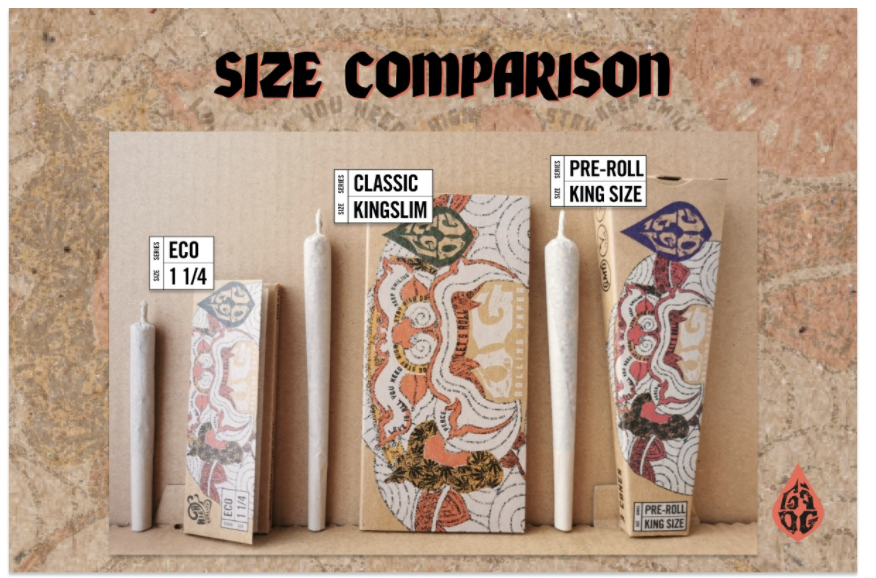
The operation is entirely legal, and while these papers are obviously for cannabis consumers, there’s no law in Thailand prohibiting rolling papers.
“The law doesn’t impact our operations,” Pim explained. “Because we know deep down that everyone is smoking weed already, and the papers are normally used for weed, not tobacco. Most people who purchase our papers consume cannabis. But the regulations don’t make it difficult for us to continue making and distributing our products because we don’t say they’re for weed.”
OG Papers began its operations right before Thailand began to experience legislative progress. While recreational cannabis remains prohibited, fear is dissipating in the Kingdom’s cannabis community as interest in the plant flowers.
“It’s more popular than in the past,” Krit said. “Now, people can talk about weed in public without as much fear as before. In the past, it was more taboo.”
“I can see the difference in the news and regulations, but in everyday life, it doesn’t affect us at all,” Pim added. “Big brands are coming into the market, but this doesn’t change our operations. The legislative changes are more for the corporate levels than the small businesses.”
Besides changes at the consumer level, small businesses are connecting and collaborating with one another as the Kingdom’s legislative changes tend to lean more towards the large, corporate operations.
“Many small businesses are now coming together in the cannabis community,” Pim said. “More events are drawing them out than ever before, attracting small businesses that come out to share.”
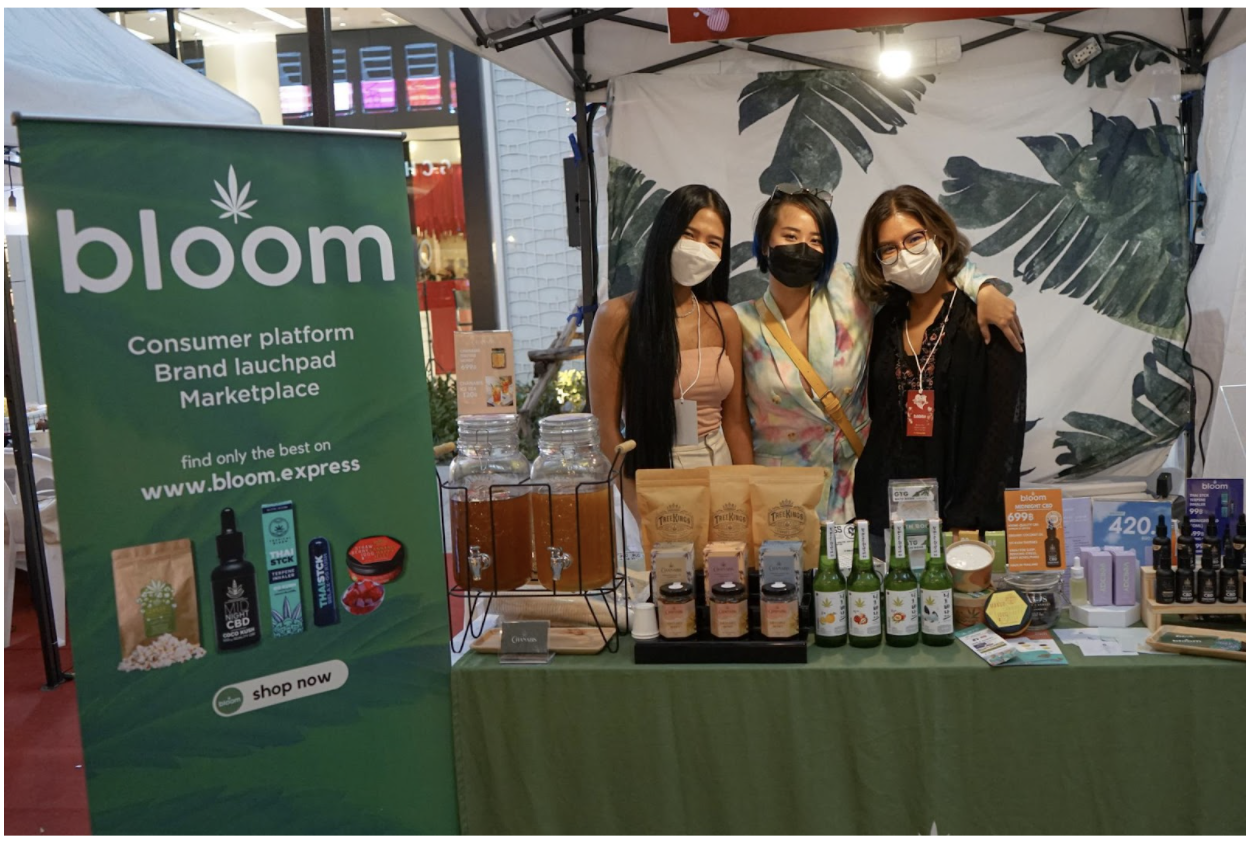
Bloom was conceived to solve one of the more significant issues in Thailand’s cannabis community: a portal to purchase quality, legal cannabis products. The Kingdom’s first “green rush” began in mid-2021, but most of the products were low-quality and gimmicky with poor branding.
“When we first started Bloom, it was even hard for us to find quality products to put on the website,” said John Williams, one of Bloom’s co-founders. “Quality companies were also having difficulty reaching the right audience.”

The company created its own line of cannabis products and established a network of trusted vendors. It offers a gateway for these qualified vendors while serving the community with quality products, education on its website, and answering questions at three to four events monthly.
“Bloom has been fortunate to have opportunities that align with Thailand’s health community,” explained Williams. “We participate in community markets, health-conscious events, concerts, and this week, we’re running a Q&A panel and workshop about women in cannabis.”
Thailand’s cannabis laws constantly evolve, but the rules are progressing towards full legalization over the last few years. With around 125 Thai local cannabis products that can be made in the Kingdom and certified easily, plenty of product options exist. The main issue is the FDA’s regulations for packaged items.
“Any store can buy cannabis leaves from a legal source and cook cannabis foods without a license,” Williams explained. “A series of new laws have been approved to allow THC in foods, too, which comes fully into effect around June. However, it must be under 0.2% total THC content.”
As a new company operating in Thailand, Bloom must be wary of the law. However, the company has forged strong connections with policymakers and receives inside information prior to most public announcements, allowing it to remain ahead of legislative changes.
Bloom also collaborates with other members of Thailand’s cannabis industry, including Golden Triangle Group, an industry leader for growth and extraction. The lead grower of this operation, Jamie Carrion, bred a nine-time Cannabis Cup-winning CBD strain, Cannatonic, into Thailand’s landrace strains to create the CBD-rich “Raksa” strain.
The company also focuses on forming collaborations with key industry players, cannabis influencers, politicians, doctors, clinics, celebrities and local law enforcement.
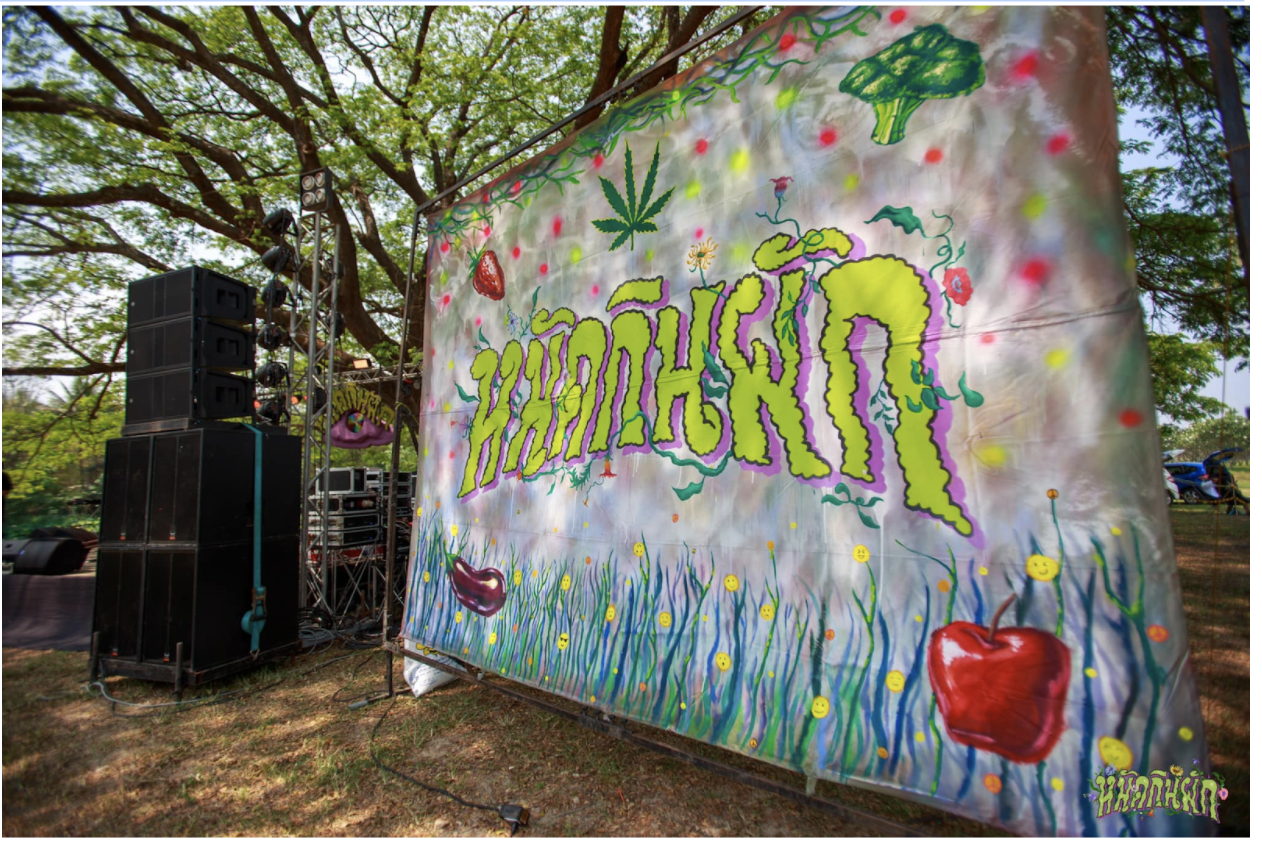
The word “Nudkinpuk” is a southern Thai language pronounced “Nud Kin Puk.” “Nud” translates to skilled; “Kin” means to eat; and “Puk” means vegetable. Together, these three words could be used to describe a group of people who are experts at eating vegetables.
“It started with my friend and co-founder, Beer,” explained Nuttawat Attasawat (Nut), one of Nudkinpuk’s co-founders. “We started by making a bong-cleaning product called ‘Blue Magic.’ We saw the separation in Thailand’s cannabis industry, an ongoing battle between high-quality and compressed marijuana.”
The idea behind the event was to clear the stress and problems within the cannabis community participating in the “Green Party House” in the Lat Phrao area. It grew into an event as friendships formed between the old and new generations.
“I thought about creating an atmosphere where cannabis lovers could celebrate and party together,” said Nut. “Breaking the walls from within the cannabis community was when the Nudkinpuk festival started gaining traction.”
The first event was held on the Chao Phraya cruise ship. This cruise represented those in the cannabis community who are in the same boat, encouraging members to set out together in search of friendship through weed. But the taboo nature of cannabis has caused issues while planning more events.
“The second Nudkinpuk was to take place near a forest’s edge,” Nut said. “However, between the COVID-19 situation and the fact that the Nudkinpuk festival is a marijuana-centered event, the property canceled two weeks before the event!”
As Thailand’s budding cannabis consumer market materializes, its cannabis community continues to push for full legalization. For now, these business operators must adhere to the Kingdom’s restrictions and societal prejudices while maintaining a watchful eye on the country’s evolving legislation.
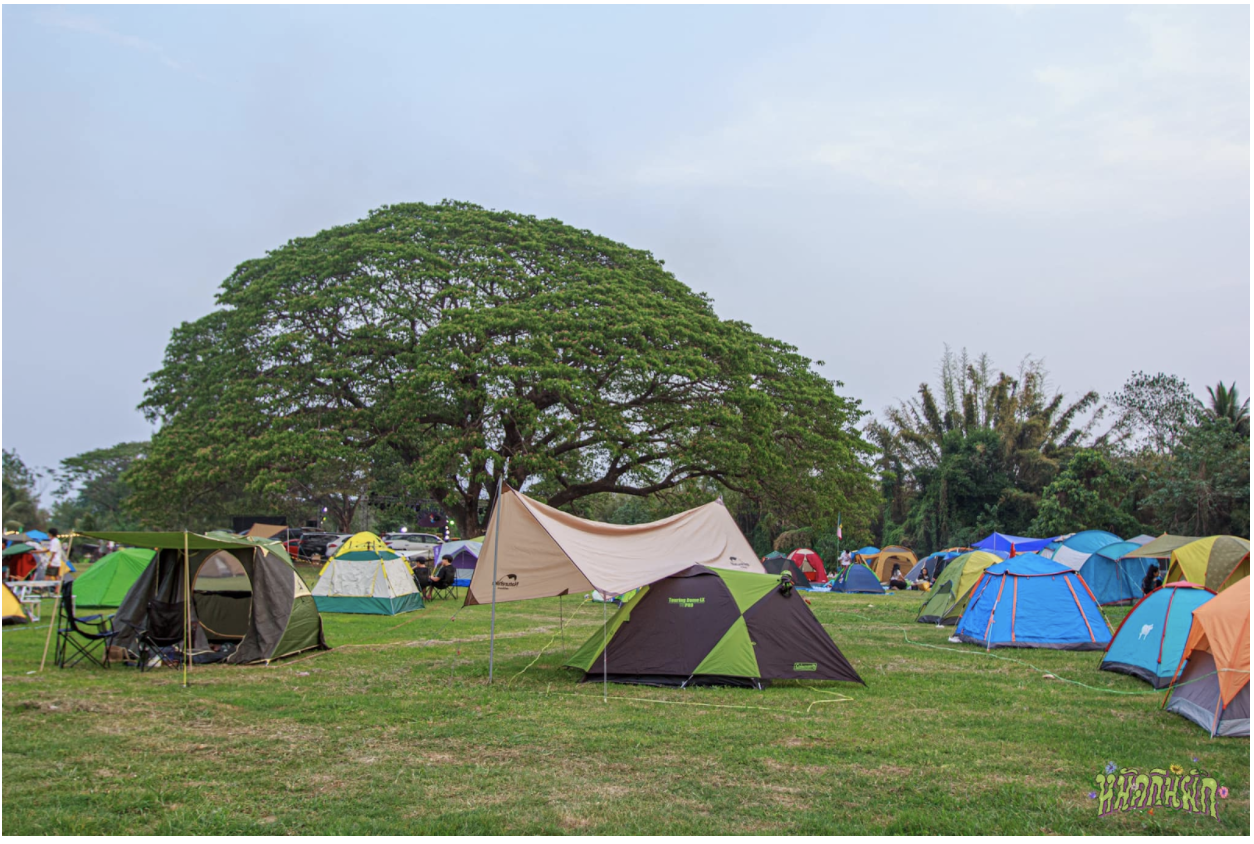
The festival was rescheduled, but permission wasn’t granted when Beer went to see a new location. Instead, they had to dilute the concept to focus more on the camping in nature aspect of the festival rather than the cannabis and bands.
“On the concert side, we selected bands that talk about cannabis with love, such as Srirajah Rockers, JUU4E, Pae Arak, Swisawaard, Jahdub Stido and Srirajah Sound System,” Nut explained. “We also include guest speakers at the event, allowing festival-goers to hear inspiration from people who use cannabis to drive their lives. Some speakers include Ko Dam Koh Tao, Guide Highland, Oof Green Party and Beer Sukhumweed Industries.”
More than 20 brands participated in these events as well most notably Bong Party, Nippan Nirvana, Blue Magic Something Else, Highland, Thailand Green Party, Channel Weed Thailand, Treekings OG, Green Mile, New Atlantis, Pisit Thai & China Tradition Clinic, Squidroll, OCB, OG Rolling Papers, Releaf Mint, King Kangaroo Kush, Mr. Herbman and others.
Nudkinpuk has had to overcome some legal hurdles. This mostly has to do with the taboo prohibition the Kingdom encourages.
“With the legal restrictions unclear, many people aren’t open to cannabis in Thailand yet,” explained Nut. “But the event isn’t directly affected because rather than focusing on cannabis literally, we use the symbolism of vegetables to represent marijuana. True marijuana lovers understand that the focus of this festival is to eat vegetables together.”
Like every active member of Thailand’s cannabis community, Nut and Beer would like to see the government become more open to hearing citizens’ opinions about the benefits of cannabis. They believe that the benefits in medicine, the local economy, and recreational consumption outweigh the prejudice from the older generation that banned weed outright in the Kingdom.
As legal cannabis makes more progress in Thailand, this unique community continues to expand as ganjapreneurs share and work together towards the change they desire.
The post Shining a Light on the Thailand Cannabis Community appeared first on High Times.
During a recent interview, Puerto Rico Sen. Joanne Rodríguez Veve (of the conservative Proyecto Dignidad) expressed her misgivings about the legalization of adult-use cannabis. As I have made clear before on this blog, Puerto Rico’s failure to fully legalize cannabis strikes me as dreadfully self-defeating. At a time when the island is in dire need of jobs and revenue, the economic opportunities presented by the cannabis industry are being swatted away by most of its governing class—for no good reason. Struck with disbelief, I am always curious to see how cannabis detractors justify their opposition to further legalization.
Rodríguez Veve is generally a sharp exponent of her ideas, but she was on shaky ground when discussing cannabis. (PSA: THC is not cannabis’ “party” component; it is an integral part of medical cannabis, with applications that help cancer and AIDS patients.) To her credit, though, the senator recognized that she needed to deepen her knowledge when it came to cannabis. She also mentioned that she plans to discuss a bill that has been introduced to legalize adult-use cannabis in Puerto Rico with its sponsor.
Yet when the interviewer suggested that Rodríguez Veve was “open to change,” the senator countered, “honestly … I do not see myself taking a position in support of marijuana legalization.” The senator powerfully advocates for her own ideas, but is clearly skeptical about the ability of others to sway her, at least on cannabis policy.
Rodríguez Veve used the term despenalización (decriminalization), but I purposely translated it as “legalization” to avoid confusion: The senator is open to decriminalizing cannabis use, which is what is commonly understood as decriminalization in the United States. As calls for legalization grow around the world, support for decriminalization-only has become a popular hedge for politicians, who presumably figure they will come off as having a sensible, middle-of-the-road position. No one should be in jail for smoking marijuana–but neither should there be stores openly selling it.
Subject to scrutiny, however, decriminalization-only is a vacuous and counterproductive approach. It does little to reduce cannabis consumption, but deprives society of tax revenues and job creation associated with said consumption. Moreover, a lack of legal avenues to procure cannabis keeps profits in the wrong hands, and prevents the state from engaging in constructive regulation geared to promote health and safety (such as ensuring cannabis products are properly labeled).
Rodríguez Veve stressed that it was important to study the experiences of places where adult-use cannabis has been legalized. Well, with more than a dozen U.S. states (and all of Canada) having legalized adult-use cannabis since 2012, there are plenty of examples to study. If Puerto Rican cannabis skeptics are going to deprive the island of growth opportunities, then they should make their case by pointing to the actual experiences of places like Washington State and California—not some dystopia that exists only in their imaginations.
And if the economic dimensions do not move Rodríguez Veve, she should consider if opposition to legalizing adult-use cannabis can be squared with her ardent support for personal freedom. The senator has energetically argued against what she perceives as unwarranted government intrusions into the lives of citizens, including vaccine mandates. Telling adults that they cannot use cannabis, even in the privacy of their homes, is a textbook example of the nanny state in action.
Rodríguez Veve’s comments are a timely reminder to proponents of legalization, in Puerto Rico and elsewhere, that there is still much work to be done educating key audiences on the facts about cannabis, highlighting the benefits of a legal industry, as backed up by the real-life examples. At the same time, policymakers should proactively avail themselves of the information necessary to think critically about legalization, at least if they want to take a stance on the issue.
The post Opposition to Cannabis in Puerto Rico: Uninformed appeared first on Harris Bricken Sliwoski LLP.
The New Jersey adult-use cannabis program is off to a halting start, with the launch of sales hamstrung by repeated delays.
Now a top lawmaker in the Garden State wants answers, and is working hard to get them through the work of a committee.
Nick Scutari, the president of the New Jersey State Senate, said Tuesday that he is forming a special legislative committee to look into why legal pot sales still haven’t begun in the state.
“These delays are totally unacceptable,” Scutari said in a statement. “We need to get the legal marijuana market up and running in New Jersey. This has become a failure to follow through on the public mandate and to meet the expectations for new businesses and consumers.”
In a press release, Scutari’s office said he wants “explanations on the repeated hold-ups in expanding medical dispensaries to sell recreational marijuana and in the opening of retail facilities for adult-use cannabis,” as well as to find out “what can be done to meet the demands and reduce the costs of medical marijuana.”
In 2020, New Jersey voters overwhelmingly approved an amendment to legalize recreational pot use for adults aged 21 and older. However, there has still not been anything put in place when it comes to actual movement on legalization.
Last year, Scutari helped author and pass legislation designed to implement the adult-use program.
But the new cannabis program has been beset by repeated delays since that bill was passed, including a missed deadline in September to begin accepting applications from would-be cannabis cultivators, manufacturers and testing labs.
Last month, after New Jersey regulators missed a deadline for recreational pot sales to begin, Democratic Governor Phil Murphy indicated that the launch was coming soon.
“If I had to predict, we are within weeks—I would hope in March—you would see implicit movement on the medical dispensaries, some of them being able to sell recreational,” Murphy said during an interview on a radio show. “They’ve got to prove they’ve got the supply for their medical customers. I hope shortly thereafter, the standalone recreational marijuana operators.”
But that plan hit a snag last week, when the New Jersey Cannabis Regulatory Commission declined to award licenses to eight medical cannabis dispensaries hoping to sell adult-use cannabis.
Jeff Brown, the executive director of the commission, said that the panel would like to receive additional information from those medicinal dispensaries regarding how they will have enough product to serve both sets of customers.
“We may not be 100% there today, but I assure you we will get there,” Brown said last week. “We have a few things to address and when we address them I’m happy to return to this body with a further update.”
In the meantime, Scutari wants to get to the bottom of the delays. His office said Tuesday that his plan is to “form a bi-partisan special committee” and then ask “the Assembly if they want to participate to make it a joint panel of legislators from both houses.”
“The oversight hearings will include an accounting from CRC officials and input from those operating cannabis businesses or waiting to get licensed, as well as others involved in the legal marijuana market,” the press release from Scutari’s office explained.
“The voters approved adult-use recreational marijuana in 2020 and the implementing legislation was enacted more than a year ago. The Cannabis Regulatory Commission missed its deadline for allowing [medical cannabis dispensaries] to sell to the recreational market. The licensing of growers, distributors and retailers to serve the adult-use market has been plagued with repeated delays. Senator Scutari said the committee’s membership and scheduling will be worked out soon.”
The post New Jersey Lawmaker Plans Hearings for Delays to Cannabis Launch appeared first on High Times.
A bill to legalize recreational pot-use for adults, and expand medical cannabis treatment to children, is going before a Tennessee legislative committee this week.
The legislation, known as the “Free All Cannabis for Tennesseans Act,” would authorize “the possession and transport of marijuana or marijuana concentrate, in permitted amounts, for adults who are at least 21 years of age (adults).”
The bill would also create a process for “a parent, guardian, or conservator to administer a marijuana product, excluding any combustible product, to a minor, over whom the parent, guardian, or conservator has legal authority.”
Under the terms of the bill, the state’s Department of Health would be required to provide an online form “that, upon execution by a parent, guardian, or conservator, after consultation with a healthcare practitioner, creates a rebuttable presumption that the minor has a medical condition for which the use of marijuana is treatment for any such condition.”
“My constituents are regularly asking why are we dragging our feet on this,” said state House Rep. Bob Freeman, a Democrat from Nashville who is one of the bill’s sponsors, as quoted by local news outlet WSMV.
If it were to become law, the bill would permit adults aged 21 and older to cultivate as many as 12 cannabis plants for personal use. According to local television station WZTV, “adults would be allowed to possess and carry under 60 grams of marijuana or 15 grams of marijuana concentrate,” and would be “allowed to transfer to one another no more than the same amount.”
It would also establish a framework for the state to set up a regulated adult-use cannabis market. According to the bill’s summary, pot sales would be “subject to the state and local sales and use tax, as well as an additional 15% marijuana tax,” while also enabling local governments to “impose a local sales tax on such sales, not to exceed 5% of the price of the products sold, of which proceeds shall be distributed identical to the existing local sales and use tax.”
The proceeds of the 15% sales tax would be allocated as follows: 50% to the state Department of Agriculture, which will implement and administer the adult-use program; 20% to the state Department of Safety, which would go toward “training and education of law enforcement agencies and officers with regard to state cannabis-related laws … the support of law enforcement officers injured in the line of duty … and the support of families of law enforcement officer killed in the line of duty”; 20% would go toward the State Employee Legacy Pension Stabilization Reserve Trust; five percent toward the state Department of Education “for education programs for elementary and secondary students regarding age restrictions for marijuana use and potential health and legal risks for improper or underage use of marijuana”; and another five percent to the state Department of Revenue “for administrative costs incurred pursuant to this Act, including collection and enforcement costs.”
“Let’s talk about the financial benefits this could have for our state. What could we fund differently? What could we fund better? We got the fiscal note back, and it’s hundreds of millions of dollars every year. States that have passed this before its billions of dollars in additional state revenue,” Freeman said, as quoted by WSMV.
It isn’t the only cannabis-related bill to be taken up by the Tennessee legislature this year.
In January, a pair of lawmakers in the state introduced legislation that would direct counties in Tennessee to essentially conduct a public opinion poll on this year’s general election ballot that would gauge voters’ support for both recreational and medical cannabis.
The post Tennessee Lawmakers Consider Cannabis Legalization Bill appeared first on High Times.
If the quandaries of figuring out how to legally certify a cannabis market in both the U.S. and Canada have been filled with drama, the issues in Europe are going to be hardly less daunting.
In Germany right now, the entire debate is essentially being put in deep freeze with various excuses, including the ongoing pandemic, if not the war in Ukraine, despite the ongoing chatter about its inevitability.
Right across the Schengen border, the Dutch, the inventors of the eponymous coffeeshop, are now going through their own “growing” pains when it comes to creating a legal, certified, national market.
The coffeeshops that operate in the largest cities will still have their own uncertified cultivation. However, with the exception of these stores, the Dutch government established a national cultivation bid to supply ten cities with regulated cannabis. This is a trial program, which will also be studied to see how this entire idea works as well as its impact on the general population — including its ability to keep cannabis out of the hands of children and teenagers.
The trial is expected to kick off next year. At that point, the cannabis grown under the trial will be shipped to these establishments and every coffeeshop that is located in a municipality which is participating will be obligated to buy their cannabis from the government-certified program. If they do not, they will lose their permit. This does not mean that the coffeeshops will be limited to just one cultivator.
Ten growers, who won the right to participate in a cultivation bid, will supply this market — although at this point there are only seven who have qualified to do so. Growers must prove that they do not have a “criminal” past, and that they can secure their cultivation facilities.
The standardization of the weed biz however does not make the owners of coffeeshops in these locations very enthusiastic. Many people doubt that the cannabis they will get from these cultivators is up to the quality that they previously produced — and will almost certainly limit the selection of the cannabis on offer.
That issue has not been taken into consideration by the government. When the trial begins, coffeeshops in these municipalities will only have six weeks to sell through the self-cultivated cannabis they might have. Then they will be required to purchase from the government program.
Many shop owners wish that they were given more choice. Indeed, many are suggesting that there is a voluntary opt in rather than a mandatory requirement.
The Dutch government, however, is not giving them that option.
For that reason, many coffeeshops fear that they will then lose customers to the existing black market.
The Dutch government initiated a national trial program to attempt to control the entire supply chain of cannabis for recreational purposes in late 2019. Since then, a legal tender was created to select the cultivators allowed to grow such cannabis.
The trial program is intended to last for four years.
The process has been, rather predictably, frustrated with multiple delays including NIMBY protests from municipalities who objected to such cultivation taking place in their districts and even a slap suit by a large Canadian producer.
During the experiment, researchers will monitor the entire process. Based on the results of the trial, the government will then decide how to effectively implement policy for the long term.
Presently Dutch coffeeshops grow their own cannabis, and as a result, the entire process exists in a grey area of the law. This will not come to an end once the national trial starts. Establishments in the larger cities will still grow their own.
This trial is also set against a backdrop of increasing pressure on the existing coffeeshops, which includes perennial threats from government authorities to ban tourists from being able to drop into such establishments.
There is a great deal of attention on how the Dutch trial will proceed outside of Holland. This is particularly true in Germany which is now wrestling with how to make its own recreational system function. While Germany is not likely to allow establishments like coffeeshops to operate, at least at first, they are likely to set up a similar system of controlled cultivation — if they do not mandate that the original three medical growers are the initial providers of the same.
Regardless, it is clear that Europe is on the cusp of finally coming to terms with the fact that cannabis is not going to disappear.
Now the question is how to create a regulated, legal market that can protect consumers and bring in much needed tax income.
The Dutch, as usual, are in the forefront of this discussion.
The post Dutch Coffeeshops Doubt Quality and Success of Pending National Cannabis Trial appeared first on High Times.
An activist group based in Michigan has received the go-ahead from state election officials to start gathering signatures for a psychedelic legalization initiative to make it onto this year’s ballot.
The group, known as Decriminalize Nature Michigan, said on Monday that the state’s Board of Canvassers “certified that the Michigan Initiative for Community Healing could begin collecting the required 340,047 signatures needed by June 1st to qualify for the November ballot.”
According to a press release from the group, the initiative “would decriminalize the possession and cultivation of ‘Natural plants and mushrooms’, reduce penalties for controlled substances that currently include life sentences and lifetime probation, and create pathways for religious organizations and hospitals to develop psychedelic assisted mental health and ceremonial services.”
Julie Barron, co-director of Decrim Nature Michigan, said in the press release that psychedelic assisted therapy offers a “rare ray of hope for people who have been suffering.”
Along with both the national and Michigan-based chapters of Decriminalize Nature, the coalition behind the initiative also includes People for Healthy Choices Michigan (PFHC) and Students for Sensible Drug Policy (SSDP).
“Young people across the country have been calling on our elected officials for safe and sensible drug policies to be implemented for decades,” said Kat Ebert, an SSDP board member. “This is an opportunity for the people of Michigan to make history by coming together to pass policy that’s centered around compassion instead of criminalization.”
The activists submitted the proposed initiative to Michigan ballot officials last month. If the initiative were to be ultimately approved by voters in November, it “would decriminalize personal use, possession and growth of psychoactive substances for adults 18 and reduce penalties for all controlled substance use and possession in Michigan,” while also permitting “religious organizations and entities designated by hospitals certified by the state health department to produce and sell entheogenic plants,” according to MLive.com.
Myc Williams, the other co-director of Decriminalize Nature Michigan, said at the time that initiative amounts to “true decriminalization.”
The initiative also includes a host of other drug reforms, including the removal of test equipment from what the state defines as “drug paraphernalia.”
Williams said that people in Michigan “who choose to use drugs can be charged with another crime to test their substance.”
“In a time of heavy fentanyl overdoses, it’s really important for people who do use drugs to know what they’re consuming regardless of their legality from a public safety perspective,” Williams said then. “The state supports harm reduction in the distribution of Narcan and fentanyl strips, which fentanyl strips are technically illegal. There’s a contradiction there and we’re just clearing it up.”
After a decade in which dozens of states and cities ended their prohibition on recreational pot use, psychedelics are emerging as the new frontier in the legalization movement, with lawmakers and policymakers increasingly open to their potential therapeutic value.
This month in Connecticut, lawmakers pushed forward a bill that would devote $3 million for psychedelic-assisted therapy research in the state.
Although it would not legalize psychedelics, it would establish a program through which qualifying patients could receive MDMA-assisted or psilocybin-assisted therapy from the state Department of Mental Health and Addiction Services.
The legislation would also establish a regulatory panel that would offer recommendations regarding the “design and development of the regulations and infrastructure necessary to safely allow for therapeutic access to psychedelic-assisted therapy upon the legalization of MDMA, psilocybin and any other psychedelic compounds.”
The post Michigan Group Launches Petition Drive For Psychedelic Legalization appeared first on High Times.
Data reveal a concerning increase in violent crime in many U.S. cities during COVID in 2020 and 2021. Increasingly, cannabis businesses, particularly dispensaries, are targets for robbery or other criminal activity.
The reason that cannabis businesses are being hit particularly hard is not hard to fathom. Federal law still treats cannabis as a Schedule I narcotic, which means businesses have limited access to banking. Much of the industry still runs on cash, making it a target for theft of cash as well as product.
Cannabis business owners should be concerned with legally protecting their businesses under these circumstances. This includes both steps to prevent or mitigate the risks of criminal acts as well as protections in the event that a crime does occur.
In addition to the direct risks that come to a business from crime, such as loss of cash and inventory, criminal activity can drive away customers, as well as potentially subject business owners to liability. The law in every state allows property owners to be held liable if their negligence causes damages to people on the premises.
In most states, business owners owe an affirmative duty to customers to inspect the premises for dangerous conditions and to make necessary repairs, safeguards, or warnings to protect against harm. Dangerous conditions can include lighting that’s burned out or missing, malfunctioning security equipment, blind spots, or ongoing nuisance activity on the premises such as loitering or trespassing.
As far as the steps to take before a crime happens, ironically, one advantage that cannabis businesses have in operating in a heavily-regulated industry is that many precautions against criminal activity, such as premises access control, video surveillance, and storage of product in a safe, are often already mandated by state regulations.
Further steps however are called for to protect businesses, customers, and employees. As noted above, dangerous physical conditions on the property raise the potential for liability and should be regularly inspected for. Arrangements for proper storage of cash in a drop safe and regular pickups of cash deposits should be made. A policy should be in place for employees to conduct inspections on a regular basis and to promptly document and report any observed potential hazards.
Employees should also receive specific training in proper cash handling, loss prevention and robbery response from qualified security or law enforcement professionals. Documentation of and compliance with sound company policy helps protect the business owner in the event of a future incident.
Unfortunately, the reality is that no matter how many precautions a business takes, there’s no way to prevent every crime that can happen at a business. Cannabis business owners therefore need to take steps to protect their business for when a crime does occur. Both commercial property and liability insurance are available to manage the risk and exposure to cannabis business owners.
On that point, it’s important to understand what insurance does and doesn’t cover, as well as what coverage requires. For example:
Generally, claims for employee injuries (including from criminal activity) are covered by worker’s compensation insurance under the law of each state, which prevents employees from suing their employers directly. However, employers can still face liability for employee injuries in certain circumstances, such as under so-called “third-party-over” claims in which an injured employee sues a non-employer, who then in turn sues the employer.
Worker’s compensation insurance generally includes so-called “stop gap” coverage in these circumstances, but in states that have a state monopoly on worker’s compensation insurance (Ohio, North Dakota, Washington, and Wyoming), stop gap coverage has to be purchased separately (usually as an additional coverage to a general liability insurance policy). Coverage also requires that business owners promptly notify their insurers in the event of a claim, and that they cooperate with the insurer in investigating the claim.
The important takeaway is that protection from criminal activity and its consequences is something a cannabis business needs to think about before it happens. Consulting with an experienced attorney in this area before an incident occurs can save a lot of trouble and expense down the road.
The post Protect Your Cannabis Business from Crime Risks appeared first on Harris Bricken Sliwoski LLP.
April 1 is Rec Day One in New Mexico. Where's the nearest store? We've got all 118 listed here.
The post How to find New Mexico’s adult-use marijuana stores appeared first on Leafly.
Lawmakers in Louisiana are considering a bill that could put minors behind bars for possessing even small amounts of pot, less than a year after the state enacted legislation to end jail time for low-level cannabis possession convictions. The measure, House Bill 700, was introduced in the Louisiana House of Representatives by Republican state Representative Larry Bagley on March 4 and approved by a legislative committee last week.
Last year, the Louisiana legislature passed House Bill 652, a bill to decriminalize possession of small amounts of cannabis. The bill was passed in June and went into effect in August, ending the possibility of jail time for possessing less than 14 grams of weed. The legislation was hailed by cannabis reform advocates including Peter Robins-Brown, policy and advocacy director at Louisiana Progress, a partnership between the Coalition for Louisiana Progress and Louisiana Progress Action Fund.
“Marijuana decriminalization will truly make a difference in the lives of the people of our state,” Robins-Brown said after the decriminalization bill was passed last year. “It’s an important first step in modernizing marijuana policy in Louisiana, and it’s another milestone in the ongoing effort to address our incarceration crisis, which has trapped so many people in a cycle of poverty and prison. Now it’s time to make sure that everyone knows their rights under this new law, and that law enforcement officers understand how to properly implement it.”
But now some of that progress is in jeopardy from Bagley’s bill, which would once again put jail time on the table for minors caught possessing small amounts of cannabis. The legislation would amend Louisiana’s decriminalization bill to resurrect jail time as a possible sentence for weed possession by young people, but would not affect the penalties imposed on adults convicted of the same offense.
Under HB 700, people under 18 caught with less than 14 grams of cannabis can be placed on probation or “imprisoned for not more than fifteen days” on the first conviction, according to the text of the legislation. For cases involving amounts of cannabis greater than 14 grams, a first conviction can put a kid behind bars for up to six months.
The penalties become more severe upon subsequent convictions. A minor’s second conviction for possessing up to 14 grams of cannabis can result in six months in jail. A third and fourth conviction subjects children to sentences of two and four years imprisonment, respectively, “with or without hard labor,” for possessing less than a half-ounce of weed.
Bagley has said that HB 700 is needed because schools in the state are having trouble keeping cannabis off of school grounds, according to the Louisiana Illuminator. He said that prosecutors have no way to force children into drug rehabilitation programs without the threat of incarceration and that judges are unlikely to incarcerate a minor for possession of small amounts of pot.
“It was presented like this bill is about trying to put people in prison. It’s not,” Bagley said.
But Robins-Brown, who is now the executive director of Louisiana Progress, said that school disciplinary action including suspension, expulsion or exclusion from athletics and other activities is a more appropriate way to address the problem.
“We don’t think we should be criminalizing youth more harshly than adults,” Robins-Brown said.
Megan Garvey with the Louisiana Association for Criminal Defense Lawyers noted that other options exist to compel minors into drug treatment. Under state law, family court judges can mandate parents or guardians place their children in treatment programs.
But the bill is receiving bipartisan support from lawmakers. State Representative Nicholas Muscarello voted in favor of HB 700 in committee despite generally supporting laws relaxing cannabis prohibition.
“We are trying to rehabilitate children. This allows our courts to kind of keep them in check and put them in drug courts,” said Muscarello. “No judge is putting a kid in jail for six months for marijuana.”
Although he also voted for the bill in committee, Republican state Representative Danny McCormick expressed concerns about HB 700’s revival of jail time for kids caught with weed. He questioned why the penalties were more severe than laws prohibiting possession of alcohol or tobacco by young people. Under Louisiana law, people under 21 can be fined up to $100 and lose their driver’s license for up to six months for possessing alcohol, while minors possessing cigarettes can be fined $50.
“Alcohol, in my opinion, would be greatly more harmful than marijuana,” McCormick said.
Last week, the House Committee on the Administration of Criminal Justice approved HB 700 after amending the measure to include exceptions for minors who are registered medical cannabis patients possessing regulated cannabis products. On Monday, the bill was scheduled for a floor debate by the full Lousiana House of Representatives to be held on April 5.
The post Louisiana Mulls Locking Up Kids For Weed Again appeared first on High Times.
New York unveiled a pioneering new plan earlier this month as it prepares to launch its new adult-use cannabis program later this year, with the first round of retail licenses reserved for individuals previously convicted of a pot-related charge, or who have relatives with a cannabis conviction.
But while many social justice advocates applauded the measure, a majority of the state’s voters are not on board.
A poll out this week from Siena College found that 54 percent of voters in the Empire State “oppose ensuring that early licenses for marijuana retail stores go to those previously convicted of marijuana-related crimes, or their family members.” Only 33 percent are in favor of the proposal.
The opposition is most pronounced among New York Republicans, 72 percent of whom told the pollsters that they are against the idea. Only 19 percent of Republicans said they back it.
Among Democrats, the proposal produced a near-even split: 45 percent said they support the idea, while 43 percent oppose. A majority of New York state independents, 55 percent, also said they are against the proposal.
“Giving first dibs on marijuana licenses to those previously convicted divides Democrats and New York City voters. Strong majorities of Republicans, independents, voters outside New York City, and white voters give it a thumbs down,” Siena College pollster Steven Greenberg said in the survey’s analysis. “Latino voters support it by 12 points and Black voters by 11 points.”
New York Gov. Kathy Hochul, a Democrat, announced the “the first-in-the-nation Seeding Opportunity Initiative” earlier this month, which her office said would ensure “an early investment into communities most impacted by the disproportionate enforcement of cannabis prohibition.”
Under the initiative, the first 100-200 licenses for adult-use pot dispensaries would be awarded to either an individual previously convicted of a weed-related offense, or a parent, guardian, child, spouse or dependent of an individual with a pot conviction.
“New York State is making history, launching a first-of-its-kind approach to the cannabis industry that takes a major step forward in righting the wrongs of the past,” Hochul said in a statement at the time. “The regulations advanced by the Cannabis Control Board today will prioritize local farmers and entrepreneurs, creating jobs and opportunity for communities that have been left out and left behind. I’m proud New York will be a national model for the safe, equitable and inclusive industry we are now building.”
In the announcement earlier this month, Hochul’s office said the initiative would be comprised of three different programs: the Equity Owners Lead Program, which will provide “a Conditional Adult-Use Retail Dispensary License to eligible equity-entrepreneur applicants, putting them at the front-end of the adult-use market”; the Farmers First Program, which provides “an Adult-Use Conditional Cultivator License to eligible New York cannabinoid hemp farmers, giving them the first chance to grow cannabis for New York’s adult-use market”; and the New York Social Equity Cannabis Investment Program, a $200 million program proposed in Hochul’s budget that would “make funding available for equity entrepreneurs at the forefront of the adult-use cannabis market.”
Hochul, who took over as New York governor following the resignation of Andrew Cuomo in August, has made it a priority to jumpstart the state’s recreational cannabis program. In September, she completed appointments to the state’s Office of Cannabis Management shortly after taking office.
The state expects recreational pot sales to begin by the end of the year, and all signs are pointing to a lucrative industry. According to a budget projection from Hochul’s office in January, New York expects to collect $1.25 billion in tax revenue from recreational pot sales over the next six years.
The post Most NYers Oppose Giving First Dispensary Licenses To Those With Pot Convictions appeared first on High Times.
Looking for the best dispensaries in Toronto? Leafly List shows you our highest-rated cannabis shops in Toronto according to reviews by people on Leafly.ca.
The post Best rated dispensaries in Toronto appeared first on Leafly.
New Jersey regulators last week declined to award retail cannabis licenses to eight medical dispensaries seeking to sell adult-use cannabis, delaying the expected launch of recreational pot sales in the state for at least weeks. The delay, which reportedly surprised cannabis industry insiders, came less than a month after New Jersey Gov. Phil Murphy said that recreational sales were expected to begin “within weeks.”
At a meeting of the state’s Cannabis Regulatory Commission (CRC) on Thursday, executive director Jeff Brown said that the agency wants the eight alternative treatment centers (ATCs), as medical cannabis dispensaries are called in New Jersey, to submit plans specifying how the businesses will ensure there is enough cannabis for patients when recreational sales begin.
“We may not be 100% there today, but I assure you we will get there,” Brown said on March 24, as quoted by NJ.com. “We have a few things to address and when we address them I’m happy to return to this body with a further update.”
The commission then voted 5-0 to table the recreational sales licenses for the eight businesses until a later date.
Brown said that the commission is concerned that the dispensaries will not have enough cannabis for medical patients, estimating that the market could be short up to 100,000 pounds of cannabis to meet the needs of both recreational customers and patients. Brown added that the CRC would conduct site visits to the applicants to make sure that they will be able to handle the new influx of customers, noting the commission wanted the businesses to have separate entrances and service lines for patients and recreational customers.
“Our goal is to work with the industry and the industry to work with us so at the very next CRC meeting we have a cohort of ATCs that are turn-key to launch this market here, simply pending a vote by this commission,” Brown said. “If for any that are still not there, hopefully [they’ll be] ready for conditional approval pending certain timelines and regulatory milestones that we can work to get done.”
Senate President Nicholas Scutari, who led the drive to legalize medical and recreational cannabis in the New Jersey legislature, expressed frustration after the CRC announced the delay.
“Totally unacceptable,” Scutari wrote in a text message to NJ Advance Media. “The Senate is weighing its options with regard to oversight.”
Representatives of the state’s cannabis industry were also displeased by the setback. The New Jersey Cannabis Trade Association said in a statement that it “remains optimistic that the CRC will sooner rather than later open the adult-use cannabis market in New Jersey, though we admit to being disappointed with today’s decision to further continue its delay.”
“In November 2020, New Jerseyans made it very clear that they wanted a safe and legal adult-use cannabis marketplace in the state,” the trade group added. “It goes without saying that no one could have foreseen that some 16 months later, we would still be waiting to see this come to fruition.”
The CRC did, however, approve conditional licenses for 68 adult-use cannabis cultivators and manufacturers. The licenses, which were approved as a social equity measure, are designed to ensure a path into New Jersey’s recreational cannabis market for small businesses.
“This is a historic action that the Board is proposed to take with these first conditional licenses to sell adult-use recreational cannabis in the state of New Jersey,” Brown said before the board voted to approve the conditional licenses. “I am humbled to make this announcement.”
“These are the first businesses to get a foot forward in the state of New Jersey,” he added. “I cannot stress that enough.”
Last month, after the CRC failed to meet a self-imposed deadline to launch recreational cannabis sales, Murphy said that he expected the delay would be short-lived.
“If I had to predict, we are within weeks—I would hope in March—you would see implicit movement on the medical dispensaries, some of them being able to sell recreational,” Murphy said last month on his WBGO Newark radio show. “They’ve got to prove they’ve got the supply for their medical customers. I hope shortly thereafter, the standalone recreational marijuana operators.”
After the CRC announced its most recent delay of adult-use sales last week, Murphy reiterated that recreational cannabis sales would begin imminently.
“The way this is supposed to work, and it is working this way: If a medical dispensary can prove it has more than enough supply for its medical customers, it’s at least eligible,” Murphy said.
“Assuming it meets all the other requirements, it should be deemed eligible,” the governor added. “I believe it will still be a matter of weeks. It’s not gonna be months.”
The CRC did not indicate how long the latest delay would last, although the agency posted a notice of a special meeting scheduled for April 11.
The post New Jersey Regulators Delay Launch of Recreational Pot Sales appeared first on High Times.
