Sunday, July 31, 2022

Canna Law Blog Cited by U.S. Senators in Letter to the Attorney General

Last week, we discovered that U.S. Senators Elizabeth Warren and Cory Booker cited our own Vince Sliwoski in a letter to Merrick Garland, the U.S. Attorney General, pressing for the end of cannabis prohibition. The Warren-Booker letter, dated October 6, 2021, advocates for DEA to remove cannabis from the federal Controlled Substances Act— which would decriminalize the plant at the federal level. The letter cites a 2018 blog post by Vince discussing international developments with cannabis at the United Nations level. Readers, we feel heard!

Warren has written a few of these high-profile letters on cannabis over the years, going back to 2016. Back then, her goal was re-scheduling “marijuana”, from Schedule I to Schedule II under the federal Controlled Substances Act. Vince critiqued Warren’s proposal at the time, explaining why rescheduling would have minimal effect and why descheduling is the far better course. Was Warren listening? We’d like to think so.

This more recent Warren/Booker letter does take the recommended course, and is a great example of how high-profile politicians have evolved on cannabis policy over the past half-decade. The best news of all is that Warren, Booker and others continue to press. Most recently, Warren signed onto yet another letter with several others, again addressed to Garland–and President Biden, and HHS Secretary Xavier Becerra–pressing for cannabis descheduling along with pardons. We’re pretty skeptical any of that is happening anytime soon. That said, relentless advocacy is critical.

We should also note that the Warren-Booker letter is not the first time our cannabis business lawyers have had the U.S. Government’s ear on cannabis. In 2019, our law firm was hired by the National Credit Union Association (NCUA) to help write guidance for federally chartered credit unions serving the hemp industry. Vince and our practice group chair, Hilary Bricken, flew to D.C. to advise NCUA during the process. Vince also has advised the Office of U.S. Congressman Earl Blumenauer on federal cannabis law and policy going back to 2017.

We have been publishing the Canna Law Blog daily for over a decade. In that time, our cannabis business lawyers have established the gold standard for analysis on cannabis law and policy. It is gratifying to be cited and even hired at the highest levels of government. We will keep pushing to advance the cannabis industry, including at the highest levels. Please reach out if you think we can help.

The post Canna Law Blog Cited by U.S. Senators in Letter to the Attorney General appeared first on Harris Bricken Sliwoski LLP.


from Canna Law Blog™ https://ift.tt/fvPXn0t
via IFTTT

Saturday, July 30, 2022

Cannabis Litigation: What is “Alter Ego” liability?

When going into business—whether cannabis or otherwise— the first step is to create a business entity. (This seems obvious but still eludes many in the cannabis industry.) One of the principal purposes of establishing a business entity to limit the personal liability exposure of the founders. Typically, the business entity itself and not the investors, owners, or managers of the entity, is liable for the debts of the business in nearly all circumstances. One exception is the alter ego theory of liability.

The alter ego theory of liability attempts to reach pockets beyond the putatively liable business entity. Doing so is known at piercing the corporate veil. The alter ego theory of liability is not limited just to piercing a company to reach into the pockets of the owners. It may also be used to reach into other entities. And veil piercing may be accomplished in few different ways.

  • Vertical piercing refers to piercing the veil between a subsidiary and its parent to hold the parent company liable.
  • Horizontal piercing refers to using the alter ego theory of liability to hold sister company’s liable.
  • Reverse piercing refers to using the alter ego theory of liability to hold a company liable for the conduct of its owners.

A recently filed Oregon cannabis case demonstrates uses of the alter ego theory in its traditional and horizontal forms. The plaintiff is a well-known purveyor of cannabis candies, licensed by the OLCC. The plaintiff markets its candies to licensed marijuana dispensaries throughout Oregon. The dispensaries sell the candies to their customers. Since 2019, plaintiff has done business with a set of dispensaries that operate under the same brand and have the same or substantially the same owners. (In other words, this brand operates numerous dispensaries throughout Oregon which have the same owners.) Each dispensary operates is its own entity. But each is under the common control of the same two individuals.

According to the complaint, defendants failed to pay for approximately $390,000 of cannabis candies. The candies allegedly were delivered by plaintiff to the various defendants, who accepted the candies without complaint and sold them to retail customers. After demanding and not receiving payment, plaintiff filed suit against more than 20 companies and their two principals. In the absence of an alter ego theory of liability, each defendant is liable only for the candies for which it did not pay. So the plaintiff’s recovery for each dispensary is limited.

But the plaintiff pleaded a traditional and horizontal claim for alter ego liability. In other words, plaintiff seeks to hold each defendant—all of the dispensaries and the two owners—liable for the candies purchased by the other. A claim for alter ego liability is not typically available to an aggrieved party. A claim for alter ego liability is also not available just because the same individuals own multiple companies. Similarly, a claim for alter ego liability is not available just because all of the companies all operate under the same brand or operate in the same industry.

So in what circumstances can a plaintiff allege a claim for alter ego liability?

Well, the specifics differ from state to state. But generally, for the horizontal alter ego theory, a plaintiff needs to allege that the defendants had common supervision, control, management and unity of interest. For all theories, a plaintiff usually must allege the defendants failed to follow corporate formalities. That’s a way of saying that the owners/companies did not act as though the companies were separate entities or separate from themselves. This conduct may include failing to hold board meetings, comingling business and personal monies, or comingling between companies earnings, expenses, and losses. It may also include owners treating company accounts as mere “piggy banks” rather than properly issuing dividends or distributions. Other factors may include insufficient capitalization, insolvency at the time of the transaction in question, siphoning funds by one or more owners, the absence of corporate records, or non-functioning officers or directors.

As the name suggests, the “alter ego” theory of liability ultimately concerns whether the members or shareholders have treated the corporate entity as a “mere instrumentality” or “alter ego” of themselves. Typically the bar to pierce the veil is high, and a court’s use of its equitable powers is exercised only when there is clear evidence that those in control of a company have used the corporation for improper means such as fraud.

Keep in mind that a plaintiff must have a reasonable good faith belief that its allegations are true. Oftentimes a plaintiff does not have enough information to allege a claim for alter ego theory liability. But where a plaintiff does have such information, a claim for alter ego liability is a powerful one. It allows the plaintiff to reach past the ordinary limitations of liability into the pockets of shareholders, members, or sister or parent companies.

For more and related information, see:

The post Cannabis Litigation: What is “Alter Ego” liability? appeared first on Harris Bricken Sliwoski LLP.


from Canna Law Blog™ https://ift.tt/6WbLfPF
via IFTTT

Friday, July 29, 2022

Poll States 28% of Americans Have Tried At Least One Psychedelic Substance

The poll asked 1,000 adults to answer questions online between July 22-25, which revealed that 28% of Americans have used at least one of the seven psychedelic drugs included in the questionnaire. In order of most used to least used, the list of substances included LSD (14% of participants), psilocybin (13%), MDMA (9%), ketamine (6%), DMT (6%), and salvia (5%).

The poll notes that psychedelic acceptance is increasing, and more legislation is being proposed. “Recent shifts, both in policy and public opinion, suggest the tide in the United States may be turning toward increasingly favoring psychedelic drugs,” YouGov states. “In the past few years, a number of cities across the U.S., such as Oakland, California, have decriminalized psilocybin, also known as psychedelic mushrooms. This November, Coloradans will vote on whether to legalize the drug state-wide, and by January 2023, Oregon is expected to begin allowing its use for mental-health treatment in supervised settings.”

According to the poll, 42% percent of those who have tried psychedelics at least once have a family income of $100,000 or more, while only 34% have an income of $50,000 to $100,000, and 23% reported having an income of $50,000 or less. Forty-two percent also said they had earned a postgraduate degree, with 26% having graduated with an undergraduate degree, and 24% who have a high school degree or less.

In terms of age, 39% of participants who have tried psychedelics range between 30-44 years old, whereas 35% range between 18-29 years of age, and only 14% were over 65. Thirty-four percent of participants who have tried a substance identified as men, while 22% identified as women.

Regionally, the pattern of acceptance follows areas that have enacted psychedelics-related legislation. Thirty-seven percent of participants who have tried substances live in the western United States, with 34% in the Northeast, 23% in the South (other regions were not specified). Those who have experimented with psychedelics often live in cities (36%), compared to those who live in suburbs (26%), and rural areas (19%).

Other categories of definition explored people from different religions, those who live in other regions of the country, age, and other identifiers such as “very conservative,” “conservative” or “liberal.” The poll data shows that those who are liberal, which is defined by the 52% of participants, said that they have tried at least one psychedelic drug.

However, many of the participants still showed opposition to decriminalizing of some of these substances. Forty-four percent oppose decriminalization of psilocybin, 53% oppose decriminalizing LSD, and 53% oppose MDMA decriminalization. Overall, those who have tried one of these substances are more likely to agree that it should be decriminalized. “And while support for legalizing psychedelic drugs is relatively low among Americans overall, it’s much higher among people who have personal experiences with the substances—especially in the case of people who have used mushrooms.”

Those who have tried these substances also expressed support for medical initiatives that promote psychedelics as a medical treatment. “Recently proposed bipartisan amendments to the annual National Defense Authorization Act, suggested by Reps. Dan Crenshaw and Alexandria Ocasio-Cortez, relax federal restrictions on research into psychedelic-assisted post-traumatic stress disorder (PTSD) treatment for veterans,” YouGov wrote. When participants were asked about their support of research such as that initiative, 54% said they supported it and 18% said they were opposed. Sixty-three percent of those who hold a college degree supported research efforts for at least one psychedelic drug, but 49% of those without a college degree also support research. Sixty percent of participants who aligned as Democrat said they were more likely to favor psychedelic research, versus 54% of Independents and 45% of Republicans.

The post Poll States 28% of Americans Have Tried At Least One Psychedelic Substance appeared first on High Times.


from News – High Times https://ift.tt/sTQMhRI
via IFTTT

Denver Weed Delivery Services Face Mile-High Challenges

When city officials in Denver, Colorado authorized home delivery of cannabis products in April of last year, licenses for cannabis delivery services were reserved for social equity businesses for a period of three years. Under the plan, delivery services owned by entrepreneurs who have been negatively impacted by the War on Drugs would partner with the city’s licensed marijuana dispensaries to complete customer deliveries.

The goal of the plan was to help create a diverse cannabis industry in the city while giving people who had been harmed by marijuana prohibition policies a path to business ownership in the regulated market. To qualify, owners or a family member had to have an arrest or conviction for a marijuana offense, or applicants had to meet certain residency requirements. But more than a year into the program, the social equity cannabis delivery service business owners in Denver are facing challenges that threaten the viability of their enterprises.

The business owners and regulators cite high licensing costs, a saturated cannabis market and a lack of support from retailers as some of the barriers to success in the industry. Of the 206 licensed cannabis dispensaries in Denver, only nine have opted to partner with a social equity business to provide delivery service for their customers. Molly Duplechian, the executive director of the Denver Department of Excise and Licenses, said that many dispensaries might be waiting for the three-year exclusivity period for social equity delivery services to expire before launching their own home delivery programs.

“What we’ve heard is that some of the existing industry may have been waiting the exclusivity period out, or they could have been investing in a social equity transporter and then planning to move to do their own delivery in two years,” Duplechian told local media.

The High Cost of Getting People High

Some retailers cite the high permitting fees associated with launching home delivery services while others note steep delivery fees and difficulties updating existing software for placing orders to integrate with the delivery partners’ operations. Others say with so many weed shops in town, most customers would rather shop in person than pay extra to have it delivered. Whatever the reason, the challenges have become unsurmountable for some delivery business owners.

In August 2021, the marijuana delivery service Dooba made news when it became the first company to deliver cannabis in Denver legally. Ari Cohen, the owner of the business, qualified as a social equity applicant because of a past marijuana conviction. But less than a year after the initial headline-grabbing delivery, Cohen’s business is faltering and he is shutting Dooba down.

“About a month before licenses were due for renewal, we decided not to go forward,” Cohen told Westword. “There were significant costs associated with it, and we’ve had limited and stagnant growth.”

“The more regulations we have to follow and fees that pile up, the harder it is for businesses, and the more resources it takes to meet those requirements,” explained Cohen. “Cannabis is one of Colorado’s most highly regulated industries, and that comes with a lot of high costs. Businesses are closing down because they can’t make ends meet. You’re seeing it with store groups and cultivations out here already.”

At least one additional business, Mile High Cargo, is also declining to renew its license, according to Eric Escudero, a spokesperson for the Excise and Licenses Department. Michael Diaz-Rivera, a social equity owner who operates the Denver-based Better Days Delivery, said that the fact that Dooba is ceasing operations does not bode well for other cannabis delivery services in Denver.

“[Cohen] had the business chops. … He had more dispensary partners than me,” Diaz-Rivera told Politico. “Am I just throwing money into a bottomless pit because I’ve been sold this dream of generational wealth that might already be gone?”

Noting how few cannabis dispensaries in Denver have partnered with social equity delivery services, Diaz-Rivera believes that many retailers are waiting for the three-year exclusivity period to end before they launch their own cannabis home delivery services.

“A year and a half has already gone up [with] this exclusivity. And the dispensaries are just waiting it out,” Diaz-Rivera said. “What good does it do for us if they know that they can just wait?”

Denver Proposes Extending Social Equity Exclusivity for Cannabis Delivery

To help support the city’s social equity cannabis delivery services, Denver officials have proposed making licenses for cannabis delivery services exclusive to social equity businesses on a permanent basis.

“We’re one year into one adopting delivery, but also adopting our social equity program. And based on feedback we’ve heard from our transporters and the industry, there’s just not a high level of industry participation,” said Molly Duplechian, Denver Department of Excise and Licenses executive director. “So what we want to do is we want to provide certainty to our social equity transporters that they have a path going forward beyond just the next two years.”

The proposal also includes a reduction in licensing fees for social equity delivery services and the retail dispensaries that partner with them to provide home delivery.

“Some fees are going from $2,000 all the way down to $25. So we’re really trying to reduce and remove any barrier that stands in the way,” Duplechian said.

The Excise and Licenses Department expects to finalize its proposed changes to the social equity program before presenting them to the Denver City Council. If the proposal is adopted by the council, it would go into effect within a few weeks, according to media reports.

The post Denver Weed Delivery Services Face Mile-High Challenges appeared first on High Times.


from News – High Times https://ift.tt/kInqQL4
via IFTTT

Bid To Get Legalization Initiative on Missouri Ballot ‘Isn’t Dead’ Yet

Amid growing speculation that activists may have fallen short in their bid to get a cannabis legalization question on this year’s ballot in Missouri, a top official in the state said this week that the outcome is far from sealed.

“I can’t say without any certainty whether it will make it or not. It is in no way certain that they will fail. This isn’t dead,” Missouri Secretary of State Jay Ashcroft told the St. Louis Post-Dispatch.

Ashcroft’s office is reviewing hundreds of thousands of signatures submitted by Legal Missouri 2022, the group vying to get the question on this year’s ballot. If it were to pass, the initiative would legalize cannabis for Missouri adults aged 21 and older and establish a state-regulated marijuana market. It would provide a path for individuals in the state previously convicted of nonviolent pot-related offenses to have their records expunged.

But first, it must qualify for the ballot, and to do that, organizers “need signatures from 8% of the registered voters in six of the state’s eight congressional districts,” according to the Post-Dispatch. (That amounts to about 170,000 signatures total.)

The Associated Press reported that Legal Missouri “collected nearly twice the required number of signatures by mid-April, and it turned in more than 385,000 signatures” in early May.

But signs of trouble emerged earlier this week. Local television station KFVS reported on Tuesday that organizers had gathered a sufficient number of signatures in four congressional districts, but the count in the other four could come down to the wire.

Ashcroft’s office will make a final call on whether the initiative qualifies by August 9.

In the meantime, those involved with Legal Missouri are holding out hope.

“The Legal Missouri 2022 campaign continues to work to ensure that every valid voter signature is counted properly, and is excited that Missouri voters will soon have their opportunity to decide for themselves,” the group’s campaign manager, John Payne, told the St. Louis Post-Dispatch.

“Our close review of voter signature totals submitted to the state by counties shows that we have more than enough signatures to qualify our citizens’ initiative for the November general election ballot — and that some counties, due to a reliance on temporary workers, mistakenly rejected thousands of valid voter signatures. To be clear, this is not to suggest or imply any wrongdoing on the part of counties,” Payne continued.

Ashcroft himself did not rule out that possibility.

“There have been times in the past, when we went back and checked, we’ve found enough signatures,” Ashcroft said, as quoted by the Post-Dispatch.

Payne and other supporters of the initiative believe that the state’s previous embrace of medical cannabis, and the subsequent launch of that program, bode well for its chances this November.

In 2018, a large majority of Missouri voters approved an initiative that legalized medical pot for qualifying patients.

“Missourians now have confidence in our state government’s ability to operate a new division of state government that would regulate marijuana,” Legal Missouri says on its website. “The Department of Health and Senior Services has effectively administered the new program and met all guidelines set out by the Missouri Constitution.”

In addition to legalizing marijuana for adults and setting the framework for a regulated market, the initiative would also extend the “amount of time that medical marijuana patient and caregiver ID cards are valid from one to three years while keeping that cost low ($25),” according to Legal Missouri’s website. It would also reduce the $100 fee for patients who grow their own cannabis by 50%.

The post Bid To Get Legalization Initiative on Missouri Ballot ‘Isn’t Dead’ Yet appeared first on High Times.


from News – High Times https://ift.tt/bOxT31k
via IFTTT

Another American Caught With Weed in Russia Sentenced to 14 Years in Prison

A United States citizen, teacher, and lecturer was slapped with 14 years of hard time in prison for a little bit of pot found in his luggage at an airport in Moscow, Russia. It’s the latest move in a series of harsh sentences dished out on Americans in the country, including WNBA star Brittney Griner.

On August 14, 2021, Marc Hilliard Fogel, then 60, was arrested at Sheremetyevo airport in Moscow when half an ounce of weed (approximately 14 grams) in various forms was discovered in his luggage. Fogel was approved by a doctor in the United States for medical cannabis for chronic pain following a series of serious surgeries.

The Fogels had been teaching abroad in places including Russia for years, but they were used to less security at that airport during previous flights. Something went terribly wrong, and Fogel told his wife he’d packed 14 vape carts and put some flower in a contact lens case. He thought he could get away with stashing some in his luggage for his trip back to Russia after a trip in the U.S. The Fogels were heading back to Moscow to celebrate Marc’s 10th year of teaching the children of U.S. diplomats.

Russian police discovered the weed, and he immediately knew the country doesn’t play games when it comes to cannabis, especially when it’s a U.S. citizen. But Fogel assumed he’d be looking at deportation, or some other punishment—not hard time.

Fogel has already spent 11 months in various Russian detainment centers for his “crime.” But hearing the judge say “14 years” was a crushing moment for Fogel and his family, The Washington Post reports.

“There’s a sinking feeling in the pit of my stomach that Marc will be left behind,” Jane Fogel told The Washington Post. “It’s terrifying. I would hope that President Biden and especially first lady Jill Biden, who is an educator, realize the importance of including Marc in addition to Brittney Griner and Paul Whelan.”

You can’t help but make the connections to WNBA basketball star Brittney Griner, who is currently being detained for her “crime” of a couple of vape pens. Since Secretary of State Antony Blinken said there is a  “substantial proposal” to free both Griner and another unjustly detained American, Paul Whelan, Fogel’s family has hope that he might not have to sit in prison for 14 years.

Fogel was fed things like bowls of gruel and dried apricots, depending on what Russian prison he was in.

“He says what he wants in English, someone translates for him, one of his cellmates, and depending on how good their English is is how accurate of a picture we get of what is happening,” Anne Fogel said. “It’s very convoluted and it’s incredibly worrisome because we can’t really have an honest conversation. Everything goes through the censors. It’s harrowing.”

But for Marc, he wasn’t happy to hear Griner might be released before himself. “That hurt,” Marc Fogel wrote in a letter. “Teachers are at least as important as ballers.”

Reality in Russia

President Vladimir Putin ramped up punishments for citizens and tourists alike including one particular new law that dishes out sentences of up to 15 years in prison for people who distribute “false news” about the Russian military. Russia has been accused of using prison sentences as a “tool for exercising control over society” by the Centre for Eastern Studies.

The Fogels are now calling to President Joe Biden to step in and get him out of Russian prison—just as efforts are being made to free Brittney Griner and Paul Whelan, CNN reports.

Ever since Russia invaded Ukraine in February 2022, U.S.-Russian relations have obviously been strained, to say the least. It’s typical of Russia to rebrand normal U.S. citizens and athletes as drug pins, often allegedly with political motivations.

Nearly 5,000 people have already signed a petition on Change.org to free Marc Fogel from wrongful detainment in Russia.

The post Another American Caught With Weed in Russia Sentenced to 14 Years in Prison appeared first on High Times.


from News – High Times https://ift.tt/U6Y9wDc
via IFTTT

Hire A New York Cannabis Attorney

If you are applying for an adult-use cannabis license in New York, please please please hire a New York cannabis attorney.

It doesn’t have to be be us, but it should be someone who is actually familiar with the licensing rules and regulations beyond just reading media headlines. We’ve written about it before (here, here and here). Unfortunately, we’ll likely write about it again. Picking the wrong attorney and following inaccurate advice can lead to the loss of time, money and the opportunity to obtain a license in New York’s cannabis industry (or any other state’s cannabis industry for that matter).

Licensing rules and regulations are dense. There are technicalities that make the difference between a license working for a potential applicant and being waste of time and money. The particular rule that makes a difference for an applicant may not be on the first page or the second page of a set of rules and regulations, or even something that’s referenced in official statements. That’s why really, really knowing each specific set of rules and regulations, and having a strong feel for administrative policies and behaviors, is critical to submitting a successful application.

The most recent trigger for our soapbox: the location options for New York’s Conditional Adult-Use Retail Dispensary (CAURD) license. For the last few weeks, we have received too many calls from prospective applicants, many of whom have already identified real estate for a non-conditional retail dispensary license, asking to submit a CAURD application. When asked about the CAURD’s apparent mandate that licensees accept a state-selected dispensary location, we are told that the prospective applicant has “heard” or “read”–or even “been advised”–that CAURD applicants can select their own dispensary locations.

We are confident that CAURD applicants cannot select their own dispensary locations, and any definitive guidance that they can is questionable, at best. Section 116.7(b)(6) of the CAURD regulations makes it a condition of licensure that the licensee “[accept] a dispensary location identified by the fund or office[.]”

The Office of Cannabis Management also published a very useful FAQ that all prospective applicants should read (and which we will write about), which provided as follows (emphasis added):

31. Can I choose where my CAURD licensed retail dispensary will be located?

Applicants who are selected will be assigned a retail dispensary location in one of the fourteen (14) geographic regions of NYS. When applying you will be asked to indicate which region(s) of the State you would prefer to be assigned a license in. You will be able to rank your top five (5) preferred regions. You will not be able to choose the specific street address or neighborhood for this dispensary. Provisional licensees will be able to share their preferences among the available locations in the region for which they have been selected.

If you would like to select your own site for a retail dispensary, the CAURD license may not be the right fit for you. Future adult-use retail dispensary licenses (and those for on-site consumption sites) will have more flexibility in allowing licensees to choose their own location.”

Which is not to say there is 100% certainty, because the OCM also published comments and responses for the CAURD regulations, and included this contradictory tidbit (emphasis added):

“COMMENT: Commenters requested clarification from the Office on the nature of agreements which applicants would be required to enter into as described in section 116.7(c)(6) of the proposed rules. Commenters requested clarification on what support would be offered by the New York Social Equity Cannabis Investment Fund and the specifics of that support, such as disbursement schedule, repayment rate, acceptable expenses, and tax repercussions of accepting support. Commenters noted that “financing with favorable terms” is difficult for cannabis businesses to secure and expressed a desire to obtain support from the Fund for costs beyond build-out of the dispensary. Commenters stated it was unclear what level of control the state would have over their business as a result of accepting this support. Commenters were concerned that the terms of agreements with the Fund would be unfavorable and that licensees would be trapped in predatory arrangements. Commenters expressed a desire to apply for licensure without receiving location assistance from the Fund. Commenters suggested that, before approving any agreements between licensees and the fund, the Board consult with the Chief Equity Officer and Cannabis Advisory Board to ensure the terms and conditions of the agreements promote equity.

RESPONSE: The proposed rules only require licensees to enter into agreements which have been approved by the Board and been made available by the Office. The proposed regulations do not insist upon applicants to use New York Social Equity Cannabis Investment Fund locations and provide for the allowance of an applicant to provide their own location that complies with the proposed regulations. The Office is working with the Fund to ensure that the location assignments are a benefit to all applicants to ensure their success. No changes have been made to the proposed regulations as a result of this comment.”

We expect to get some clarity from the OCM regarding the contradictory guidance, and will update this post as soon as we do. With that said, the disconnect between media reports (which do not and should not get into the gritty details of licensure) and the actual application process should not be a problem because prospective applicants should get legal advice on the actual rules and regulations before deciding to apply. That there is still so much misinformation given the prevalence of New York “cannabis” attorneys is disconcerting.

We’ve said it before and we’ll say it again: if you are planning on applying for a cannabis license, you don’t have to hire us, but you should hire a local, New York cannabis attorney who has more than passing knowledge of the applicable rules and regulations.

The post Hire A New York Cannabis Attorney appeared first on Harris Bricken Sliwoski LLP.


from Canna Law Blog™ https://ift.tt/l9i1VUb
via IFTTT

Thursday, July 28, 2022

Star signs and cannabis strains: August 2022 horoscopes

August is upon us and your horoscope is here to help guide you. Check out which strains to smoke for your star sign on Leafly.

The post Star signs and cannabis strains: August 2022 horoscopes appeared first on Leafly.


from Leafly https://ift.tt/PonwkaF
via IFTTT

Sweet Talk nano gummies are instant day brighteners you can take anywhere

Sweet Talk’s colorful cannabis confections are fast-acting, temptingly tasty, and game-changing nano gummies.

The post Sweet Talk nano gummies are instant day brighteners you can take anywhere appeared first on Leafly.


from Leafly https://ift.tt/JRhHja8
via IFTTT

SAFE Advertising Act could bring weed ads to TV and radio

A bill introduced this week could give radio and TV stations the freedom to advertise cannabis brands without fear of losing their FCC license.

The post SAFE Advertising Act could bring weed ads to TV and radio appeared first on Leafly.


from Leafly https://ift.tt/1nUD902
via IFTTT

Biden Administration Proposes Prisoner Swap To Free Brittney Griner

Secretary of State Anthony Blinken revealed on Wednesday that the United States has offered to release a Russian arms dealer imprisoned in the United States in exchange for the release of WNBA superstar Brittney Griner and Paul Whelan, both U.S. citizens currently being held by the Russian government. Blinken added that the U.S. had presented a “substantial proposal” for the release of Griner and Whelan, who have been classified as “wrongfully detained” by the Department of State.

Blinken said at a State Department news conference on Wednesday that President Joseph Biden was “directly involved” and had approved the proposal. He did not specifically confirm that Bout was part of the proposed exchange, saying that he “can’t and won’t get into any of the details of what we proposed to the Russians over the course of so many weeks now,” according to a report from CNN.

Blinken continued that “in terms of the President, of course he was not only directly involved, he signs off on any proposal that we make, and certainly when it comes to Americans who are being arbitrarily detained abroad, including in this specific case.”

Undisclosed sources close to the matter told CNN that the president’s support for the prisoner exchange trumped opposition from the Department of Justice, which generally opposes such deals as a matter of course.

The Russian government was quick to point out that the U.S. proposal has not yet been accepted. Kremlin spokesman Dmitry Peskov said on Thursday that “so far, there is no agreement on this issue.”

Blinken said that he planned to discuss the issue with Russian Foreign Minister Sergey Lavrov during a telephone call this week, adding that “my hope would be that in speaking to Foreign Minister Lavrov, I can advance the efforts to bring them home.”

“There is in my mind utility in conveying clear, direct messages to the Russians on key priorities for us,” Blinken said. “And as I mentioned, these include securing the return home of Brittney Griner and Paul Whelan.”

Griner Arrested for Cannabis Possession in February

Griner, the star center for the WNBA’s Phoenix Mercury and a two-time women’s basketball Olympic champion, was arrested by Russian authorities at an airport outside Moscow in February after customs officials allegedly found vape cartridges containing less than one gram of cannabis oil in her luggage. Griner has pleaded guilty to the charges she faces, which could send her to prison for up to 10 years. Her trial continues at a courthouse in the Moscow suburb of Kimki as authorities hear additional testimony before deciding her fate.

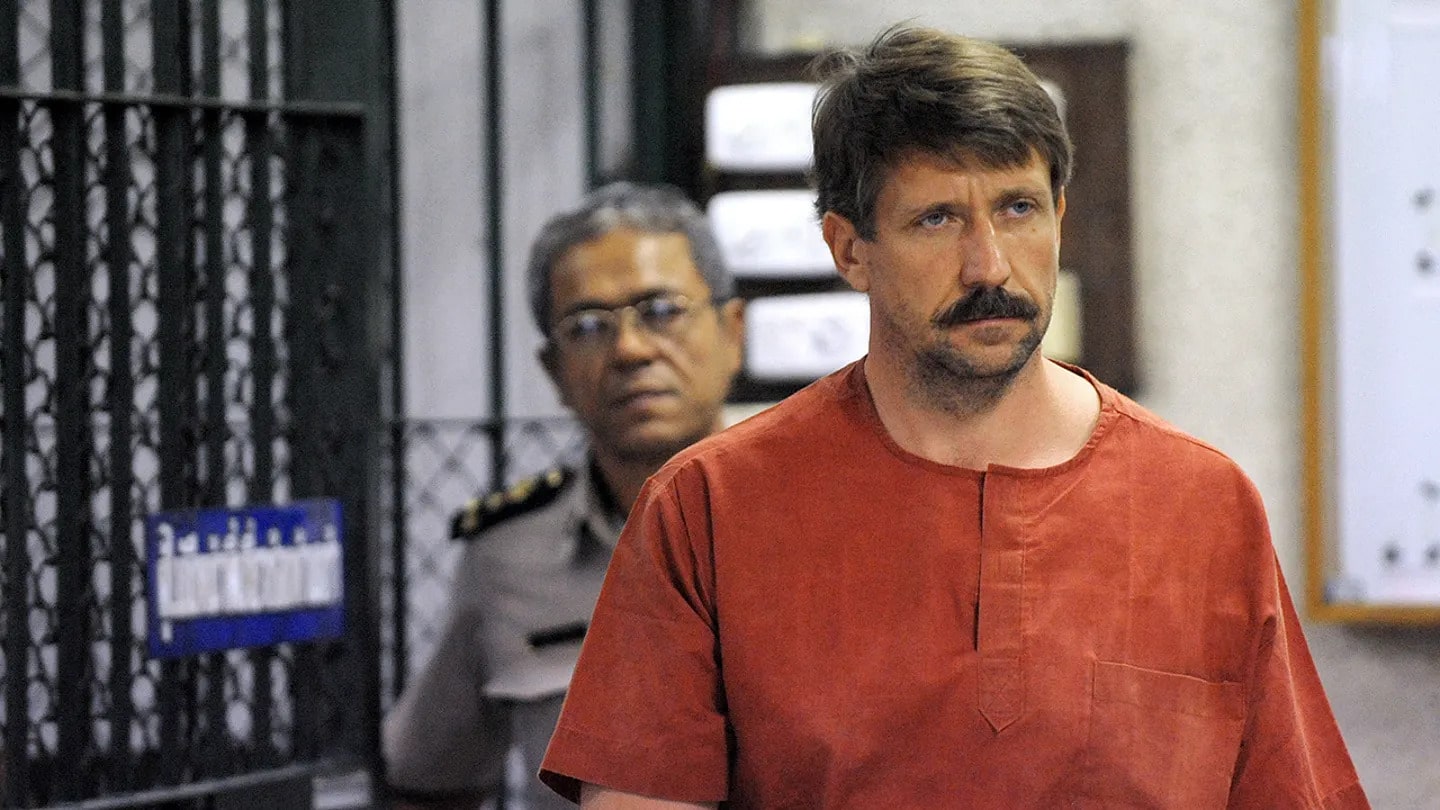
Whelan has been held by Russian authorities since 2018 on espionage charges. If the offer from the Biden administration is accepted by the Russian government, Griner and Whelan would be exchanged for Viktor Bout, a Russian convicted of arms trafficking in 2018 who is serving a 25-year prison sentence in the United States.

Viktor Bout / Photo by Christophe Archambault/AFP via Getty Images

A senior Biden administration official said that the Russian government was unresponsive to the “substantial offer” presented in June, adding that “it takes two to tango.”

“We start all negotiations to bring home Americans held hostage or wrongfully detained with a bad actor on the other side. We start all of these with somebody who has taken a human being American and treated them as a bargaining chip,” the official said. “So in some ways, it’s not surprising, even if it’s disheartening, when those same actors don’t necessarily respond directly to our offers, don’t engage constructively in negotiations.”

The official did not reveal the conditions of the offer, saying it was in Russia’s “court to be responsive to it, yet at the same time that does not leave us passive, as we continue to communicate the offer at very senior levels.”

National Security Council Strategic Coordinator for Communications John Kirby said on Wednesday that Biden administration officials had spoken with the families of Griner and Whelan before Blinken revealed the prisoner exchange offer. He added that the White House is focused on bringing the two Americans home.

“We urge the Russians to move positively on that proposal, so we can get these two individuals home,” Kirby said. “The details of it, I think, are best left between us and our Russian counterparts.”

Apparently unhappy with the Biden administration for making the offer public, the Kremlin noted that prisoner exchange deals are usually negotiated discreetly.

“We know that such issues are discussed without any such release of information,” Peskov told reporters during a conference call. “Normally, the public learns about it when the agreements are already implemented.”

Griner’s attorneys, Alexander Boykov and Maria Blagovolina, said that the WNBA star’s trial will have to conclude before an exchange can be negotiated.

“From a legal point of view, the exchange is possible only after a court verdict,” the lawyers said, as quoted by the Russian media outlet RBC. “In any case, we will be glad if Brittney is soon at home and we hope that this will happen.”

The post Biden Administration Proposes Prisoner Swap To Free Brittney Griner appeared first on High Times.


from News – High Times https://ift.tt/1YzI7ic
via IFTTT

Trump Urges ‘Very Quick Trial’ and Death Penalty for Drug Dealers

Former President Donald Trump on Tuesday gave a clue to his vision for a potential return to the Oval Office, saying in a Washington, D.C. speech that the nation needs to get tough on crime and sentence drug dealers to the death penalty. Speaking before the conservative nonprofit the America First Policy Institute, Trump said that drug traffickers should face execution after a “very quick trial.”

“The penalties should be very, very severe,” Trump said during his speech on Tuesday, as quoted by The Hill. “If you look at countries throughout the world, the ones that don’t have a drug problem are ones that institute a very quick trial death penalty sentence for drug dealers.”

Trump added that the United States would not face the problems associated with illicit drugs if authorities were tougher on crime. He praised other countries that have quick trials for suspected drug dealers.

“It’s terrible to say, but you take a look at every country in this world that doesn’t have a problem with drugs, they have a very strong death penalty for people that sell drugs,” he said.

“It sounds horrible, doesn’t it? But you know what? That’s the ones that don’t have any problem. It doesn’t take 15 years in court. It goes quickly, and you absolutely — you execute a drug dealer, and you’ll save 500 lives,” the former president continued.

At one point in his address, Trump applauded the way Chinese President Xi Jinping handled drug traffickers, recalling a time when Xi told him about “quick trials” for drug criminals in China that he estimated sentenced people in “two hours.”

Trump’s appearance at the America First Policy Institute’s two-day summit marked the first time the former president has spoken publicly in Washington, D.C. since he left office in January 2021. His remarks on harsh punishment for drug dealers came in a speech calling for the nation to get tough on crime and support law enforcement agencies and their officers.

Former President Calls for American Police State

Trump said that the country is becoming unsafe for its citizens, highlighting instances of attacks on everyday Americans in cities including Washington, D.C. and Philadelphia that have been extensively reported by conservative media.

“The dangerously deranged roam our streets with impunity. We are living in such a different country for one primary reason: There is no longer respect for the law and there certainly is no order. Our country is now a cesspool of crime,” said Trump, only 18 months after leaving office at the end of his first term.

Trump advocated for what would be a huge increase in police officers across the country, saying that there should be a police car on every corner. He called for a “no-holds-barred national campaign to dismantle gangs and organized street crime in America.” The former president also called for efforts to defeat violence “and be tough and be nasty and be mean if we have to.”

“We’re living in such a different country for one primary reason: There is no longer respect for the law, and there certainly is no order. Our country is now a cesspool of crime,” Trump said.

“We are a failing nation,” he added, only 18 months after leaving office.

Trump also said that encampments of unsheltered people in cities should be relocated to “large parcels of inexpensive land at the outer reaches of the city.” The former president added that such camps should also have tents staffed with healthcare professionals including medical doctors and psychologists.

To fight back against crime, Trump argued that the president should ignore state authority by deploying the National Guard and “go beyond the governor,” completely ignoring the Republican Party’s often repeated support for states’ rights.

“When governors refuse to protect their people, we need to bring in what is necessary anyway,” Trump said, adding that “the next president needs to send the National Guard to the most dangerous neighborhoods in Chicago until safety can be restored.”

Trump has a history of supporting draconian tactics to deal with drug traffickers and other criminals. In 2017, he called then-President Rodrigo Duterte of the Phillipines to praise him for his crackdown on drug dealers that led to the killing of an estimated 12,000 people at the hands of police and vigilantes.

“I just wanted to congratulate you because I am hearing of the unbelievable job on the drug problem,” Trump reportedly said, referring to the country’s rash of extrajudicial deaths. “Many countries have the problem, we have a problem, but what a great job you are doing and I just wanted to call and tell you that.”

The post Trump Urges ‘Very Quick Trial’ and Death Penalty for Drug Dealers appeared first on High Times.


from News – High Times https://ift.tt/6LWkteE
via IFTTT

LA Cannabis Social Equity Partnerships

The Los Angeles Social Equity Verification period came to an end at 4pm on Monday, July 25th. Recall that verification is required to enter into the Social Equity Retail Lottery this Winter. The verification period will be followed by a 90-day review period. Then, the Department of Cannabis Regulation (DCR) will notify qualified applicants of their eligibility to enter this cannabis licensing lottery.

For those that don’t qualify or fail to obtain verification, consider forging a partnership with a verified applicant who wins a lottery ticket. We won’t know who those folks are until after the lottery this winter. However, it makes sense to begin considering your options. Even if a verified applicant doesn’t win the Social Equity Retail Lottery, other licensing options are available. For example, cultivation and delivery licensing will only be open to verified social equity applicants until 2025.

Moreover, for those of you who are social equity applicants awaiting verification, knowledge will be your greatest tool in establishing successful, balanced, partnerships with investors or incubators. This blog has written extensively about the risks that present themselves with these kinds of partnerships, and more generally about cannabis partnerships. As a general rule, partnerships last longer and produce greater benefits when all parties stand on equal footing.

Some social equity licensees won’t mind allowing a management company, investor, or incubator to take over the day-to-day operations of the company. Many will want to maintain decision-making authority over their business and brand. Either way, the regulations require that the social equity owner maintains voting and economic rights conducive to their ownership share (51% or more). And, either way, social equity partners should have adequate business acumen. More on this below.

How to forge a relationship with a compatible Social Equity licensee

Ultimately, this decision is about compatibility. Trying to force a social equity owner to accept a minimized role in their own corporation is bound to end in a lawsuit. Similarly, expecting an owner without cannabis business experience to make key decisions could result in financial loss for the company.

If you’re an individual investor (or group of individual investors) that knows very little about what it takes to operate a business in the cannabis space, it makes sense to find a social equity partner who possesses that knowledge to manage operations for the company. We’ve written on this blog before about entity selection. In this scenario, an LLC would be your best choice for most entities owned by a social equity applicant. This arrangement allows the social equity partner to manage the company. Meanwhile the partner-investor takes on the administrative roles related to finance and budgeting. In this way, the investor keeps an eye on the spending of their capital contribution, while the owner-operator focuses on building a successful business.

If you’re a management company, institutional investor, or incubator, you might seek out a social equity partner comfortable with just voting and economic rights and the accompanying right to elect a number of board seats. It also makes sense to form a C-Corporation in this scenario. A C-Corp allows for more flexible fundraising while maintaining the licensee’s control of the company. That way, the company’s structure satisfies regulatory requirements, affords the social equity partner adequate authority over their company, and enables the management company or incubator to conduct a profitable business.

There are of course important tax considerations that need to be made when choosing between a corporation and LLC, and social equity applicants and their partners should consider these with a qualified tax advisor. In general, having a solid operating plan will attract further investment to sustain the company through its start-up stage.

Social Equity licensees: Here’s what you should know before seeking investment

Social equity partners historically get the short end of the stick when it comes to these deals. To avoid that outcome, it makes sense to learn basics business. You should also find an attorney to represent you at the negotiating table. Once upon a time, my mother and I sought cannabis licensing and these are all things I wish we’d known at the start.

     1.  If you intend to operate your cannabis business, start drafting a business plan now

If you know the industry well, you probably have a lot of great ideas. But great ideas are best on paper. Begin the process now of evaluating whether they’ll work in practice. We have explained before that a cannabis business plan is a great tool for that. Good business plans contain:

  • an executive summary: self explanatory, just sums up the other sections and includes some information about yourself and anyone else who will operate the business with you.
  • an overview of the products and/or services: what will you contribute to the market? and how?
  • a marketing analysis with a corresponding marketing strategy: who is your consumer base? how will you reach them?
  • financial planning, and key budget elements: how much money will you need to operate? and how will you spend it wisely?

You can share your business plan with trusted friends and advisors for feedback.

Even if you don’t intend to operate, you should decide what kind of business you want to run, beyond just the license type. Do you want to be a retailer that serves high-end consumers and tourists, or a mom-and-pop shop that serves communities and patients? Knowing will help you identify the right kind of incubator or management company.

       2. You should consider who you’d want to employ to help you run your business

Having a team and a plan in place before you seek out start-up funding ensures that you’re taken seriously by investors. Even if you don’t plan to operate your business, you should still build a team of advisors who might even serve as board members for your C-Corp, or otherwise provide you with counsel in making key decisions.

If you’re a lone-wolf with a huge investment company or management company as a partner, you’re bound to feel outnumbered. It’s vital to have people who are knowledgeable about business in your corner. That person could be a family member, your pastor, or your barber who owns his own shop. The advice and support of someone you trust and the representation of a good attorney will keep you on relatively equal footing with even a large corporation.

     3.  Read and stay updated on the regulations

This represents one of the most important practices of a good owner-operator. You want to be the first to know when a new law or rule will effect your business. We write extensively about regulations on the Canna Law Blog. But if you can, read them for yourself, attend regulatory meetings, and discuss them with your team of trusted advisors. It might benefit you to join a trade organization. These groups often update their members when new laws affect the trade, and advocate on members’ behalf. This is key, as social equity licensing has been a regulatory rocky road from the start. I wrote a guide to advocating for better regulations earlier this summer, which I encourage you all to read.

The post LA Cannabis Social Equity Partnerships appeared first on Harris Bricken Sliwoski LLP.


from Canna Law Blog™ https://ift.tt/akHcRd2
via IFTTT

Wednesday, July 27, 2022

Cannatourism: Canada’s best vacation spots for a high holiday

Weed is legal in Canada, and it's vacation season. Here are the best safe spots to toke, eat, vape, and vacation.

The post Cannatourism: Canada’s best vacation spots for a high holiday appeared first on Leafly.


from Leafly https://ift.tt/jvFmxgW
via IFTTT

Is weed or alcohol more addictive?

There’s a common perception that cannabis is safer and less addictive than alcohol, but what does the science say?

The post Is weed or alcohol more addictive? appeared first on Leafly.


from Leafly https://ift.tt/XkcMJEO
via IFTTT

Brittney Griner testifies as Biden considers trading Russian prisoner to free her

The president is reportedly open to releasing a Russian arms dealer to bring the WNBA star home, but the Russians aren’t rushing to make a trade.

The post Brittney Griner testifies as Biden considers trading Russian prisoner to free her appeared first on Leafly.


from Leafly https://ift.tt/2B9CXlu
via IFTTT

Senate Committee Holds Hearing on Cannabis Decriminalization Bill

A Senate panel met on Tuesday to consider a bill that would decriminalize cannabis at the federal level, less than a week after the legislation was introduced by Senate Majority Leader Chuck Schumer and two Democratic colleagues. The bill, the Cannabis Administration and Opportunity Act, was introduced on July 21 by Schumer, the senior senator from New York, Senate Finance Chair Ron Wyden of Oregon and New Jersey’s Senator Cory Booker.

The Senate Judiciary Subcommittee on Crime and Terrorism, which is chaired by Booker, discussed the legislation and heard testimony from witnesses at a hearing held at the nation’s Capitol on Tuesday. Under the nearly 300 pages of legislation, marijuana would be removed from regulation under the federal Controlled Substances Act, where the drug is listed under the most restrictive Schedule I, and states would be allowed to create their own cannabis policies. The measure would also establish a national tax on cannabis products, expunge records of past federal cannabis convictions, and allow nonviolent cannabis prisoners to request resentencing.

Booker, the chair of the subcommittee and the only Black senator on the Senate Judiciary Committee, said that national cannabis prohibition has “miserably failed” and has led to a “festering injustice” of enforcement policy that disproportionately targets Black and Brown communities. According to a 2020 report from the American Civil Liberties Union, Black people in America are almost four times more likely to be arrested for a cannabis-related offense than whites, despite relatively equal rates of pot use.

“Cannabis laws are unevenly enforced and devastate the lives of those most vulnerable,” Booker said during the Tuesday hearing.

Witnesses Testify To Support Cannabis Decriminalization Bill

Weldon Angelos, a former federal cannabis prisoner and criminal justice reform advocate, appeared before the subcommittee to testify in favor of the legislation. Sentenced to 55 years in federal prison for a first-time cannabis conviction and firearms possession charge, Angelos spent 13 years behind bars before being released in 2016. He told the senators at the hearing that expungement is a vital element of cannabis policy reform.

“Each arrest, prosecution, conviction and sentence makes the world a little bit smaller for those bearing the modern scarlet letter,” Angelos said, referring to what life is like for those with a conviction for a drug offense.

Representatives of the law enforcement community also testified in favor of the legislation to reform the nation’s marijuana laws. Edward Jackson, chief of the Annapolis Police Department, told the subcommittee that “there is nothing inherently violent” about cannabis.

Jackson said that decriminalization would permit police officers to concentrate on more serious crimes and help restore the community’s trust in law enforcement.

“I have spent far too much time arresting people for selling and possessing cannabis,” Jackson testified.

Senator Tom Cotton, a Republican from Missouri, lodged his opposition to the cannabis legalization bill and expungement, arguing that the legislation “would wipe clean the criminal records of illegal alien traffickers.”

“When these criminals trafficked marijuana, they broke the law,” Cotton told his colleagues on the subcommittee. “Whether some find that law unfashionable or even unfair, what they did was illegal.”

Cannabis Industry Reacts to Senate Hearing

Mason Tvert, partner at cannabis policy consulting firm VS Strategies, told High Times after Tuesday’s hearing that it “is refreshing to finally see a significant discussion of cannabis policy in Congress’ upper chamber.”

“History has shown that the more people talk about and hear about cannabis, the more quickly support grows for ending its prohibition,” Tvert wrote in an email. “Hopefully there will be more to follow, and members will have an opportunity to continue hearing about the many important aspects of this major policy issue, from expungement and equity to the economics and public safety benefits of legalization.”

Ryan G. Smith, co-founder and CEO of online cannabis wholesale platform LeafLink, urged lawmakers to approve comprehensive cannabis policy reform at the national level.

“For far too long, communities of color have been disproportionately harmed by unjust cannabis laws,” Smith wrote in an email to High Times. “Today’s hearing was a step forward, but now it’s time for Congress to take real action to end prohibition and support communities that have been unfairly targeted and left behind.”

But George Mancheril, co-founder and CEO of cannabis industry lender Bespoke Financial, is not optimistic that meaningful cannabis policy reform measures will be approved in the near future, noting that less controversial bills such as the Secure and Fair Enforcement (SAFE) Banking Act, which would allow banks to offer financial services to legal cannabis companies, have not fared well in the upper chamber of Congress.

“This hearing was an important step towards federal cannabis legalization but illustrated the long road still ahead. Passing comprehensive legislation is significantly harder than limited scope proposals such as the SAFE Banking Act which stalled in the Senate numerous times,” Mancheril said in an email. “The current political and economic environment will likely continue to keep all such cannabis focused bills on the fringe of political discussion and unlikely to pass any time soon but we hope that future hearings will drive the discussion towards the mechanics and timeline for federal regulation to provide greater clarity and transparency to the industry and to all stakeholders.”

The post Senate Committee Holds Hearing on Cannabis Decriminalization Bill appeared first on High Times.


from News – High Times https://ift.tt/qw6Gtil
via IFTTT

Griner Testifies That Russian-Provided Interpreter Gave Incomplete Translation

The American basketball star Brittney Griner on Wednesday provided details of her arrest and first moments in Russian custody, testifying that an interpreter provided by authorities left her clueless during hours of questioning.

Griner, who was arrested in February at a Moscow airport for carrying cannabis oil in her luggage, faces up to 10 years on the drug charges.

The trial began earlier this month, with Griner pleading guilty to the charges during a court appearance on July 7. In her plea, Griner said “there was no intent,” and she “didn’t want to break the law.”

Griner said at that hearing that she preferred to give her official testimony later.

That moment arrived on Wednesday, with Griner testifying for the first time and shedding light on the lead-up and aftermath of her arrest on February 17.

According to the Associated Press, Griner “described making a grueling 13-hour flight to Moscow from Arizona while recovering from COVID-19,” and “said she still does not know how the cannabis oil for which she had a doctor’s recommendation ended up in her bag but explained she had packed in haste while under great stress.”

Most notably, Griner said “that a language interpreter provided during her questioning translated only a fraction of what was said and officials instructed her to sign documents without providing an explanation,” the Associated Press reported.

The AP has more: “Along with the interpreter provided an incomplete translation, Griner said she was offered neither an explanation of her rights nor access to lawyers and was instructed to sign documents without receiving an explanation of what they implied. After hours of proceedings she did not understand, she was allowed to hand over her personal belongings to a lawyer before being led away in handcuffs, Griner said. She said she received only a cursory translation of the allegations at her during a Feb. 19 hearing where a court sanctioned her arrest.”

According to The New York Times, Griner testified “from an enclosed witness box.”

The Times, citing Griner’s lawyers, said that the “verdict is expected in August.”

Griner’s detention has become a symbol of the contentious relationship between the United States and Russia, with her arrest coming days before the Russian invasion of Ukraine.

In May, the U.S. reclassified Griner as “wrongfully detained,” a move that signaled an intention to negotiate her release.

President Joe Biden has faced mounting pressure, both from lawmakers and Griner’s brethren in the athletic world, to secure her freedom.

Last week, a bipartisan group of U.S. senators filed a resolution calling for Griner’s release.

Earlier this month, Biden and Vice President Kamala Harris spoke with Griner’s wife, Cherelle Griner, after the WNBA star sent the president a letter.

“As I sit here in a Russian prison, alone with my thoughts and without the protection of my wife, family, friends, Olympic jersey, or any accomplishments, I’m terrified I might be here forever,” Brittney Griner wrote in the letter to Biden.

“I realize you are dealing with so much, but please don’t forget about me and the other American Detainees,” she continued. “Please do all you can to bring us home. I voted for the first time in 2020 and I voted for you. I believe in you. I still have so much good to do with my freedom that you can help restore. I miss my wife! I miss my family! I miss my teammates! It kills me to know they are suffering so much right now. I am grateful for whatever you can do at this moment to get me home.”

The post Griner Testifies That Russian-Provided Interpreter Gave Incomplete Translation appeared first on High Times.


from News – High Times https://ift.tt/wQEZf3i
via IFTTT

DEA Rescinds Proposal to Ban Five Psychedelic Drugs

The Drug Enforcement Administration announced on Friday that it had rescinded a plan to prohibit five psychedelic compounds under federal drug laws, only weeks after the agency scheduled a hearing on the proposed ban.

In January, the DEA announced a proposed rule change to place five psychedelic drugs known as tryptamines under Schedule I of the federal Controlled Substances Act (CSA), a move that would prohibit access to the substances and create steep challenges to researching them. Reaction to the proposed ban was swift, with nearly 600 comments, most opposed to the move, submitted during a public comment period on the change. A DEA administrative law judge subsequently issued an order directing the agency to hold public hearings on the proposed ban.

Matthew X. Lowe Ph.D., research director at the psychedelic research nonprofit organization Unlimited Sciences, tells High Times that the psychedelic drugs that the DEA had sought to ban have therapeutic potential that should be explored through research.

“The compounds 4-OH-DiPT, 5-MeO-AMT, 5-MeO-MiPT, 5-MeO-DET and DiPT are lesser-known psychedelic substances of the tryptamine class,” Lowe wrote in an email. “The effects of these psychedelic compounds on humans were first documented by Alexander and Ann Shulgin, who famously synthesized and studied the effects of these and hundreds of other psychoactive compounds.”

“Research is limited on these compounds, and little is known about their pharmacological properties, metabolism, toxicity and therapeutic potential, which is precisely why we must continue to support research endeavors,” Lowe continued. “The DEA’s reversal of its plan to ban these compounds will allow crucial research to better understand these compounds.”

Hearing Scheduled, Then Canceled

In early July, the DEA published a notice announcing that it would hold a hearing on the proposal to prohibit the drugs. The agency wrote that the proposed ban “was based primarily on the scientific and medical evaluations and recommendations provided by the Department of Health and Human Services (HHS) to DEA. In those submissions to DEA, HHS concluded that these five substances meet the criteria for placement in schedule I as they all have a high potential for abuse, no currently medical use in treatment in the United States, and a lack of accepted safety for use under medical supervision.”

On July 22, the federal law enforcement agency changed course, saying that a hearing scheduled on the matter had been canceled because the DEA had rescinded the proposal. Instead, the agency said that it would seek an updated review of the compounds from HHS. 

Proponents of psychedelic research hope that the new review will lead to a decision to place tryptamines in a lower schedule under the CSA. It is not yet clear how long it will take HHS to complete the new review of the compounds.

“The decision to get an updated evaluation will allow important research and development to continue that could lead to lifesaving medicines and a better understanding of this drug class,” said Matt Zorn, an attorney representing a client with a research interest in the tryptamines. “I’m glad the Administrator and DEA took a hard look at the science and data before it.”

Lowe said that the DEA’s reversal of its proposal to place the psychedelic compounds under Schedule I of the Controlled Substances “is an unprecedented victory for the continued momentum of research exploring the therapeutic potential of psychedelic medicine.”

“Substances categorized with a Schedule I classification are considered to have ‘no currently accepted medical use and a high potential for abuse,’ and this classification would severely restrict research and building scientific knowledge of these compounds,” he said. “The therapeutic potential of psychedelics is now widely recognized and we must continue to advocate for research that could shed light on our understanding of both the risks and benefits associated with psychedelic medicine.”

The post DEA Rescinds Proposal to Ban Five Psychedelic Drugs appeared first on High Times.


from News – High Times https://ift.tt/UfQpqmK
via IFTTT

Goods and Services and Canna Trademarks

Goods and services (G&S) identifications are a critical part of a cannabis trademark application, as with any other trademark application. An improper identification can delay an application, and in the worst cases prove fatal. Cannabis brands in particular have to be very careful when it comes to G&S.

Trademark rights are linked to specific goods and services (or, said differently, products). If my neighbor starts using the name Gina’s Lawns in connection with her lawn care business, she can establish trademark rights in that name in connection to lawn care services. Nothing prevents me from using the same name in connection to my own business selling, say, cell phone cases. Needless to say, it would be an odd choice for a cell phone case business, even if I wouldn’t be infringing on Gina’s trademark rights.

For cannabis brands, the key issue when it comes to identifying goods and services (and indeed trademark applications more generally) is the legality under federal law of the identified products. Simply put, under what is known as the lawful use requirement, USPTO will not register a trademark in connection to goods and services that are unlawful according to federal law. This includes marijuana, as defined in 21 U.S.C. § 802(16), which is a Schedule I substance under the Controlled Substances Act (CSA). It also includes many hemp products that are considered illegal under FDA‘s interpretation of the Federal Food, Drug, and Cosmetic Act (FD&C Act or FDCA). Beyond cannabis, USPTO has refused to register trademarks in connection with products such as Cuban cigars and certain insecticides.

The legal justification for refusing to register trademarks in connection to marijuana is debatable, but at least a bright line exists that canna brands can follow. There is (far) less of a bright line when it comes to hemp products, with their regulation by FDA very much in flux, but at least in certain cases the illegality under the FD&C Act of certain products is pretty obvious (for example, in the case of a CBD food). But when we get to the application by USPTO of the drug paraphernalia laws, things get wacky.

Drug paraphernalia is broadly and subjectively defined under federal law. As we have explained before, “this creates a fraught situation from a legal standpoint, as an imported product’s legality may hinge not on its immutable characteristics, but rather on subjective factors.”

Take a water pipe made in Jordan. If the importer of that product is a company that sources Middle Eastern products, including flavored tobacco, and refers to the pipes as shisha or argileh on its website, they are unlikely to face issues upon entry into the United States on drug paraphernalia grounds.

On the other hand, if the importer calls the product a water bong and alludes to cannabis on its advertising, there is a good chance the products will be seized as drug paraphernalia.

Taken to an extreme, this conception of drug paraphernalia could lead to innocuous products such as lighters and ashtrays to be considered drug paraphernalia. Sadly, things often are taken to the extreme. And if it’s silly for lighters to be seized as drug paraphernalia, it is downright absurd for USPTO to take issue with the identification of lighters as goods, on drug paraphernalia grounds.

But that is exactly what’s happening. Recently, USPTO has denied applications for trademarks used in connection with several smokers’ articles, including lighters, rolling papers, and ashtrays. In order for the applications to go through, USPTO required the addition of language to the G&S identification clarifying that the products were to be used exclusively with hemp.

Look, a lighter is a lighter, and an ashtray is an ashtray. Yes, the lighter could be used to ignite a marijuana cigarette, but it could also be used for a host of activities that are not illegal under federal law. Should G&S identifications for firearms include caveats that they are not to be used to commit crimes?

In any case, whether the lighter or ashtray or rolling paper is used with marijuana or hemp or tobacco is a question of fact that will be determined by the user of the products. Conditions encountered by law enforcement when they seize drugs can in some instances support the characterization of a product as paraphernalia, even in cases where there are legal uses for that same product. However, by definition, such products cannot be drug paraphernalia prior to use, just as guns and cars can only become instrumentalities of crime after someone uses them.

There is also a whiff of prejudice in USPTO’s actions. Are lighters sold by canna brands more likely to be used to smoke marijuana than those sold at gas stations? Maybe, but would anyone seriously argue that gas stations lighters are not broadly used to smoke marijuana?

There is clearly a bias against cannabis brands, and the more you think about it, the more it seems like USPTO just has a general beef against cannabis companies. Because this is clearly not about what lighters are going to be used for. And if it is, then it might be even more concerning that government officials live in a world in which marijuana smokers get their lighters from cannabis stores, while those lighters sold at CVS are only used for wholesome purposes like tobacco smoking.

We can and should point out the ridiculousness of this approach: USPTO should never object to the G&S identification of a lighter, period. But, at least, for now, it is what it is. To avoid issues, cannabis brands need to identify their goods and services carefully.

The post Goods and Services and Canna Trademarks appeared first on Harris Bricken Sliwoski LLP.


from Canna Law Blog™ https://ift.tt/as5qp4P
via IFTTT

Tuesday, July 26, 2022

New Jersey stands up to weed companies for disobeying patient-first laws

Big fines from the tiny state set a stern example for how regulators nationwide should deal with multi-state cannabis companies.

The post New Jersey stands up to weed companies for disobeying patient-first laws appeared first on Leafly.


from Leafly https://ift.tt/NfGzMBx
via IFTTT

Will delta-8, delta-10, or HHC make you fail a drug test?

Unclear which hemp-derived cannabinoids like delta-8, delta-10, or HHC will flag a drug test? Never fear, you’ve come to the right place.

The post Will delta-8, delta-10, or HHC make you fail a drug test? appeared first on Leafly.


from Leafly https://ift.tt/f08Z6Aw
via IFTTT

Singapore Executes Man for Cannabis Trafficking

As Amnesty International pleads to stop Singapore’s fifth execution in under four months, one man, whose name is not being released, was executed by hanging at the Changi Prison Complex in east Singapore for the crime of trafficking cannabis. 

Singaporean executions are carried out by “long-drop hanging”—usually taking place at dawn. The country is notorious for its use of corporal and capital punishments, and the country’s hanging system has been criticized for at least the past 20 years. During canings, for instance, a 1.2 meter-long cane of about 1.2 centimeters in diameter is used to beat the perpetrator, sometimes for drug offenses. For the crime of trafficking cannabis, the death penalty is mandatory.

Thanks to activists like Kokila Annamalai, we know when severe injustices amid the War on Drugs take place in the farthest stretches of the globe. People like Annamalai are tired of executions for drug-related crimes, especially when it involves cannabis and other harmless crimes.

“We have confirmation that a 49-year-old Singaporean Malay man was executed today, 26 July, at Changi Prison,” Annamalai tweeted. “He has lived in prison since 2015, after being convicted of trafficking in cannabis (marijuana). He was sentenced to the mandatory death penalty.”

Activists say racism is part of the equation, as the region is allegedly prone to racially-biased decisions during the legal process. The 49-year-old Malay man executed for cannabis trafficking was one of 17 prisoners who had filed a suit accusing the Singaporean government of racial bias in their prosecutions in capital punishment cases. Unfortunately, the lawsuit was tossed out and nearly anyone involved in the case was allegedly targeted—even the defense attorney.

“This is the 6th confirmed execution in a span of 4 months,” Annamalai continued in subsequent tweets. “He was one of 17 prisoners who had filed a historic suit accusing the Singapore state of racial bias in their prosecutions in capital punishment cases. The suit was thrown out last year and their lawyer M Ravi was slapped with heavy fines after being accused of abuse of process by the attorney-general (AG).”

Singapore publicly reveals very little, if any information about its executions, which come in the form of hangings. Local anti-death penalty non-governmental organizations (NGOs) like Transformative Justice Collective ask questions regarding the deaths and the surrounding circumstances. They get information through other prisoners or inmates’ relatives, which is the only way information is possible.

Singapore officials also executed another man, Singaporean Nazeri Lajim, 64, with a long history of drug use and other drug offenses, who had been sentenced in 2017 for trafficking 960 grams of heroin.

Earlier this month, VICE World News followed the families of people on death row in Singapore due to drug charges. They found clemency appeals to the president were rejected and hopes were destroyed in one of the harshest places on the planet to be caught with drugs.

“This morning, the family of Kalwant Singh, a Malaysian on death row in Singapore, was informed that his execution has been scheduled for next week, 7 July 2022,”  the Transformative Justice Collective tweeted on June 29.

Singh was arrested in 2013 for drugs. He was 23 years old then and has spent the past nine years in prison.

According to activists, executions by hanging came to a standstill during COVID-19.

VICE World News reports that Malaysia and Singapore shared a gung-ho approach to the death penalty, but both countries’ approach to drugs were originally rooted in British colonial-era laws. But then nearby in Thailand, cannabis has been decriminalized, suggesting drug reform is overdue in the corner of the globe.

The post Singapore Executes Man for Cannabis Trafficking appeared first on High Times.


from News – High Times https://ift.tt/ZzDwXNx
via IFTTT

Illinois Trumpets 50% Rise in Adult-Use Pot Sales, Tax Revenue

It has been a 50-50 year for Illinois’ adult-use cannabis program. As in a 50% increase in sales, and a 50% increase in tax revenue.

The state’s governor trumpeted the figures in an announcement on Monday, saying that Illinois “has seen a 50% increase in total tax reported from adult-use cannabis, from $297.7 million in fiscal year 2021 to $445.3 million in fiscal year 2022,” as well as a 50% increase in adult-use cannabis sales, from $1 billion in fiscal year 2021 to $1.5 billion in fiscal year 2022.

“Illinois has done more to put justice and equity at the forefront of this industry than any other state in the nation and has worked to ensure that communities hurt by the war on drugs have had the opportunity to participate,” Illinois Gov. JB Pritzker, a Democrat, said in the announcement. “The $1.5 billion in sales of adult-use cannabis in Illinois translates into significant tax revenue with a portion of every dollar spent being reinvested in communities that have suffered for decades.”

The announcement said that “cannabis tax disbursements to local governments saw a significant jump from fiscal year 2021 to fiscal year 2022, increasing 77% from $82.8 million to $146.2 million,” and that under the state’s recreational cannabis law, “25 percent of tax revenue generated from cannabis sales must support communities that are economically distressed, experience high rates of violence, and have been disproportionately impacted by drug criminalization.”

Illinois’ new cannabis law has become a centerpiece of Pritzker’s first term, with the Democrat up for re-election this year.

Pritzker signed a measure legalizing recreational pot use for adults in 2019. The state’s regulated cannabis market opened for business at the start of 2020.

In January, the Illinois Department of Financial and Professional Regulation (IDFPR) reported that adult-use weed sales doubled in 2021, going from around $669 million in the inaugural year of 2020 to $1,379,088,278.61 last year.

Along with the formation of the regulated market, Illinois’ new marijuana law has also focused on remedies toward individuals and communities who have been adversely affected by the War on Drugs.

When the new law took effect at the start of 2020, Pritzker marked the occasion by issuing more than 11,000 pardons for non-violent cannabis offenders.

“We are ending the 50-year-long war on cannabis,” Pritzker said at the time. “We are restoring rights to tens of thousands of Illinoisans. We are bringing regulation and safety to a previously unsafe and illegal market. And we are creating a new industry that puts equity at its very core.”

Last month, Pritzker announced plans to award 185 new cannabis dispensary licenses with a particular focus on non-white applicants.

“Today marks the beginning of the next chapter of the most equitable adult-use cannabis program in the country,” Pritzker said in announcing that plans for the lottery. “After signing the most equity-centered program in the country into law, expunging thousands of low-level cannabis convictions, and investing tens of millions of dollars in cannabis proceeds in communities failed by the war on drugs, we are about to more than double the number of adult use cannabis dispensaries in Illinois. This means countless more opportunities for communities that have suffered from historic disinvestment to join this growing industry and ensure its makeup reflects the diversity of our state.”

In the announcement on Monday, Pritzker’s office said that, to date, “the State has awarded $113.5 million in grants, using funds generated from taxes on adult-use cannabis sales to support and invest underserved communities through Illinois Criminal Justice Information Authority’s Restore, Reinvest, and Renew (R3) Program.”

The post Illinois Trumpets 50% Rise in Adult-Use Pot Sales, Tax Revenue appeared first on High Times.


from News – High Times https://ift.tt/7WRwNDs
via IFTTT