The President hasn’t lived up to 2020 campaign promises about cannabis legalization. Will this larger-than-life US Senate candidate finally hold Biden to his word?
The DCC announced on Aug. 25 that it has officially seized more than $1 billion worth of illegal cannabis. The department attributes this milestone to recent raids conducted in Los Angeles and Riverside County within the past year.
“This important milestone was reached through close collaboration with local, state, and federal partners and furthers California’s efforts to go after activities that harm communities and the environment, including water theft, threats of violence, elder abuse, and human trafficking to name a few,” the DCC wrote in a press release. “These operations and the products they produce threaten consumer safety and the vitality of legal and compliant licensees.”
The agency described that over the last 13 months, it participated in 232 search warrants (either led by the DCC, or in partnership with other agencies). Those searches yielded over half a million pounds of “illegal product,” along with 1.4 million cannabis plants “eradicated.” It also explains that these efforts have “removed more than $1 billion worth of potentially harmful and often untested cannabis products from the market,” in addition to 120 illegal firearms, and $2.3 million in “illegally obtained assets.”
The DCC also explains that it is taking measures to ensure that consumers remain safe. “In tandem with law enforcement actions that crack down on illegal activity, DCC staff are working to expand access to tested cannabis products for consumers and lower barriers of participation for businesses,” it wrote in the announcement. “This includes a recent allocation of $20 million to DCC to grant cities and counties with funding that will support the creation of cannabis retail access in areas that currently do not allow it.”
In March, the DCC introduced new changes to state cannabis regulations to “streamline and simplify” existing rules. “This proposal is a direct result of DCC’s engagement with stakeholders and the thoughtful feedback received through letters, conversations, meetings and previous rulemaking processes,” said DCC Director Nicole Elliott. “We are deeply [committed] to creating a cannabis regulatory structure that works for all Californians, including California’s cannabis industry, consumers and communities.” Topics such as video surveillance, live cannabis plant sales, certificates of analysis and more were addressed.
In July, the DCC announced its projection to seize more than $1 billion in illegal cannabis products. At the time, the agency had participated in 208 search warrants, had removed 1.38 million plants, and seized more than half a million pounds of “illegal product.”
On Aug. 29, the DCC announced that it will be holding a virtual meeting on Sept. 8 to discuss how a recent $20 million grant will be allocated to expand consumer access to legal cannabis dispensaries across the state. It’s the first meeting to include the Cannabis Advisory Committee (CAC), which is tasked with providing feedback to the DCC’s regulations through public discussion. The members of which were appointed on Aug. 1 and include a total of 17 individuals, chosen out of a pool of 300 applicants. “Pursuant to Division 10 of the Business and Professions Code, the CAC is tasked with advising DCC on the development of relevant standards and regulations for commercial cannabis businesses, including those necessary to protect public health and safety. Key to the CAC’s work will be to ensure DCC is working to create regulations for commercial cannabis activity that helps protect public health and safety while decreasing burdens for legal operators and reducing the illicit market.”
The first meeting will introduce the CAC members, debut a presentation about plans for 2023, and make time for public comment.
Conversely, around 16% of Americans identified as current cannabis smokers, according to Gallup.
For the first time, the pollster asked Americans if they are current users of cannabis edibles, with 14% reporting that they are.
The findings were foreshadowed by the previous decade, when dozens of states and cities ended the prohibition on pot and Americans turned away en masse from tobacco––often in favor of smokeless nicotine vapes that may or may not be safer.
In 2019, Gallup’s “Consumption Poll” found that only 15% of Americans reported as cigarette smokers, at the time a new low and substantially lower than the 45% of U.S. adults who said they were back in the 1940s. That poll showed that 12% of Americans reported as marijuana smokers.
“Smoking cigarettes is clearly on the decline and is most likely to become even more of a rarity in the years ahead. This reflects both public awareness of its negative effects and continuing government efforts at all levels to curtail its use. Smoking remains legal in general but is prohibited in many public places, offices, modes of transportation and in private places across the U.S. Each pack of cigarettes carries draconian warning messages about their harmful effects,” Gallup’s Frank Newport wrote in his analysis of the latest survey.
Cannabis has perhaps never been more accessible in the U.S. and pot smokers never more ubiquitous––despite the ongoing federal prohibition.
“Despite its widespread use, alcohol’s downsides have been recognized in the U.S. for centuries. This awareness reached a climax over a hundred years ago, when the 18th Amendment to the U.S. Constitution — passed by Congress and ratified by 46 of the 48 states — banned the manufacture, transportation and sale of alcohol. While the resulting Prohibition may have actually lowered the consumption of alcohol as intended, it had numerous other unanticipated negative consequences and was repealed some 13 years after it took effect,” Newport wrote.
Gallup released findings last year that found a new high of 68% of Americans believe that marijuana should be legal.
But as far as its effects, the country is split.
In the latest “Consumption Poll,” 53% said that marijuana has a positive effect on its users, while 45% said it has a negative effect.
But when it comes to marijuana’s effect on society, 49% said it is positive, while 50% said it is negative.
Gallup’s latest survey found that alcohol remains far more prevalent than either marijuana or cigarettes. About 45% said they had an alcoholic drink in the last week, while 23% said they have one occasionally. A third identified as complete abstainers.
“The future of alcohol drinking presents the most fascinating sociological case study out of the three substances. Alcohol use has been remarkably steady over the past 80 years (the time during which Gallup has measured it). In fact, alcohol has been widely used in the U.S. since the nation’s founding. Its use continues to be intertwined with many aspects of American culture, including social and — in some instances — religious rituals. Alcohol is also a major contributor to the nation’s economy. If the best predictor of future behavior is past behavior, then the best guess would be to predict no significant change in alcohol use going forward,” Newport wrote.
President Joseph Biden last week announced a long-awaited plan to forgive student loan debt, saying the move will provide needed relief and narrow the racial wealth gap. But vestiges of the failed War on Drugs are likely to block the aid from many people who need it most, the Associated Press reported on Tuesday.
The soaring cost of education in the United States has led to total student loan debt of more than $1.6 trillion. When he released his student loan forgiveness plan last week, Biden noted that the debt burden “is especially heavy on Black and Hispanic borrowers, who on average have less family wealth to pay for it.”
Under the plan released by the president last week, borrowers making less than $125,000 can have up to $10,000 of their federal student loan debt forgiven. For those who received financial aid as students in the form of a federal Pell Grant, the amount of loan forgiveness available doubles to $20,000.
But under federal financial aid policies put in place at the height of the War on Drugs and promoted by Biden, who was a U.S. senator at the time, access to Pell Grants was denied for convicted drug offenders, who were required to disclose their convictions by checking a box on financial aid applications. The policy caused financial aid to be denied or delayed for hundreds of thousands of students, many of whom turned to more expensive and sometimes predatory private student loans.
Racial Disparity in Drug Enforcement
Because of the racial disparity in the enforcement of the nation’s drug laws, the federal financial aid policy disproportionately impacted people of color, particularly young Black and Latino men. The policy remained in effect for 25 years, when it was repealed by Congress in 2020. But during that time, incarceration rates for people of color increased dramatically.
Pell Grants have been one of the federal government’s effective student financial aid programs, with studies showing that they pay educational expenses for more than half of Black students and nearly half of Hispanic students. But because the War on Drugs caused a disproportionate number of Black and Latino students to be ineligible for a Pell Grant, student loan forgiveness tied to them will also be distributed disproportionately. Drug policy reform advocates say Biden’s student loan forgiveness plan should address the inherent unfairness.
“I think there’s a particular onus on this administration and on this president to be part of the solution for issues that he was very deeply involved in,” said Melissa Moore, the director of civil systems reform at Drug Policy Alliance.
The policy denied Pell Grants and federal student loans to a generation of former drug offenders, many of whom borrowed from private lenders instead. According to a report on private loan debt from the Student Borrower Protection Center, Black students are four times as likely as white students to struggle in repayment of private loans. But under Biden’s plan, they are not eligible for student loan relief. Moore believes the plan should include restorative justice provisions to make it fairer.
“For people who previously would have had to check that box, there should be some mechanism by which, if you were excluded in the past, you are prioritized now for relief,” Moore said.
DeAnna Hoskins was lucky. Her drug conviction did not cause a loss of eligibility for federal student loans or Pell Grants because she applied after Congress repealed the ban on aid for those with drug convictions. Others were helped by a 2006 change by Congress that limited the ban to those who were convicted of a drug crime while receiving financial aid. But even with that change, the policy caused hundreds of students to drop out after losing aid, experts say.
“The ’94 crime bill was so comprehensive in the destruction that it did,” said Hoskins, the president of JustLeadershipUSA, a criminal justice reform group. She wants to know how Biden’s debt relief plan was developed, saying, “I feel like you’re piecemealing our liberation back to us.”
Friday, June 10, psychedelic advocate Aaron Genuth was arrested in Ulster County by New York State Police officers. He is facing serious charges for allegedly possessing several psychedelics including LSD, MDMA, ketamine, and psilocybin. Genuth is calling upon the psychedelic community for help.
Genuth’s vehicle was impounded, and beyond the severe charges he’s facing, he also has to deal with mounting legal fees. A GoFundMe was set up to help Genuth handle growing fees and charges, with support from the Hudson Valley Psychedelic Society and Dr. Bronner’s.
Genuth is founder and president of Darkhei Rephua—a Jewish entheogenic nonprofit he founded. Aaron has been advocating for cannabis, psychedelic, and drug policy reform for over 15 years. He also works with Decriminalize Nature New York, the Hudson Valley Psychedelic Society, and has hosted or produced a variety of community events in New York City and upstate New York over the years.
“Ironically, the psychedelics Aaron is being charged with are either legal in clinical settings, scientifically proven to be beneficial medicines, decriminalized in some places, or on the brink of legalization,” his GoFundMe reads. Ketamine, for instance, is FDA-approved in clinical settings, while the National Institutes of Health (NIH) funds psilocybin research. Psychedelics in general are amid a renaissance in the world of psychedelic-assisted therapy.
Friends and associates of Genuth are raising funds to help him A) recover his car and B) get on the road again, covering his initial expenses while he assesses the charges that were filed and legal fees.
Genuth spoke to High Times about his ongoing case and the current situation.
High Times: Should anyone be in jail for psychedelics (and cannabis for that matter)?
Genuth: No. Absolutely nobody should be in jail for psychedelics or cannabis, including me. Cannabis and psychedelic reform and legalization need to prioritize decriminalization and prisoner release and they really haven’t thus far.
Given your work with Hudson Valley Psychedelic Society and Darkhei Rephua, did you have legitimate, educational reasons for having psychedelics?
Yes I did, though I should probably not say much more than that due to the case being active. I will add that there’s no legitimate reason to arrest people for psychedelic or other drug possession.
Tell us what Darkhei Rephua is.
Darkhei Rephua is a 501(c)3 Jewish psychedelic nonprofit that I founded just as the pandemic began. Our focus is on spiritual health and healing that is rooted in community and nature, prioritizing advocacy for psychedelic medicine, culture, and experience. Over the last few years we’ve been hosting gatherings and outreach for New York’s psychedelic and cannabis communities, primarily in NYC and the Catskills. One of the factors that inspired me to found Darkhei was a reaction to the growing positive press around clinical studies and limited research on psychedelics in institutions like Johns Hopkins and NYU. I believe everyone should have access to psychedelic research and healing in the setting that is most optimal for them, including those who feel most comfortable with a medical doctor in a sterile clinical or research environment. I don’t, and I wouldn’t recommend it for most people. I’m concerned that the current representation and media around psychedelics still reinforces the idea that they are dangerous substances that most people shouldn’t be legally allowed to access, produce, or consume. That’s part of the same false narrative around cannabis that still exists—the idea that it should only be medically legal, or only legal if bought through legally regulated outlets, I believe that psychedelics should be represented in an honest and ethical way that first addresses the injustices of criminalization, the class and cost barriers that currently exists, and the fact that humans have been intentionally pursuing spiritual, transcendental, and drug experiences for our entire existence. Institutional researchers shouldn’t have any more legal access to psilocybin than community healers, or anyone capable of cultivating and consuming them. That’s what Darkhei Rephua represents to me, and hopefully to our community.
Tell us about your involvement with Decriminalize Nature New York.
My connection to Decriminalize Nature happened very organically and psychedelically. I was first introduced to the idea and group a week or so before the first initiative passed in Oakland in 2019. I was volunteering at the Queering Psychedelics conference at the table next to them so I had an opportunity to learn a lot about the resolution, and that it was expected to pass, possibly unanimously. This was just after the Denver Psilocybin Initiative had passed and the locally targeted and cultivation focused elements of Decriminalize Nature’s resolution, as well as expanding beyond psilocybin to include all naturally occurring entheogens inspired me to launch it in New York, thinking that we may have a good chance of passing a resolution in one of the progressive towns in the Hudson Valley. I co-launched the group in New York City, which is where I was entirely based at the time. Since the pandemic I’ve been spending most of my time in New York in the Catskills and Hudson Valley, where I joined the founding board of the Hudson Valley Psychedelic Society as director of outreach and policy.
I’ve been a religious and recreational cannabis and psychedelic user for most of my life and I was deeply disappointed with many elements of cannabis ‘legalization’. I spent some time working in and covering cannabis in California just after legalization there in 2018, for publications that include High Times. I’d fallen in love with Northern California’s cannabis community and culture in 2006 or so, ever since my first visit to a pot farm in Humboldt County when I was dragged out west from Brooklyn by hippie friends for my first national Rainbow Gathering. I also worked in the industry around 2013, learning more about the legal and medical markets in California, Colorado, and Washington. When Prop 64 ultimately passed, I watched the cannabis industry quickly transition to a highly taxed, regulated and re-criminalized corporate system. I recognized the Decriminalize Nature model as much more reflective of what many of us wanted and expected to see from cannabis legalization; a complete and permanent end to law enforcement’s ability to arrest or otherwise violently harass us, and the right of all people to cultivate and share plants and fungi. Until we’ve done that, we’re still allowing the perpetuation of the horrific legacies of Anslinger, Nixon, Reagan, Clinton, Biden, and their many partners in drug war injustice and mass incarceration.
More recently, our group in New York City has had some disconnects with the national board in Oakland regarding some of their more antagonistic strategies and practices. We and some other local groups have launched a Decrim First coalition and initiative that includes all psychedelics and fights for decriminalization as a necessary first step to reforms like therapeutic and medical access. We’ll be operating under that banner while we work through the internal and external issues currently facing Decriminalize Nature. I’ve also been actively working with the New York Psilocybin Action Committee (NYPAC) to advocate for state level reforms that include decriminalization and cultivation in next year’s legislative session. I’ve also worked continually with Students for Sensible Drug Policy because they’re awesome and maintain the focus on student leadership in ending the war on drugs, which, as they like to remind us, is a war on (some) people.
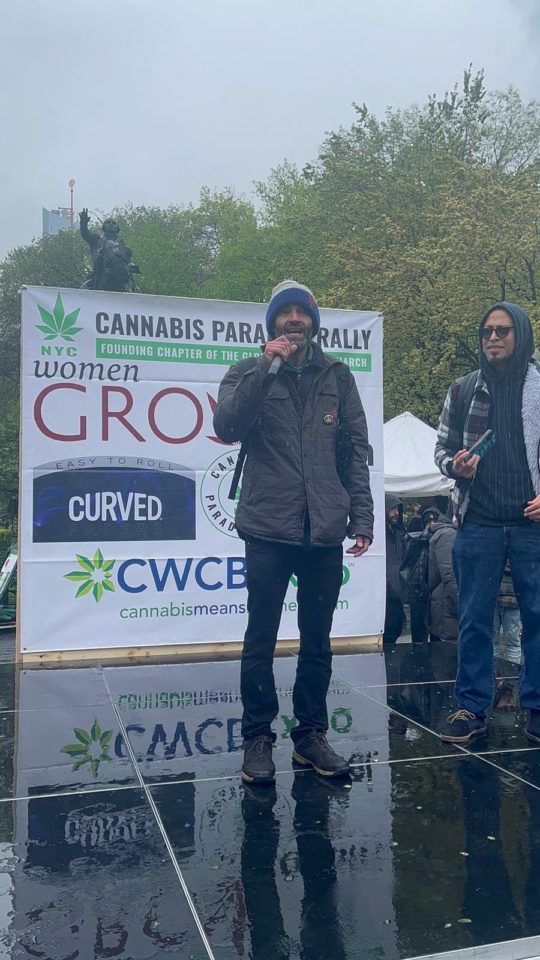
At NYC’s 2022 Cannabis Parade & Rally at Union Square / Courtesy of Aaron Genuth
What happened on June 10?
I’ll have to be somewhat sensitive about what I say here again, since the case is still active. I was pulled over for an expired inspection sticker. I declined repeatedly to consent to a search, so the officer arrested me for suspicion of DUI due to the smell of cannabis in the car, and searched my car. Long (and possibly incriminating) story short, I was charged with possession of psilocybin, LSD, MDMA, and ketamine. The 98 grams of psilocybin was initially charged as a felony, which would include a mandatory minimum of 3 years in state prison if convicted at trial under New York’s reformed but still draconian Rockefeller Drug Laws. Fortunately, I was able to find and retain a very good and qualified lawyer, through supporters of the Hudson Valley Psychedelic Society. Just as fortunately, the Assistant DA is familiar with some of the positive research on psilocybin as well as the Oregon legalization so she dropped the felony down to a misdemeanor. I’m optimistic that my documented advocacy work and the very well documented benefits and positive research results surrounding all of these psychedelics will lead to a relatively positive resolution. I’ve pointed out many times since my arrest that a person without my network and willingness to fight might be in a much more difficult position, particularly if they are a parent and holding a state regulated license, for example a nurse or teacher. A person in that position might lose custody and their job regardless of the results of the trial, and possibly have permanent negative effects on their life.
Is it frustrating that there are FDA-approved ketamine-assisted therapy treatments, yet the punishments are severe?
Yes, very. It’s just as frustrating to me that ketamine treatments are prohibitively expensive for many, despite the drug being very plentiful and cheap to produce. That’s not to suggest that every practitioner is gouging people, the issue at its root is regulatory; the combination of bad drug and healthcare policy creating a perfect storm of disproportionate harm that targets the poorest and most vulnerable. Ketamine was first granted ‘breakthrough’ status by the FDA in 2013 and there’s clinics and practitioners all over the country legally providing this medicine safely, legally, and therapeutically—often with incredible results for people suffering from Treatment Resistant Depression, severe PTSD, and suicidality. It’s absurd that it’s not accessibly available to everyone who needs it in the middle of an extended national mental health, suicide, overdose, and financial crisis. I personally believe that all psychedelics should be completely covered under a Universal Holistic Healthcare program, along with any other healing medicine or modality.
What are some of the charges you’re facing?
I got paraphernalia charges for a scale and the bags that the mushrooms were in. I also got charged with a DUI, which is the charge I’m most concerned about since it’s completely false, I was absolutely sober and returned from the grocery store at 10:30am. I’m an advocate for drug users, drug possession, and responsible drug use, but not for driving unsafely or unsoberly so I’m going to fight those charges from every angle possible. The paraphernalia charges also shouldn’t exist, and are addressed in a bill that Assemblymember Linda Rosenthal will be introducing in the state legislature next year. I and some others from the Decrim community worked on those and other amendments that were added to the bill that AM Rosenthal has introduced for the last 3 years to deschedule psilocybin and psilocin. We also worked with her team on another bill she’s introducing, to introduce more decriminalized and community based research and openings to treatment.
What can readers do to help right now?
My case is hopefully going in the right direction, but it’s been a very expensive disruption to my life and work. Any contributions to my GoFundMe are deeply appreciated. We have a special offer currently; a limited number of donors giving $54 or more will receive a Dr. Bronner’s Magic All-One Chocolate, which they’ve generously provided and allowed me to offer as an incentive. (The chocolates are delicious and vegan and fair trade but not psychotropic, no weed or mushrooms in them.) For those in or connected to New York; please join the Decrim First coalition and support NYPAC! The quickest route I know of to do that is to DM us or comment on Instagram @DecrimFirst or email us at DecrimFirst@gmail.com.
I also urge all New Yorkers who care and can to actively support the policies represented in AM Rosenthal’s legislation by reaching out to your state representatives to support and co-sponsor it, and to push for local reform. Please connect with us for support in reaching out to local legislators and law enforcement about policy and legislation! We’ve got templates for legislation, outreach materials, and experienced advocates and experts ready to back you up. Written and video recorded testimonials can also be very influential. We believe that New York must take immediate steps to meaningful reform that includes cultivation, decriminalization, and community access, and that it’s possible within the next year.
Florida Gov. Ron DeSantis told a group of reporters on August 23 that medical cannabis license holders in the state need to pay more for their license application and renewal fees. But operators in the state say that raising application and renewal fees could spell the end for some struggling businesses.
State officials “should charge these people more,” DeSantis said.
“I mean, these are very valuable licenses,” the governor continued. “I would charge them an arm and a leg. I mean, everybody wants these licenses.”
CBS News Miami reports that whether or not the governor was referring to existing license holders or future license holders remains to be seen.
But Florida’s license and renewal rates already exceed fees seen in other states. That could be because Florida’s licensing system requires operators to cultivate, process and sell marijuana and derivative products without limiting the number of retail locations, and lawyers say this makes the state’s licenses more valuable.
After stepping into his role as governor in January 2019, one of DeSantis’ primary promises is to provide a boost to Florida’s economy.
Gov. DeSantis pushed to repeal Florida’s ban on smokable flower. Voters in Florida passed a constitutional amendment legalizing medical cannabis in 2016, but regulations that ban smokable cannabis were passed by the legislature and signed into law by former Gov. Rick Scott.
Cannabis advocates sued, claiming the ban violated the amendment passed by voters. A state court agreed and declared the rule invalid, but it remained in place as an appeal from Scott’s administration made its way through the courts. However, when Gov. DeSantis took office, he said if the ban was not repealed his administration would abandon the appeal of the court ruling.
The ban on smokable cannabis was officially repealed on March 18, with Gov. Ron DeSantis signing a compromise bill that was passed by legislators. Smokable flower is, unsurprisingly, by far the most popular menu item at Florida’s over 460 medical cannabis dispensaries.
An earlier 2014 allowed low-THC products for certain patients. Then, medical cannabis companies part of an initial group of applicants in 2015 paid over $60,000 in order to be able to sell low-THC cannabis.
Then Florida’s 2016 constitutional amendment established more of what is thought of as a mature medical cannabis market with a variety of approved products.
Florida law requires legislative approval of rules if cost of compliance for those businesses exceeds $200,000 in one year or $1 million over the course of five years.
Jacking up application and renewal fees “would be unfortunate,” Brady Cobb, a lawyer and founder and CEO of Green Sentry told CBS News. “If it happens, it happens,” said Cobb. Cobb added that Florida could make more money by taxing cannabis products or allowing operators to wholesale products to each other and taxing those sales instead.
Black Farmer License Fees Also Too High in Florida
The state charged a higher fee in a recent round of applications for a license set aside in Florida’s 2017 law for a Black cannabis farmer. Under rules laid out by the Department of Health, applicants had to pay a $146,000 fee to compete for the Black farmer license which was over twice the fee from the application process in 2015.
“Black farmers are required to shell out $146,000 merely to apply for a license to grow medical marijuana,” the Miami New Timesreports.
The department accepted a dozen applications for the Black farmer license, but has not announced the winner of the license. A new round of license applications will launch again after the Black farmer license is issued, but the state hasn’t laid out a timeline. At least 150 applicants are expected to apply.
According to a press release from the Canada Border Services Agency (CBSA) on Aug. 24, the agency announced that it recently seized 592 kilograms (approximately 1,305 pounds) of cannabis in a recent move.
Using a CBSA detector dog in addition to “a wide range of detection tools and technology,” law enforcement was led to 1,036 vacuum-sealed bags of “suspected cannabis” bound for export on May 26. In addition to the first seizure, another was conducted on June 26 which involved 300 kilograms (661 pounds) contained in 100 bags—netting 892 kilograms (almost 2,000 pounds) of cannabis in total between the two seizures.
“Regardless of the mode of entry (air, marine, land, rail), it is illegal to bring cannabis (and cannabis products) into or out of Canada without a valid Health Canada permit or exemption,” the agency wrote in a press release. “CBSA officers have the authority to examine in-bound shipments as well as goods for export. Personal, mail, courier, and commercial shipments are subject to the Customs Act and may be examined for prohibited goods, including cannabis and cannabis products. Avoid seizures, fines or arrest: Don’t bring it into Canada. Don’t take it out of Canada.”
Rahul Coelho, CBSA A/Director, Metro Vancouver District, Pacific Region explained that exportation is only legal for those who have obtained the proper certification. “Although cannabis has been legalized and regulated in Canada, it remains illegal to import or export cannabis and cannabis products without a valid permit or exemption issued by the Government of Canada,” Coelho said. “These significant seizures demonstrate our commitment to intercepting illegal narcotics—at import and export—and contribute directly to disrupting criminal organization activity.”
According to the Canada Cannabis Act, only licensed parties may import or export cannabis in Canada, and “only for medical or scientific purposes.” All individual shipments require a permit, and permit applications are approved on a case-by-case basis.
Cannabis exports for Canada were valued at $53 million in 2020, which according to Prohibition Partners was a 229% increase from 2019 export data. Between 2018-2020, Canada exported 30,000 kilograms (approximately 66,000 pounds) of dried medical cannabis, as well as 35,500 liters (more than 9,000 pounds) of cannabis oil overseas.
Many other countries have legalized cannabis for import and export. Israel, one of the top countries in the world for cannabis research, approved cannabis exportation in May 2020. “This is a significant step for exporters and the Israeli industry, which will enable both expansion of export opportunities as well as rising employment … in the field,” said former Israel Economy Minister Eli Cohen about the decision.
Last year in July, Colombia legalized medical cannabis export as well, specifically for flower. “Colombia starts to play big, and with this decree we are putting ourselves at the forefront in terms of regulatory competitiveness, at least in Latin America and the Caribbean,” said Colombian President Ivan Duque. “We are opening the space to do much more in cosmetics … [including] food and beverages and even textiles.” Previously, Colombia approved legislation in 2016 to regulate cannabis production and sales, but exports remained banned until 2021.
A recent study revealed that in Canada, cannabis flower is still the most popular consumption method (according to data collected between 2018-2020). “The findings highlight the rapidly evolving nature of the cannabis product market, including notable shifts in the types of cannabis products used by consumers. … Although dried flower continues to dominate the market, it has begun declining with a notable shift towards increasing popularity of processed cannabis products,” researchers wrote about their findings. After flower, cannabis edibles and vape oils were the second and third most popular during the specified time frame.
A marijuana legalization initiative in South Dakota is in serious danger of going up in smoke this November, according to a new poll.
The survey, conducted by the pollster Mason-Dixon Polling & Strategy on behalf of the local news nonprofit South Dakota News Watch and the Chiesman Center for Democracy at the University of South Dakota, found that a majority of Mount Rushmore State voters are opposed to the legalization of recreational cannabis.
A little more than 54% of voters said they are against legalization, while just under 44% said they are in favor.
The polling data represents a potential source of concern for legalization activists in South Dakota, who have expressed confidence that the state’s voters will do what they did in 2020 and approve a recreational cannabis proposal at the ballot.
In 2020, 54 percent of South Dakota voters approved Amendment A, which would have legalized recreational cannabis in the state and laid the groundwork for a regulated weed industry.
But the amendment was subject to a legal challenge, led by Republican Gov. Kristi Noem, and was ultimately struck down by the state Supreme Court last November.
The new proposal, Initiated Measure 27, legalized possession of cannabis for adults in the state, but defers to the legislature on many of the regulatory details.
Matthew Schweich, the campaign director for South Dakotans for Better Marijuana Laws, said in May that the group collected more than 8,000 signatures above the qualification threshold to ensure that it would qualify.
“One of the main reasons why we maintained such ambitious goals for our signature drive was to ensure that we had a healthy margin, so we could deter our opponents from filing a lawsuit,” Schweich told the Argus Leader at the time. “This was the plan to have this buffer and be sure there would be no more lawsuits over cannabis initiatives in South Dakota.”
Following the release of the new poll last week, Schweich said he was confused more than anything.
“When I look a little deeper, I found things that do not make sense to me,” Schweich told local news station KELO. “Some of the numbers don’t really make sense and conflict strongly with previous data that we’ve seen.”
KELO reported that “Schweich pointed out that certain elements within the News Watch/USD poll do not jibe with past indicators of support for legalization in South Dakota.”
“I see this as a flawed poll, but one that I still need to keep in the back of my head as motivation to keep working hard,” Schweich told KELO. “I’m not going to dismiss this poll entirely, and it’s a reminder that we have to work really hard and not take anything for granted because in recent times, it’s gotten harder and harder to predict what an electorate will look like.”
A poll late last year found that a slim majority of South Dakota voters disapproved of Noem’s handling of cannabis legalization, while only 39% said they approved.
During a campaign stop earlier this month, Noem said that she will implement the new cannabis law if a majority of voters approve Initiated Measure 27 in November.
“From what I’ve seen, this amendment this year that will be on the ballot is written more appropriately towards the Constitution,” Noem said, as quoted by the Argus Leader.
A New York-based biotech firm has begun a clinical trial to study LSD as a treatment for anxiety, announcing last week that it had administered the psychedelic drug to a patient enrolled in the study for the first time. The research is designed to study the effectiveness of MM-120, a pharmaceutically optimized form of lysergic acid diethylamide (LSD) from MindMed, in treating generalized anxiety disorder (GAD).
MindMed is a biopharmaceutical company developing psychedelic therapies to treat mental health disorders. Robert Barrow, the chief executive officer of the company, said that the study is the largest well-controlled clinical trial of LSD ever conducted, adding that the research “represents a major milestone for MindMed and for the many patients suffering from GAD.”
“This exciting next step in the advancement of LSD builds on the positive topline data presented by our partners at University Hospital Basel in May 2022, which demonstrated the rapid, durable, and statistically significant effects of LSD and its potential to safely mitigate symptoms of anxiety and depression,” Barrow said in an August 25 statement from the company. “The results of our phase 2b trial will guide the dose selection and development strategy for our pivotal phase 3 clinical trials, as we continue our efforts to bring a new potential treatment to the millions of people living with GAD.”
GAD is a chronic and sometimes debilitating mental health disorder that affects nearly 6% of U.S. adults at some point in their lives. Symptoms of GAD include excessive anxiety and worry that persists for over six months, which can lead to significant impairments in social, occupational and other functioning, according to the National Institute of Mental Health (NIMH). While there are substantial similarities between GAD, major depressive disorder (MDD) and other serious mental health conditions, research into the disorder has yielded little innovation in treatment over the past several decades.
MindMed’s phase 2b trial is a multi-center, parallel, randomized, double-blind, placebo-controlled, dose-optimization study. Investigators plan to enroll 200 participants who will receive either a single administration of up to 200 micrograms of MM-120 or a placebo. The primary objective is to determine the reduction in anxiety symptoms 4 weeks after a single administration of MM-120, compared across five groups of study participants. Key secondary objectives of the study, measured up to 12 weeks after the single administration, include assessments of safety and tolerability as well as the quality of life.
The Resurgence of LSD Research
The MindMed study is representative of the recent resurgence in research into psychedelic drugs as treatments for serious mental health conditions. Michael Pollan, a journalist and educator who this summer released “How to Change Your Mind,” a Netflix documentary series based on his 2018 book with the same title, notes that researchers studied LSD as a possible treatment for mental health disorders in the 1950s and ‘60s. The tide of opinion turned against the drug only after people began using it recreationally.
“With a powerful assist from Timothy Leary, the flamboyant Harvard psychology professor, psychedelics had escaped the laboratory, falling into the eager arms of the counterculture,” Pollan wrote in the Wall Street Journal in 2018. “Yet in the decade before that there had been 1,000 published studies of LSD, involving 40,000 experimental subjects, and no fewer than six international conferences devoted to what many in the psychiatric community regarded as a wonder drug.”
In 1968, LSD was criminalized in the United States, largely ending research into the drug for decades. But interest in its value as a psychiatric medicine has rebounded. In July of this year, the American Psychiatric Association issued a statement that encouraged continued research into psychedelics as therapies for serious mental health conditions.
“There is currently inadequate scientific evidence for endorsing the use of psychedelics to treat any psychiatric disorder except within the context of approved investigational studies,” the APA wrote in a policy position approved by the professional group’s board of trustees. “APA supports continued research and therapeutic discovery into psychedelic agents with the same scientific integrity and regulatory standards applied to other promising therapies in medicine.”
Around this time last year, my colleague, Jesse Mondry, wrote about a District of Colorado case, entitled Sensoria, LLC et al. v. Kaweske, et al. , which involved a group of plaintiffs who sought to recover their investment in a cannabis business, Clover Top Holdings. The underlying set of facts involve an all-too-familiar cannabis investment scheme. And, the claims asserted included breach of contract, civil theft, fraud, breach of fiduciary duty. The case is notable though, because over the course of the past year, the plaintiffs ran into an unfortunate problem for this industry: the illegality defense.
What is the illegality defense in cannabis litigation?
We regularly cover the illegality defense on the blog, but for those who are unfamiliar, it comes down to this: “No court will lend its aid to a man who founds his cause of action upon an immoral or an illegal act.” It is often the position of the federal courts that because marijuana remains a schedule I drug and is illegal under the Controlled Substances Act (“CSA”), they cannot award any relief that derives from those CSA violations.
How does the illegality defense operate in cannabis litigation?
In Sensoria, the plaintiffs tried not once, not twice, but three times to rewrite their complaint to avoid the illegality defense. As Jesse wrote, the amended pleadings sought to characterize their involvement in Clover Top Holdings as that of a passive investor whose intention was to invest in a lawful business that included aspects of cannabis and hemp that do not violate federal law. The court noted that the intention to invest in a lawful business did not render the illegality issue moot and, consequently, reframing the relationship did not by itself preclude dismissal. Some dicta of the Court is particularly demonstrative of how much it did not want to get involved:
“Key aspects of this lawsuit concern activities that represent either actual ongoing CSA violations (by Defendants) or the attempt to recover the investments in an enterprise (Clover Top Holdings, Inc.) whose activities implicate the CSA. Marijuana is not an indirect or tangential aspect of the dispute. It lies at the heart of the business and thus the lawsuit … [the Court] may not vindicate equity in or award profits from a business that grows, processes, and sells marijuana.”
Sensoria’s latest move
This week, a sub-set of the defendants filed a motion for summary judgment on the issue of damages (a motion for summary judgment says to the Court, “there are no disputed facts about X issue and it can be decided before trial as a matter of law”).
In Sensoria, the defendants have the upper hand because the Court had already observed that “the remedy, should [Plaintiffs] prevail, is limited to the investment principal’s return paid from non-marijuana assets.” It even went so far as to find that the defendants’ legal interest in buildings and land are unlawful and subject to criminal forfeiture because “they are being used for marijuana.” So overall, the Court has repeatedly stated that its hands are simply tied on this because of the illegality defense: since the plaintiffs are asserting claims where marijuana is at the heart of the lawsuit, and marijuana is illegal on the federal level, it cannot and will not award any damages that derive from it.
This is a big blow to the plaintiffs and why we regularly caution our clients to stay away from the federal courts. Otherwise, no matter how artfully allegations are pled, you may run into a situation where the Court cuts your remedies in half (at best) or dismisses your case entirely (at worst).
For our latest posts on the illegality defense, see:
I’m guilty of dunking on the Federal Trade Commission (FTC) in the past for not doing more to protect cannabis consumers, despite the current federal illegality of cannabis. That may be changing, at least with respect to CBD consumers.
Before diving into this latest development, I should mention that historically, cannabis is treated differently from federal agency to federal agency. Here are some of the high level examples:
The Department of Justice is basically at a standstill on cannabis prosecutions in the wake of the Cole and Sessions memos.
The Internal Revenue Service will not relent on enforcing section 280e against cannabis businesses, even though to do so means marijuana businesses are taxed far more harshly than other businesses.
The Department of Treasury–through FinCEN–has slowly opened the door for banks to do business with those in the cannabis industry.
Now, the FTC is finally getting around to helping CBD consumers, it seems.
FTC and CBD
The FTC’s self-proclaimed mission is to “prevent business practices that are anticompetitive or deceptive or unfair to consumers; to enhance informed consumer choice and public understanding of the competitive process; and to accomplish this without unduly burdening legitimate business activity.” Under the Federal Trade Commission Act, one of the main standards guiding FTC enforcement is to prevent “unfair methods of competition, and unfair or deceptive acts or practices in or affecting commerce.”
Read that again. There’s no mention of lawful commerce, just commerce, which leaves the door open for FTC enforcement against state-legal marijuana businesses. And when it comes to cannabis and public policy, the FTC is much closer to the NLRB than, let’s say, the IRS. Both the FTC and the NLRB exist to protect individuals from certain business practices. Though the FTC works in tandem with the DOJ’s anti-trust division, it is the only federal agency with jurisdiction over both consumer protection and competition in broad sectors of the U.S. economy.
So far, the FTC still isn’t doing anything about state-legal cannabis businesses and the products they sell. But the Commission is taking up the mantle when it comes to protecting CBD consumers.
Per the FTC’s website as of August 24:
The Federal Trade Commission is sending payments to 576 consumers nationwide who bought deceptively marketed cannabidiol (CBD) products from Arizona-based Kushly Industries LLC. In total, the FTC is returning almost $21,000 to consumers deceived by Kushly’s false or unsubstantiated claims about its CBD products, averaging $36 each.
In March 2021, the FTC filed a complaint against Kushly Industries, LLC for making “false or unsupported claims or falsely claim that scientific evidence exists to back them up.” Specifically, the FTC alleges that:
Kushly . . . made false or unsubstantiated claims that their CBD products could effectively treat or cure a host of conditions—from common ailments, like acne and psoriasis, to more serious diseases, including cancer and multiple sclerosis. In addition, the complaint alleges the respondents falsely told consumers that scientific studies or research prove that CBD product effectively treat, mitigate, or cure the diseases, including hypertension, Parkinson’s disease, and Alzheimer’s disease.
Further, the FTC alleges that “the respondents have used these false or unsubstantiated claims to market or sell a range of products containing CBD, including gummies, softgel capsules, and topical ointments. They promoted their products on their website, kushly.com, and social media.” The complaint also alleges that Alt participated directly in promoting and advertising Kushly’s CBD products and has been featured and quoted in articles about the company, its products, and the CBD industry in general.”
The future of FTC CBD enforcement
The Kushly case is actually the seventh such case brought by the FTC against a CBD company in the U.S. based on false and/or unsupported health claims, related to the bodily or curative effects of CBD. It’s no secret that the FDA routinely tries to shutter these kinds of CBD companies, but now the FTC is using its teeth to sue and fine these companies and their individual owners. This case marks the first time, though, that consumers are also getting refunds for products purchased, the cost of which of course must be borne by Kushly.
The two main takeaways from the Kushly case are: 1) if you’re a CBD business, do not make either untrue or unsubstantiated health claims about your CBD products; and 2) if you’re a consumer of such products, in the future you may be entitled to a refund if the FTC continues to crack down on CBD companies in this manner. We expect that will happen given that these lawsuits are another enforcement “stick” to curb deceitful practices in the wild west industry that is CBD.
We’re excited to announce that our own Hilary Bricken will present for the Michigan State Bar’s Cannabis Law Section, in Cooperation with the Institute of Continuing Legal Education.
Hilary’s presentation is titled: “The Current State and Future of Cannabis and Psychedelics.” It begins the morning of October 1 at 9:15 a.m. Here is a description of what she plans to cover:
Cannabis and psychedelics are moving fast. More states have legalized cannabis for adult use, breeding legal innovation. Likewise, with psychedelics, certain cities and even one state (Oregon) have decriminalized and/or legalized psilocybin. Additionally, ketamine clinics are on an upward trend with heavy health care regulations. Understand emerging areas and learn about regulatory and licensing trends, barriers to entry, corporate structures, tax treatment, and investor relations.
According to event organizers:
Nowhere else can you get this many expert viewpoints in one place. Get timely insights from state and federal regulatory agencies, law enforcement, municipalities, scientists, and more. It’s perfect whether you’re experienced in cannabis law or ready to jump into this thriving area. Rub elbows with leaders in cannabis law while basking in the luxuries of the Grand Traverse Resort and Spa. In your free time enjoy championship golf courses, spa treatments, and fine dining. Or venture out and explore the area’s amazing casinos, breweries, wineries, shops, and more.
Dates:
09/29-10/01
Location:
Grand Traverse Resort and Spa
100 Grand Traverse Village Blvd.
Acme, MI 49610-0404
10 CLE credits
If you plan on attending, please look for Hilary and drop us a line!
San Diego’s proposal to establish a social equity program would present eligibility criteria that would help participants find locations, get financing, and get critical mentorship from existing members of the cannabis industry.
It would create a revolving loan fund that would begin with $5 million in city cannabis tax revenue. That probably won’t be an issue, as San Diego recorded over $24 million in cannabis tax revenue that was collected during the fiscal year that ended June 30.
Only those who meet these two criteria will be eligible:
Applicants must have been convicted of a cannabis crime, or have had a family member convicted of a cannabis crime, after Jan. 1, 1994, within the San Diego city limits.
Applicants must be a current or former resident, for at least five cumulative years between 1980 and 2016, of Barrio Logan, Linda Vista, southeastern San Diego, Encanto, Golden Hill, North Park, City Heights, the College Area or San Ysidro.
Applicants must also meet two of these four criteria:
Have a household income under 80% of the area median income.
Lost housing in San Diego through eviction, foreclosure or subsidy cancellation after 1994.
Attended school in the San Diego Unified School District for at least five years between 1971 and 2016.
Placed in the foster care system at any time between 1971 and 2016.
“We’re no longer talking in abstractions,” Kim Desmond, Chief of Race and Equity for the City of San Diego, toldThe San DiegoUnion-Tribune. “It’s an industry that is riddled with racial disparities.”
Bruce Mayberry, chief executive of the San Diego Central Black Chamber of Commerce, echoed those statements, adding that the city must take action.
“If you look at the number of African-Americans that were incarcerated and had their lives turned upside down when cannabis was illegal, and now you look at the number of African-Americans that are benefitting from cannabis now that it’s legal, you can make an argument that another crime is being committed,” Mayberry said.
San Diego’s Equity Problems
The problems of the city and county of San Diego have already been laid out.
On July 7, the City of San Diego released the Draft Cannabis Equity Report, detailing how Black and Latino people make up about 50% of total cannabis arrests since 2015, despite representing only 29% of San Diego’s population.
Ownership misrepresentation problems represent another facet of the problem: The study found that in San Diego County, 68% of cannabis business license holders are white, while white people make up 44% of the county’s overall population.
Latinos make up 34% of the overall population—yet hold only 14% of cannabis business licenses. Black people make up 5.6% of the county population and hold about 7% of cannabis licenses, perhaps due to recent efforts.
The study also found a huge disparity between men and women business owners.
San Diego’s proposal for a cannabis equity program will receive its next hearing in City Council on Sept. 20. It must be approved by late October in order to meet a state-imposed deadline for the next round of cannabis equity funding, which is expected to be close to $2 million, according to The San Diego Union-Tribune.
Voice of San Diegoreports that cannabis sales, distribution, manufacturing, and cultivation continue to be banned in the unincorporated areas, but a countywide ordinance is expected to include a social equity provision. That ordinance could roll out next year with a vote from the county’s Board of Supervisors.
Last summer, the Massachusetts based retailer Curaleaf mistakenly mixed-up THC with CBD at a bottling plant in Portland. Approximately 1,500 mislabeled bottles containing what the Oregonian describes as a “jumbo” dose of THC were shipped under the brand name Select and sold as containing only CBD. Although many of the bottles were recalled at the behest of state regulators, some were purchased and ingested, leading to approximately a dozen lawsuits.
The Oregon Liquor & Cannabis Commission (“OLCC”) initially sought to impose a 70-day suspension and a $200,000 fine on Curaleaf. This was the maximum allowable financial penalty under the law. The OLCC has now agreed that Curaleaf will face only a 23-day suspension and $130,000 fine and Curaleaf can reduce the suspension to only 12 days if it pays an additional $2,750. Meanwhile, just a few days ago, the OLCC issued a news release “signaling a desire to sideline marijuana licensees unable to follow common business practices.”
Preceding this THC/CBD mixup, Curaleaf was hit by the OLCC with a $110,000 “dishonest conduct” penalty related to claims about vaping products. And in July 2020, Curaleaf found itself defending a class action lawsuit after the FDA issued a warning for “illegally selling” CBD products and making health claims about those products.
This litany may sound like I have something against Curaleaf. I don’t. I do question why the OLCC appears to treat large cannabis corporations different than “mom-and-pop” shops. For example, everyone in Oregon cannabis knows Nectar, the state’s largest operator. A few years ago, Nectar was hit a barrage of violations ranging from Category I, where the presumptive penalty is license cancellation, to Category III, where the presumptive penalty is a fine and short suspension. The OLCC settled these violations for a seven-day suspension and fines totaling less than $50,000.
Now consider the case of Luminous Botanicals, reported on by Sophie Peel of the Willamette Week in April 2021. In that case, the licensee allegedly mislabeled a tincture and that the labels were not properly affixed and could fall off. The OLCC imposed a $100,000 penalty.
Unlike Curaleaf, nothing suggests that the Luminous was a repeat offender. Unlike Curaleaf, the contents of the products delivered to consumers were exactly as described. No one became ill, no lawsuits were filed and the labeling issue was not intentional. A $100,000 fine to a mom-and-pop outfit is a death knell in this competitive industry and tantamount to a license cancellation. The lack of proportionality in penalties and consistency in outcomes is disturbing.
“In this study, we evaluated the effects of recreational cannabis legalization in a large sample of prospectively assessed adult twins from similar cohorts of individuals born in Colorado and Minnesota, demographically similar states with different cannabis policies,” the researchers presented in their introduction. “While many participants still reside in their birth states, some participants have migrated to other states resulting in pairs discordant for exposure to recreational legalization.”
Researchers reviewed data from either the Minnesota Center for Twin Family Research or the University of Colorado, Boulder Center for Antisocial Drug Dependence, with a total of 3,452 individuals (split between 1,700 individuals from Minnesota and 1,752 from Colorado). All individuals had previously been asked about their cannabis use before and after 2014, when the state of Colorado legalized recreational cannabis, and Minnesota legalized medical cannabis. Of this number, there was a split among different types of twins: monozygotic (363 pairs), same-sex dizygotic (208) pairs and opposite-sex dizygotic (129 pairs).
The researchers concluded that in 111 pairs of twins, there were no genetic influences that led to cannabis consumption frequency, however they did confirm that “Existing genetic influences were moderated by the legal environment, as the genetic correlation between marijuana use before and after legalization was lower in states that legalized compared with states that did not.”
“Using a longitudinal design accounting for age, sex and earlier cannabis use, we found a ~24% increase in mean cannabis use frequency attributable to legalization,” researchers explained. “Furthermore, co-twin control results indicate that within monozygotic pairs, the twin living in a legal state uses cannabis ~20% more frequently than their illegally residing co-twin.”
However, the researchers also noted that nearly 92% of participants were white and projected how the inclusion of more non-white participants could alter the results. “An important extension of our work would be to investigate individual differences in the context of cannabis policy with respect to sex or racial background. Prior to recreational legalization, black Americans disproportionately bore the consequences of cannabis law enforcement,” researchers wrote. “Racial disparities in pre-legalization enforcement could mean that the legalization-related environmental changes experienced by black Americans were more dramatic than those experienced by their white counterparts, but we are not able to address this issue effectively in these samples.”
In their conclusion, researchers stated that this particular topic could use more elaboration to further understand how cannabis may have affected people in other states. “Through the use of zygosity-stratified co-twin control analyses, we found a ~20% increase in cannabis use frequency, consistent with a causal effect of recreational legalization,” they wrote. “These results do not, by themselves, demonstrate how more frequent use in legal states translates to changes in health or behavioral consequences, therefore future work is necessary to further address complex questions around the public health impacts of legalization and vulnerability to widely available marijuana.”
On Aug. 24, a new study from the National Institutes of Health found that consumption of cannabis and hallucinogens is at an all-time high for individuals between the ages of 19-30. Researchers said that consumption in this age group has “increased significantly in 2021 compared to five and 10 years ago,” and is the highest level of consumption since 1988.
National Institute on Drug Abuse Director Nora Volkow said in an accompanying statement that this research is crucial to understanding the long-term effects of cannabis on youth. “As the drug landscape shifts over time, this data provides a window into the substances and patterns of use favored by young adults. We need to know more about how young adults are using drugs like marijuana and hallucinogens, and the health effects that result from consuming different potencies and forms of these substances,” Volkow said. “Young adults are in a critical life stage and honing their ability to make informed choices. Understanding how substance use can impact the formative choices in young adulthood is critical to help position the new generations for success.”
Seasoned pro wrestler and NWO co-founder Kevin Nash is going full throttle into the cannabis industry by launching his own strain, with the expertise of the cultivators behind HYMAN Cannabis.
Nash’s new strain and collaboration was first announced at the GCW Notorious show, E Wrestling News and Wrestling Headlines reported last January. You can hear Nash talk about the new endeavor on his podcast, KLIQ This.
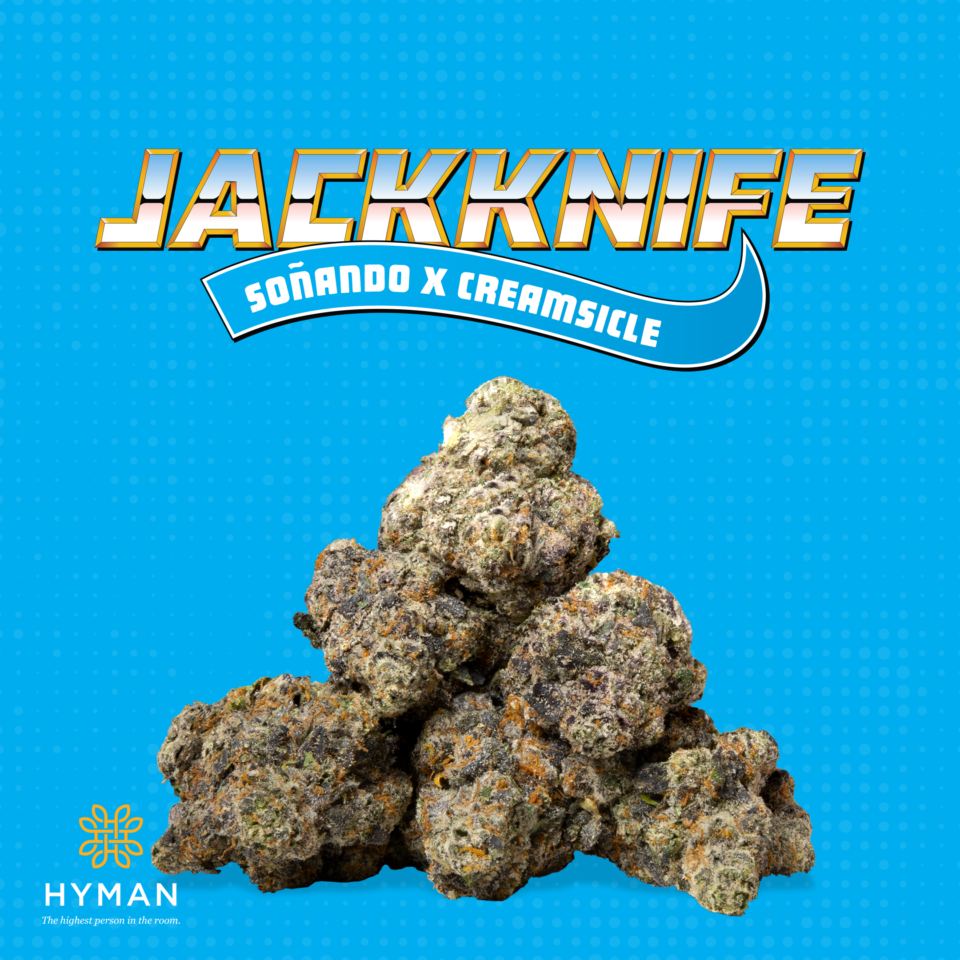
Jackknife, (Creamsicle x Soñando) his signature strain, is the result of narrowing down some of HYMAN‘s marquee genetics. Soñando has a citrus, orange, and berry flavor profile, and Creamsicle tastes exactly how you’d expect it to. HYMAN’s Head Cultivator Rabid Hippie oversees the Michigan-based cultivator’s 30,000 square feet of canopy space.
Nash is notorious for his own versions of the jackknife maneuver. In his heyday, Nash perfected the “Jackknife Powerbomb,” an enhanced version of a powerbomb that sees the opponent thrown forward and then down—one way to finish the job. But all of the physical strain that goes into wrestling takes its toll, and that’s where cannabis comes in.
“My signature move: Jackknife Power Bomb, my finishing maneuver, is fitting for my strain partnership with HYMAN cannabis as I feel it accurately represents the strength and potency of the flower,” Nash tells High Times. “When you’re being Jackknifed, you’re not in control over the situation.
“Turning my pain into passion, I have become very familiar with cannabis and the one thing I find to be most important is quality,” Nash adds. “HYMAN cultivators have achieved a level of quality that is like nothing else I’ve tried—everything HYMAN does is by design and I am excited to hear what fans think when they try it.”
Six-time world champion, five as the WCW World Heavyweight Champion and one as the WWF Champion, as well as 12-time world tag team champion, Nash has taken home some 21 or so championships during his tenure in pro wrestling.
Courtesy of HYMAN Cannabis
You may have seen Nash in films like Teenage Mutant Ninja Turtles, Magic Mike, John Wick, Rock of Ages, Longest Yard, and Punisher (2004). Nash also played D1 college basketball for the Tennessee Volunteers. Later, he joined the Army after watching the movie Stripes. He was honorably discharged, leading him to go back into basketball until a “career-ending” knee injury finished off his professional athletic career.
Nash will be making appearances at select Michigan dispensaries, so you can try the Jackknife, or get an autograph. The two-day signing tour will make stops at the following Michigan dispensaries:
The Jackknife strain drops in Michigan on Friday, September 2, and will be available in a 3.5G Pre-Pack (Eighth) and 1G Handcraft (Glass Tip Joint) in select dispensaries.