Saturday, July 2, 2022

Cannabis Patent Q&A

On June 14, 2022, Harris Bricken attorneys Fred Rocafort, Jihee Ahn, Paul Coble, and Vincent Silwoski presented a webinar entitled Protecting, Monetizing and Enforcing Cannabis Intellectual Property. Attendees submitted many great questions before and during the webinar, but our IP attorneys were not able to answer all of them. In this post, we will answer the cannabis patent questions that were not addressed in the webinar.

What do you think about using the Plant Variety Protection Act to protect strains?

The Plant Variety Protection Act (PVPA) can provide protection for both asexually and sexually reproducing plants, like cannabis. The pseudo-patent protection available under the PVPA prohibits other from marketing, selling, delivering, exchanging, transferring, or multiplying a protected strain. However, current practical realities make PVPA protection unavailable for most cannabis patent strains. The PVPA includes a strict requirement that at least 3,000 seeds of the claimed plant species be deposited with the U.S. Department of Agriculture in Fort Collins, CO. The USDA will not accept any deposits for plants that are classified as controlled substances, including cannabis. In other words, for the time being, PVPA protection is unavailable for cannabis plants that do not qualify as hemp (less than 0.3% delta-9-THC). The DEA recently stated that cannabis seeds containing less than 0.3% d9-THC are not controlled substances regardless of the THC content of the mature plant, but it is not yet clear whether the DEA’s statement will affect the USDA’s prohibition.

How can I protect a recipe/formulation that is unique to the market? How do I present a Fast-Acting ingredient and protect the recipe?  How do I sell license opportunities for my recipes?

New and useful compounds, as well as novel formulations of known compounds, can be protected with a utility cannabis patent.  Licensing strategy is a complex issue that depends on the nature of the invention and inventor(s), but obtaining a patent almost always strengthens licensing leverage. Sometimes just having a patent application on file is enough to license rights to larger companies or patent monetization firms.

Is it possible to obtain a cannabis patent for a methodology that cures or eliminates a cannabis pathogen?

Absolutely, so long as it is new, useful, and has not been disclosed or used in public (some exceptions may apply). You will also need to be able to describe the methodology in sufficient detail such that a typical cannabis cultivator can achieve the desired outcome without undue experimentation.

Who owns patentable IP that is jointly developed by multiple parties?

Absent an enforceable agreement addressing IP ownership, patent rights in the US vest by default with the inventors. Any person who materially contributed to the claims of the patent must be listed as an inventor and the inventors each have an individual right to practice and license the patent. If the inventors work for different companies, ownership of the IP will be dictated by any agreements the inventors have with their employers.

I’d like to hear thoughts on enforcement of patents on cannabis paraphernalia, specifically electronic devices and whether there’s any reason to believe there are any more issues with those than with enforcement of patents on any other consumer good.

Patents on cannabis paraphernalia (namely vaporizers, water pipes, rolling papers, etc.) are a common subject for both utility and design patents. Electronic vaporizers and cartridges are one of the most common cannabis patents, with several new patents issuing each week. There is no reason to believe that such patents are any less enforceable than any other patent, but none have been tested in court.

Ramifications of Canopy vs GW Pharma?

For the uninitiated, Canopy Growth v. GW Pharmaceuticals et al., Case No. 6:20-cv-01180-ADA (W.D. Tex.), is one of the first cannabis patent infringement cases in the US and sets the stage for many more to come. In late 2019, Canopy Growth obtained a patent for subcritical CO2 ­extraction and promptly sued GW Pharma in Texas federal court. As part of every patent infringement lawsuit, the court is required to construe the claims of the patent and, where necessary, put the patent language into terms that can be applied to the allegedly infringing product or process. Canopy and GW agreed on the meaning of all claim terms, except for one. GW argued that the patent term “CO2 in liquefied form under subcritical pressure and temperature conditions” meant that both the temperature and pressure had to be below the critical point to infringe (i.e. only extraction conditions in the red portion below):
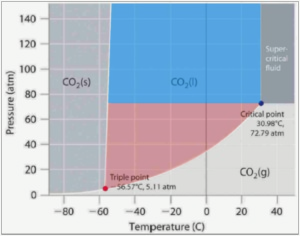
Canopy contended that liquified CO2 at either a lower pressure or a lower temperature than the critical point would constitute subcritical conditions (i.e. the red and blue portions). The court agreed with GW. Since GW’s processes are presumably solely within the blue range excluded by the court’s construction, Canopy consented to judgment of non-infringement and promptly appealed.


For now, there will be few direct ramifications from the case for most operators. Extractors that are operating processes with extraction conditions in the red range should consult a patent attorney to discuss their options. More broadly, however, it serves as an indicator that major cannabis patent suits are coming and highlights the importance of understanding cannabis science in cannabis patent analysis.

The post Cannabis Patent Q&A appeared first on Harris Bricken Sliwoski LLP.


from Canna Law Blog™ https://ift.tt/IDP8oaF
via IFTTT

Friday, July 1, 2022

North Carolina Gov. Signs Bill Marking Legal Hemp Permanent

Hemp is now permanently legal in North Carolina thanks to a bill signed into law by the state’s governor.

The legislation was one of three measures signed on Thursday by Gov. Roy Cooper, a Democrat. As written, the bill will permanently remove hemp from the state’s list of controlled substances, which brings North Carolina in line with federal law.

Cooper hailed the bill as a win for Tar Heel State farmers.

“Agriculture is North Carolina’s largest industry and giving North Carolina farmers certainty that they can continue to participate in this growing market is the right thing to do for rural communities and our economy,” Cooper said in a statement following the bill’s signing.

Changes to federal law over the last eight years have made it possible for states to cultivate hemp, a policy that has been a boon to the agriculture community.

In 2014, Congress passed a Farm Bill that enabled state governments and research institutions to cultivate and produce hemp under so-called “pilot programs.”

The 2018 Farm Bill changed national policy over hemp entirely by removing it from the federal Controlled Substances Act.

As the National Conference of State Legislatures explained: “The 2018 Farm Bill allows states and tribes to submit a plan and apply for primary regulatory authority over the production of hemp in their state or in their tribal territory. As described in the USDA interim final rule, a state plan must include certain requirements, such as keeping track of land, testing methods, and disposal of plants or products that exceed the allowed THC concentration. The USDA will review and issue a decision within 60 days on plans submitted by a state to the agency with the goal of providing states enough time to implement their plan before the 2020 hemp season.”

North Carolina had treated its hemp cultivation as a pilot program, which was scheduled to lapse at the end of June. The bill signed into law on Thursday by Cooper extends the program beyond that month, and into the future.

The measure had overwhelming support in North Carolina’s Republican-controlled general assembly, with members of the state Senate passing the bill unanimously in May.

The hemp bill fared better than a proposal to legalize medical cannabis in North Carolina. Members of the state Senate approved that legislation last month by a vote of 35-10, but has stalled in the state House of Representatives.

The bill would permit patients with the following qualifying conditions to receive medical cannabis as a treatment: Cancer; Epilepsy; Positive status for human immunodeficiency virus (HIV); Acquired immune deficiency syndrome (AIDS); Amyotrophic lateral sclerosis (ALS); Crohn’s disease; Sickle cell anemia; Parkinson’s disease; Post-traumatic stress disorder, subject to evidence that an applicant experienced one or more traumatic events; Multiple sclerosis; Cachexia or wasting syndrome; Severe or persistent nausea in a person who is not pregnant that is related to end-of-life or hospice care, or who is bedridden or homebound because of a condition; a terminal illness when the patient’s remaining life expectancy is less than six months; or a condition resulting in the individual receiving hospice care.

Polls have shown that North Carolina voters are broadly supportive of both medical and recreational cannabis.

Seventy-two percent of registered voters in the state said they are in favor of medical cannabis use, according to a survey released in April. The same poll found that 57% of North Carolina voters believe recreational cannabis should be legal, too.

Support for medical cannabis included 64% of North Carolina Republicans, 46% of whom said they are in favor of recreational pot being made legal.

The post North Carolina Gov. Signs Bill Marking Legal Hemp Permanent appeared first on High Times.


from News – High Times https://ift.tt/TpGmrtO
via IFTTT

The Roll-up #247: Getting high at work

Workday consumption spiked during the pandemic, as need met opportunity. Now that Covid anxiety has fallen, are you still working cannabis into your workday?

The post The Roll-up #247: Getting high at work appeared first on Leafly.


from Leafly https://ift.tt/cXjUsv3
via IFTTT

Report Projects Puerto Rican Recreational Cannabis Market Worth Over $500 Million

A pro cannabis trade group in Puerto Rico is hoping to advance the discussion of full recreational cannabis reform on the island. To this end, they have just released a report which predicts how recreational cannabis legalization might benefit the U.S. territory, located just southeast of Cuba. According to the analysis, the maturation of the industry here would take about five years and would take a trajectory seen in the development of the casino vertical, which developed here in the early decades of the twentieth century.

The island is not the only jurisdiction to consider this kind of economic development, particularly post-Pandemic. Nor is it the only popular tourist destination. This segment of the economy is, however, critically important to the island’s economy and has become increasingly so during the second decade of this century. It currently accounts for 10% of the total economy. Indeed, before COVID, much of the critical infrastructure was damaged thanks to Hurricane Maria and tourism was used to rebuild the island.

Beyond this, the island is no stranger to the production of other recreational commodities. This includes the world’s largest rum distillery, the Bacardi factory, located in Cataño. It is also increasingly a crypto firm haven. Because of Donald Trump, 98% of the land on the island is currently considered an “opportunity zone” designed specifically to bring foreign investors here.

Cannabis Reform in Puerto Rico

Cannabis has been illegal in Puerto Rico since 1932 when Act 12 specifically outlawed the same. Penalties for planting, importation, purchase, and sale of the plant ranged from a one month to one year in jail.

In 2013, right after the success of two American state referendums in Colorado and Washington State, Representative José Luis Báez proposed decriminalization. The Governor, Alejandro Garcia Padilla, signed medical cannabis reform two years later.

This reform includes allowing patients to have a 30-day supply of the drug, but not in smokeable form. Home grow remains illegal, and patients must purchase their meds through state-licensed dispensaries. There are an estimated 115,000 Puerto Rican patients.

Puerto Rico is today an unincorporated U.S. territory. It is not a state. How U.S. federal law is interpreted here is also a hotly contested topic. According to what some consider highly racist decisions enshrined in Supreme Court case law and handed down in the early part of the last century, the island, along with the Philippines and Guam, are places where constitutional rights enjoyed within the continental U.S. and incorporated territories do not apply. Indeed, according to these legal precedents, the U.S. Constitution applies within the United States proper, the District of Columbia and “incorporated territories” while only the “fundamental limitations” apply in unincorporated ones.

What this means when it comes to things like the constitutional rights of states (see the earliest cannabis reform at the state level as a constitutional amendment at this level), cannabis is certainly in a very strange gray zone.

Displacement of Locals?

One of the tragic impacts of the last hurricane was that in its aftermath, residents were often forced to sell their homes and for a variety of reasons. This has led to investment banks buying large tracts of distressed real estate here over the past several years and locals being unable to afford to live here (or at least own property and sustain a decent standard of living). This has also led to local protests against foreign development, including the privatization of public resources, like beaches.

The development of a cannabis industry in this kind of environment may well prove profitable for foreign firms. How it would benefit the local population in terms of sustainable economic redevelopment is another matter.

The post Report Projects Puerto Rican Recreational Cannabis Market Worth Over $500 Million appeared first on High Times.


from News – High Times https://ift.tt/eWpQNU9
via IFTTT

Stay chill with Ice Cream Cake—July’s Leafly HighLight

This summer strain is perfect for stoners with a sweet tooth.

The post Stay chill with Ice Cream Cake—July’s Leafly HighLight appeared first on Leafly.


from Leafly https://ift.tt/D3J8bNd
via IFTTT

Just Announced – High Times Cannabis Cup Massachusetts: People’s Choice Edition 2022

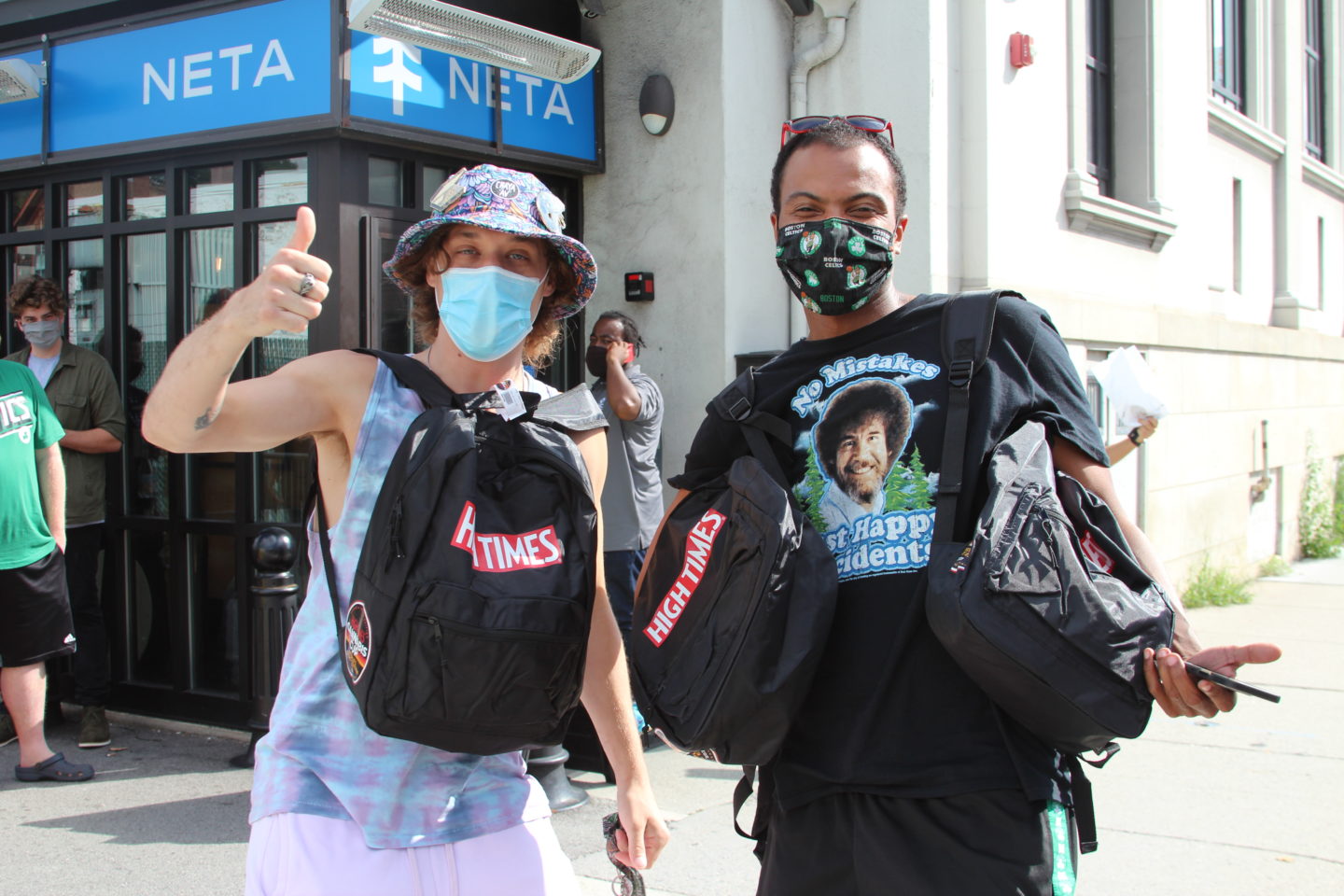
We’re proud to announce that our newest cannabis cup competition will be uniting the many unique products in Massachusetts! The state is already home to a blossoming cannabis industry with plenty of unique products to experience.

Products can be submitted for consideration at NETA dispensaries in Franklin, MA. between September 7-9. Kits will be sold starting on September 24 (first come, first serve availability). Judges will have until November 13 to check out and review everything Massachusetts cannabis companies have to offer, and the winners of the cup will be announced on November 27 through a digital awards show.

Massachusetts Cannabis Cup Entry Categories:

  1. Indica Flower (28 total slots available; 2 entries Max per Company) 
  2. Sativa Flower (28 total slots available; 2 entries Max per Company)  
  3. Hybrid Flower (28 total slots available; 2 entries Max per Company) 
  4. Pre-Rolls (10 total slots available; 1 entries Max per Company) 
  5. Concentrates (10 total slots available; 1  entries Max per Company) 
  6. Distillate Vape Pens & Cartridges (10  total slots available; 1 entries Max per Company) 
  7. NON-Distillate Vape Pens & Cartridges (10  total slots available; 1 entries Max per Company) 
  8. Edibles: Sativa Gummies (10 total slots available with 50mg THC max; 1 entries Max per Company)
  9. Edibles: Indica Gummies (10 total slots available with 50mg THC max; 1 entries Max per Company)
  10. Edibles: Chocolate Non-Gummies (10 total slots available with 50mg THC max; 1 entries Max per Company)
  11. Edibles: Fruity Non-Gummies (10 total slots available with 50mg THC max; 1 entries Max per Company
  12. Edibles: Beverages (10 total slots available with 50mg THC max; 1 entries Max per Company)
  13. Topicals + Tinctures + Capsules (10 total slots available; 1 entries Max per Company)

Once the judges have submitted their feedback, we’ll announce the first place winners that have earned themselves the renowned High Times Cannabis Cup trophy—an honorable award that proves that their product rises above the rest of the competition.

Courtesy of NETA

The trophy, which was designed by Alex and Allyson Grey, is made of zinc and 24K gold plating. First-place winners will also be given a full page advertisement in High Times magazine, a complete report of the competition scores and comment feedback, winner decals to place on your product packaging, a mention in our online article featuring the winners of the High Times Cannabis Cup Massachusetts: People’s Choice Edition 2022 (as well as being recorded as a winner on cannabiscup.com) and of course, inclusion of the winning brands for each category on High Times social media channels (shared on the High Times timeline, story and story highlights).

Second place winners will receive a silver medal made of pewter and a silver ribbon with your winning category inscribed on it, as well as a half-page advertisement in High Times magazine, second place art assets for product packaging (along with all of the aforementioned judge’s report, and inclusion of the win online and on social media).

Third place winners will receive a bronze medal, made from pewter and bronze plating, with a matching bronze ribbon and the winning category inscribed on it, and a half-page advertisement in High Times magazine as well.

Even the products that do not win first, second, or third place in their respective categories can win in other ways. All products and brands will be included and tagged on social media in order to support Massachusetts cannabis companies and everything they bring to the table. During our Awards Show, we also do a shout-out and thank all competitors for participating in our competition. Best of all, the High Times Report is available upon request, should you like to learn more about what the judges thought of your product, and where it is ranked through our scoring system.

All products must be licensed by CCC and we cannot accept caregiver product.

A special thanks to our official intake partner, NETA.

www.cannabiscup.com

The post Just Announced – High Times Cannabis Cup Massachusetts: People’s Choice Edition 2022 appeared first on High Times.


from News – High Times https://ift.tt/WDXlsTq
via IFTTT

New York’s Retail Dispensary Build-Out Requirements

Without much fanfare, the Dormitory Authority – State of New York (or DASNY) issued a request for proposal (RFP) for design-build services for conditional adult-use retail dispensaries (CAURDs). DASNY included a concept program (see Addendum 3) that details the build-out requirements for retail dispensaries selected as part of the CAURD social equity program. The Cannabis Control Board (CCB) recently announced that DASNY received more than 20 bids from design-build firms. Yes, we know, there are a lot of acronyms here.

The RFP very specifically applies only to design-build firms interested in bidding on CAURD build-out contracts. But from a big-picture perspective, the RFP is the first clear indication of what the CCB and Office of Cannabis Management (OCM) envision for adult-use retail dispensaries in New York.

Of course there is no guarantee that the forthcoming rules and regulations for adult-use retail dispensaries will include requirements identical to those detailed in the RFP. But as I explain below, the build-out requirements track a lot of the general operational requirements listed in the Marijuana Regulation and Taxation Act (MRTA). It’s our bet that the rules and regulations stick pretty closely to the RFP’s concept program.

So without further adieu, here is some (but not all) of the information we gleaned from the RFP:

Spatial Build-Out Requirements

The dispensaries that are part of the RFP are anticipated to be between 3,000 and 5,000 square feet and will have the following features:

  • Open layout to enable disbursement and flow of visitors.
  • A branding wall and sales counters and services space that include 5-10 point of sale (POS) areas.
  • Shelving and floor displays that clearly display products.
  • There should be product receivables area and a cannabis processing work room, as well as a quarantine/secure space storeroom area.
  • The circulation from “back of house” to the sales area should be shielded from view to the extent possible.
  • The vault door should be shielded from customer view. 
Security Requirements

A security plan must include interior video surveillance, exterior video surveillance, interior access controls, exterior access controls and both interior and exterior intrusion systems. Applicants will need to provide a security floor plan for each location prior to build-out of each dispensary based on the master security plan. 

One key point: a security system must be capable of 24 hour recording and producing still photos and date/time stamps. A backup power system that allows the CAURD to remain operational during a power outage is required and the perimeter around the facility must be illuminated.

Cannabis Storage

Cannabis and ready for sale, packaged cannabis-containing products must be stored within a secure room or approved safe in such manner as to protect against physical, chemical and microbial contamination and deterioration.

Odor Mitigation

Dispensaries must implement and maintain appropriate ventilation and filtration systems to satisfy unwholesome or noxious odor nuisance standards that may be in place within the local jurisdiction.

Point of Sale Systems/Equipment

POS system software such as Leaf Logix will be required. Hardware such as computers or iPads and scanners will also be required as part of the POS system and must be compatible with the POS software scanners that in turn are compatible with Leaf Logix.


Again, this is just a brief summary of the requirements contained in the RFP. For anyone who is considering applying for a retail dispensary, closely reviewing (or consulting with an attorney who has reviewed) the RFP’s concept program is a must. Stay tuned for further developments on New York’s adult-use licensing progress!

The post New York’s Retail Dispensary Build-Out Requirements appeared first on Harris Bricken Sliwoski LLP.


from Canna Law Blog™ https://ift.tt/2HhBqT4
via IFTTT