Wednesday, August 3, 2022

Cannabis Trademark Litigation: Wrigley Wins

A final judgment recently rendered in WM. Wrigley Jr. Company v. Roberto Conde, et al., is nothing short of a cautionary tale and a powerful reminder to cannabis companies: Parody is NOT a defense to trademark infringement in this type of commercial context.

The parties

We all know Wrigley – it’s a titan in the food industry and offers a range of products like gum, mints, and candies, including Skittles, Starburst, and Lifesavers. Wrigley is the owner of numerous trademarks and, relevant here, owns and have used the famous SKITTLES and STARBURST marks.

The judgment, which is based on a consent decree between the parties, is rendered against Steven Mata, an individual who lives and conducts business in Orange County. Mata does business as OC420, which is a retailer of edible cannabis products.

Mata marketed and sold products like “Medicated Skittles,” “Medicated Cannaburst Gummies,” and a “Munchies Edible Deal.” The packaging is clearly meant to imitate the Skittles and Starburst packaging, which adopts and uses the word marks in the same fashion and features a graphic design that is also nearly identical to the original candies.

The problem

There is a line between using another’s mark to make political or social commentary and using another’s mark to gain recognition and increase sales of your own product. We’ve written before about cannabis companies that have attempted to spoof well known marks and have paid a price for it.

Hershey’s, for example, made a statement against the industry when it initiated multiple lawsuits over several years against companies that branded cannabis-infused chocolate products with names such as “Mr. Dankbar,” “Reefer’s Peanut Butter Cups,” “Hasheath,” and “Ganja Joy,” all meant to imitate the popular chocolate products. These cases ultimately settled out of court.

The judgment

The judgment states that Mata’s conduct constituted:

  1. Trademark infringement;
  2. Trademark dilution;
  3. Unfair competition and deceptive acts;
  4. Dilution under relevant California Business and Professions Code statutes; and
  5. Counterfeiting.

The Court issued an injunction against any further counterfeiting, infringement, dilution, and unfair competition. Mata is also to recall any products, packaging, and advertising that is already out in the world, and provide them to Wrigley’s attorneys for destruction. Finally, Mata is to provide an accounting of all profits from the products and “disgorge” them (turn them over) to Wrigley, in addition to statutory damages of $2 million per counterfeit mark, as well as pre-judgment interest, Wrigley’s costs and its attorneys’ fees in prosecuting the case.

Oof. This is one of the harshest judgments we’ve seen in a while, and that’s because Mata’s conduct was malicious and willful. (Sidenote: this also means that if Mata filed for bankruptcy, this judgment is non-dischargeable.) So please – don’t find yourself in a similar position and make sure to work with good intellectual property lawyers to clear your brand from the get go.

And if you’re interested in similar cases, here are past articles of other case studies:

The post Cannabis Trademark Litigation: Wrigley Wins appeared first on Harris Bricken Sliwoski LLP.


from Canna Law Blog™ https://ift.tt/Sph3QFW
via IFTTT

Live resin is the best thing to happen to delta-8

Family-owned Flying Monkey is one of the producers going the extra mile to give cannabinoid-rich hemp the attention & care it deserves.

The post Live resin is the best thing to happen to delta-8 appeared first on Leafly.


from Leafly https://ift.tt/t81clb7
via IFTTT

Study Finds Genetic Link to Effects of Psychedelic Drugs

Common genetic variations in a particular serotonin receptor could be responsible for the varying effects psychedelic drugs have on different individuals, according to a recently published study from researchers at the University of North Carolina. The study, which comes at a time of reinvigorated research into the potential therapeutic benefits of psychedelic drugs, could shed light on why the substances seem to have dramatically positive effects for some patients with serious mental health conditions while others find little therapeutic value in the drugs.

Bryan Roth, MD, PhD, led a team of researchers at the University of North Carolina (UNC) to complete the study. The goal of the research was to explore how variations in this one serotonin receptor changes the activity of four psychedelic therapies. The laboratory research in cells showed that seven variants uniquely and differentially impact the receptor’s response to four psychedelic drugs—psilocin, LSD, 5-methoxy-N,N-dimethyltryptamine (5-MeO-DMT) and mescaline. The researchers believe that the in vitro research could be useful for determining appropriate mental health therapies for patients.

“Based on our study, we expect that patients with different genetic variations will react differently to psychedelic-assisted treatments,” said Roth, who leads the National Institutes of Health Psychotropic Drug Screening Program. “We think physicians should consider the genetics of a patient’s serotonin receptors to identify which psychedelic compound is likely to be the most effective treatment in future clinical trials.”

Psychedelics and Mental Health

Research published in 2020 in the journal JAMA Psychiatry found that psilocybin-assisted psychotherapy was a quick-acting and effective treatment for a group of 24 participants with major depressive disorder. A separate study published in 2016 determined that psilocybin treatment produced substantial and sustained decreases in depression and anxiety in patients with life-threatening cancer. And last year, researchers determined that psychedelic users had less stress during lockdowns put in place to control the COVID-19 pandemic.

Prior research has also determined that psychedelic drugs stimulate serotonin receptors in the brain. The 5-hydroxytryptamine receptor, also known as 5-HT2A, is responsible for mediating how a person reacts to psychedelic drugs. However, there are several naturally occurring, random genetic variations that can affect the function and structure of the 5-HT2A receptor. Much of the research into the effect that psychedelics have on mental health is inspired by the effect the drugs have on serotonin receptors, which bind the neurotransmitter serotonin and other similar molecules to help regulate mood, emotions and appetite.

Although they show great promise, psychedelic drugs do not seem to be effective as a treatment for everyone. Dustin Hines, PhD, an assistant professor of neuroscience in the department of psychology at the University of Nevada, Las Vegas, who was not involved in the UNC study, said the research could shed light on why psychedelic therapies work well for some patients while others find little therapeutic benefit from the drugs.

“Genetic variation in this receptor has been shown to influence the response of patients to other drugs,” Hines told Healthline. “While psychedelic therapies can provide rapid and sustained therapeutic benefits for multiple mental health concerns, there are a proportion of patients who fail to respond.”

Hines also noted that differences in mental health conditions from person to person could also contribute to how well patients respond to both psychedelic and more traditional treatments.

“Some individuals with depression may have a genetic predisposition that increases the likelihood that they will experience depression in their lives,” Hines said. “Other individuals facing depression may have more situational or environmental contributions.”

The researchers at UNC noted that the study could help provide insight to clinicians considering psychedelics as a treatment for their patients and called for further investigation.

“This is another piece of the puzzle we must know when deciding to prescribe any therapeutic with such dramatic effect aside from the therapeutic effect,” Roth said. “Further research will help us continue to find the best ways to help individual patients.”

Results of the study were published last week in the journal ACS Chemical Neuroscience.

The post Study Finds Genetic Link to Effects of Psychedelic Drugs appeared first on High Times.


from News – High Times https://ift.tt/jJfQB54
via IFTTT

Recipe: How to make the best vegan weed brownies

Brownies are an OG weed edible across North America. We've given the recipe a little (vegan) upgrade, just in time for late summer fun.

The post Recipe: How to make the best vegan weed brownies appeared first on Leafly.


from Leafly https://ift.tt/ofMlEHr
via IFTTT

Cannabis Industry Seen as a Target for Union Expansion

The cannabis industry is seeing a need for unions as more workers are hired and more states legalize. There is an increasing call from workers for better conditions, wages, and benefits, and unions are getting interested. 

Cannabis is continually bringing in more money for the U.S. economy. In 2020, the industry brought in a total of between $17.5B and $21.3B and provided between 240,000 and 321,000 full-time jobs. It is projected to reach $41B by 2026. As more states come on with legalization these figures could be even higher. 

And already, we are seeing unionization pop up. Modern Cannabis dispensary in Chicago unionized in 2021, and many other businesses in the city have done the same. The first cannabis union contract in Chicago was ratified in March 2022. 

“We’re trying to make these careers for the long term, not just one that is a turnover establishment,” says Alex Suarez, who works at Modern Cannabis. “I think the upswing in organization in this country right now is astonishing and we need to keep going over that energy.”

Tonya Townsend, who worked at a Green Thumb Industries cannabis facility in Rock Creek, Illinois when they pioneered unionizing in 2018 and 2019, saw some backlash to the movement. They failed to unionize, as the vote missed by a 26-30 margin. 

“There was a lot of union busting. They hired the top union avoidance firm in the country,” she says. “We took them on for about a year. It was a lot. It was mental, physical, verbal, daily abuse from these guys – they fought us tooth and nail the whole way. These workers are reaching out to us for help, so that’s unusual. It used to be we were seeking them out and now they’re coming to us. Our phones are ringing constantly with workers who want protection, higher wages, better benefits and accountability from these companies.” 

Unions have also been seeing an uptick in general. Retail has experienced gains in recent years, as 18 of 26 union elections that happened in 2021 are successful. Most of the cannabis unions are from The United Food and Commercial Workers and Teamsters groups, and they are leading even more union campaigns as more legal states and businesses come online. 

“There are plenty of people who are having to choose between feeding themselves and putting gas in their car to get to work, which is just kind of mind-boggling, considering it’s a multibillion-dollar industry,” says Maddi, who worked at Ayr Wellness in Massachusetts in 2018, before unionizing. She is now an organizer at UFCW Local 1445 in Massachusetts.

At this time, six states have statutes that require or encourage labor peace agreements for licensed medical or recreational cannabis businesses.

When recreational cannabis was legalized in New Jersey in February 2021, the law included agreements to protect workers’ union organizing efforts. The UFCW represents most of the cannabis workers.

“We were the first organization and labor union to step up to the plate and say this is a valid industry and these workers should not be treated like criminals,” says Hugh Giordano, organizing director of United Food and Commercial Workers Local 360 in New Jersey. “We hope to have 100% union density before the adult use conditional licenses are up and running.”

Beginning in 2021, 500 workers in the cannabis industry have formed unions with the Teamsters.

“When more states legalize recreational cannabis, we can’t let them simply make more minimum-wage jobs available,” says Teamsters general president Sean O’Brien. “We’re demanding careers, backed and safeguarded by Teamster contracts.”

As of today, the industry is literally growing as we speak, and with an uptick in union activity along with this growth means we will see more unions popping up in the future. 

The post Cannabis Industry Seen as a Target for Union Expansion appeared first on High Times.


from News – High Times https://ift.tt/7hTZGzo
via IFTTT

Now You Can Find Award-Winning West Coast Strains in Massachusetts

On the hunt for Runtz in Beantown? Look no further. Ayr Wellness, leading vertically-integrated multi-state cannabis operator, has announced its new partnership with flower brand, Lost in Translation (LIT for short) to bring the finest of West Coast genetics to the Massachusetts market via legacy seed breeders and pheno-hunters, Tahoe Hydroponics. Acquired by Ayr Wellness in June 2021, the six-time Jack Herer Cup winners boast famous cultivars such as Sundae Driver and Gelato 45, with Tahoe Hydro co-founder and CEO Ray Schiavone at the helm of the new Massachusetts cultivation facility.

The indoor operation, according to Schiavone, “is grown [with] the highest level of … hydroponic equipment, Athena nutrients and the latest and greatest lighting.” Running new, unreleased strains like Red Velvet Runtz, Miami Vice and Watermelon Sugar alongside tried and true flagships like The Soap—an Animal Mints cross—he continues, “Our model has always been to innovate with unique terpene profiles and fill specific consumer demands and trends within our menus.”

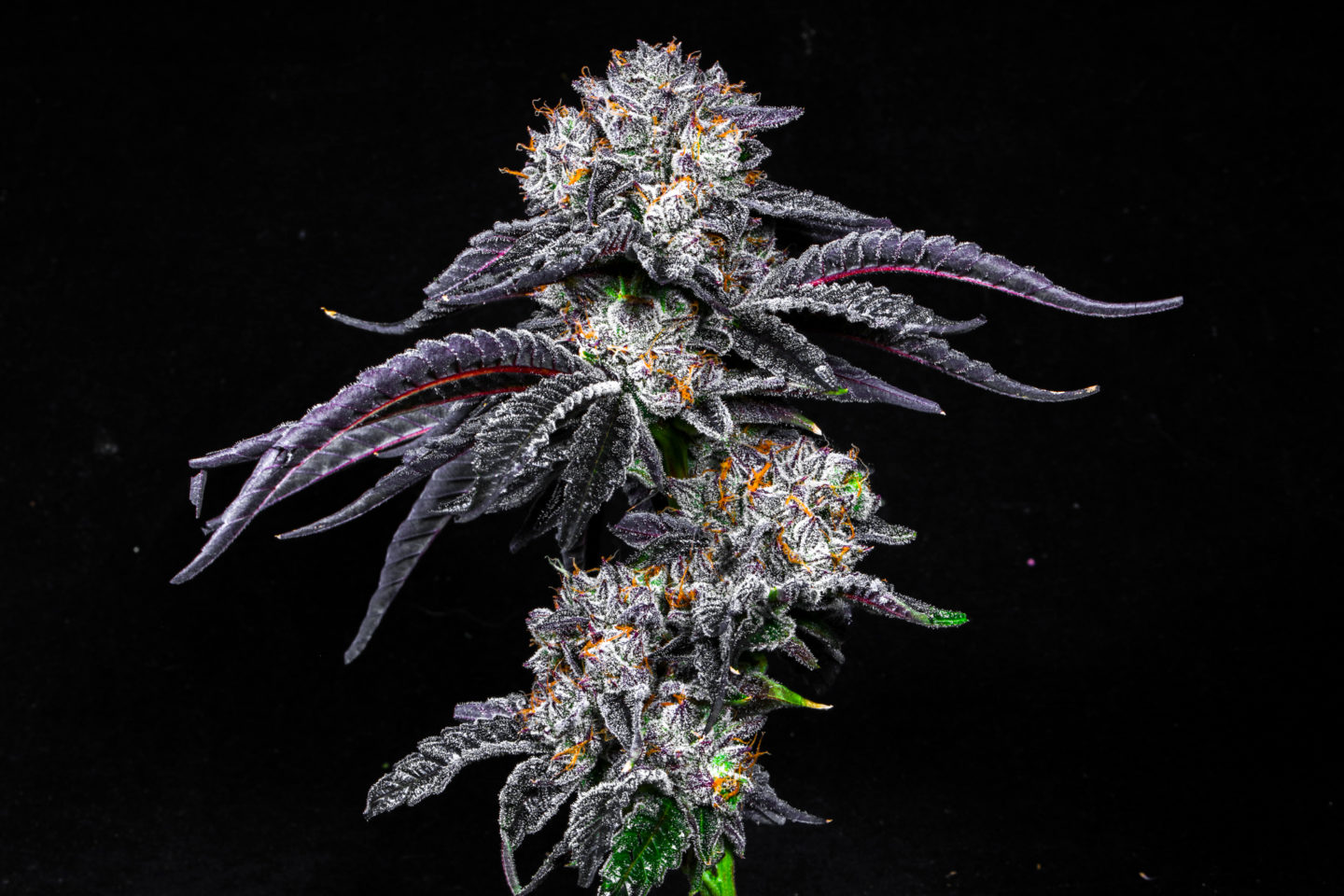
Bubble Bath / Courtesy of LIT

Ayr: The Price is Right

Eighths and quarters of the midrange-priced flower are currently available in select strains at their two newly-opened greater Boston Ayr Wellness Dispensary locations in Back Bay (for adult use and medical) and Watertown (adult use only), as well as wholesale. When asked about their lower-than-normal price point for typical indoor-grown products, Schiavone says, “Massachusetts consumers are now going to have access to these new high-quality options at a price better than the competition.”

Multi-state operators (MSOs) are historically good at providing decent, if not quality products at reasonable prices—the typical result of master planning and proper financial backing. Holding some level of care for the plant, the environment, and the people taking care of the plant normally takes a backseat, but as founder, chairman, and CEO of Ayr, Jonathan Sandelman says, “LIT flower is a testament to our commitment to taking the best ingredients – facilities, people, genetics – and cultivating excellent cannabis at scale throughout our organization.”

When asked why he felt so strongly about working with an MSO like Ayr, Schiavone explains that “I really respect and appreciate Ayr’s commitment to quality and willingness to incorporate our management and methodologies into their platform.”

Temptation / Courtesy of LIT

Flower to The People

Ayr and LITs commitment to their customers and team is evident in conversation with Schiavone, who says their strain selections are based on consumer demand and feedback. He also mentions how much he looks forward to working with Massachusettsans and gushes, “I have personally spent a lot of time not only meeting Ayr’s retail team but visiting many other operators such as Nova Farms, Caroline’s and North East Alternatives. Everywhere we have [gone] we have had a warm welcome and everyone is excited to experience a West Coast flower brand. Not only does everyone enjoy great flower, it’s humbling to see how many people enjoy wearing our hats and clothing that haven’t even tried our flower yet. It truly is amazing to see.”

He continues, “I think with any brand you have to treat [it] … like your own child. I take tremendous pride in making sure that everything from the clothing, flower and derivatives are all of the highest quality with the intent of having a lasting relationship with whoever it comes in contact with.”

The future’s looking bright for the brand family, as they make plans to expand, which includes a pheno-hunting passion project from Schiavone. What does he hope to bring to Massachusetts besides decades of cultivation experience and a smile? The master grower says that the East Coast needs some good purps. “I think something the Massachusetts market needs is a high quality purple flower with lemon terpenes, which is something I’ve been working on in R&D for years, so I’ll be excited to introduce that to the market eventually.”

The post Now You Can Find Award-Winning West Coast Strains in Massachusetts appeared first on High Times.


from News – High Times https://ift.tt/Q9bzyxs
via IFTTT

Cannabis Cafes Emerge in Post-Legalization Thailand

Reuters reports this week that “several” such cannabis cafes have opened in the capital city of Bangkok since Thailand decriminalized pot in June, becoming the first country in Asia to do so.

When the government removed cannabis from its list of banned substances earlier this summer, officials were adamant that they were not legalizing recreational pot use.

“It’s a no,” Thai Health Minister Anutin Charnvirakul told CNN when asked if recreational use would be permitted. “We still have regulations under the law that control the consumption, smoking or use of cannabis products in non-productive ways.”

But that isn’t exactly how it has played out.

The new law “has led to an explosion in its recreational use,” according to Reuters, “something that government officials – concerned about negative effects on health and productivity often linked to uncontrolled use of the drug – have retro[s]pectively tried to discourage.”

“The law does not cover recreational cannabis use… and so tourism promotion is focused on medical (aspects),” the national tourism authority’s Deputy Governor, Siripakorn Cheawsamoot, said, as quoted by Reuters.

According to Reuters, a “parliamentary committee is now debating a bill to regulate cannabis use that is expected to finalise in September and could impact the cannabis cafes.”

The “pushback against the way the new policy is being interpreted has caused some confusion, with authorities resorting to issuing piecemeal regulations such banning public smoking of cannabis and its sale to under 20s,” Reuters reported.

CNN reported in June that the new law meant that it “is no longer a crime to grow and trade marijuana and hemp products, or use parts of the plant to treat illnesses,” and that “cafes and restaurants can also serve cannabis-infused food and drinks — but only if the products contain less than 0.2% tetrahydrocannabinol (THC), the plant’s main psychoactive compound.”

“We [have always] emphasized using cannabis extractions and raw materials for medical purposes and for health,” Charnvirakul told CNN at the time. “There has never once been a moment that we would think about advocating people to use cannabis in terms of recreation — or use it in a way that it could irritate others.”

“Thailand will promote cannabis policies for medical purposes. If [tourists] come for medical treatment or come for health-related products then it’s not an issue but if you think that you want to come to Thailand just because you heard that cannabis or marijuana is legal … [or] come to Thailand to smoke joints freely, that’s wrong,” he added. “Don’t come. We won’t welcome you if you just come to this country for that purpose.”

Tourists have not heeded his warning, however.

Reuters this week spotlighted one such cafe called RG420, located in “Khao San, an area of Bangkok popular with backpackers.”

RG420’s owner Ong-ard Panyachatiraksa told Reuters that his cafe has had “hundreds” of visitors every day.

“Europeans, Japanese, Americans – they are looking for Thai sativa,” Ong-ard said. “Cannabis and tourism are a match.”

The new marijuana law has been fraught with controversy since it was enacted earlier this summer. Last month, more than 850 doctors in Thailand came together to speak out against cannabis decriminalization, warning that it posed dangers to young people.

“Cannabis was removed from the Public Health Ministry’s Narcotic list on June 9, but no policies have been launched to control the use of cannabis for personal pleasure,” a spokesperson for the group of physicians said. “This lack of [legal] direction makes cannabis more accessible for children and teenagers.”

The post Cannabis Cafes Emerge in Post-Legalization Thailand appeared first on High Times.


from News – High Times https://ift.tt/S6ZyAQN
via IFTTT