Tuesday, April 4, 2023

New York Cannabis: Energy and Environmental Plans

Since the Marijuana Regulation and Taxation Act (MRTA) was passed back in April of 2021, New York has made clear that mitigating environmental impact, including energy usage, would be a key component of New York’s adult-use cannabis industry. To wit, the legislators expressly included applicants’ “ability to mitigate adverse environmental impacts, including but not limited to water usage, energy usage and carbon emissions” as part of the Cannabis Control Board’s (CCB) selection criteria. Well, the CCB followed through with that mandate by requiring licensees to provide an Energy and Environmental Plan as part of applications.

The composition of an Energy and Environmental Plan

So what goes into an “Energy and Environmental Plan”? A LOT of things. The CCB included 12 separate and distinct requirements for each plan, “in a form and manner as required by [the Office of Cannabis Management.]” Here are the categories of required information:

  • actions to reduce usage of single-use plastics
  • actions to minimize the use and disposal of chemicals that are considered hazardous waste
  • actions that will be taken to use compost or other recycles organics as a component of growing media
  • areas to reduce the applicant’s carbon footprint
  • the submission of an annual energy report that includes energy benchmarking as required by the Office of Cannabis Management (OCM)
  • all planned lighting and the energy impact of the planned lighting to meet all standards set by the OCM
  • environmental control and odor mitigation plans that meet all standards set by the OCM
  • a plan for reducing greenhouse gas emissions and reliance on fossil fuels
  • ecological regeneration practices
  • water conservation and use
  • waste management, recycling and disposal
  • the applicant’s strategy to measure, track and record performance and execution of the provided energy and environmental plan

We note that these are only the categories; the current version of the rules and regulations provides several baselines standards, including (but not limited to) standards for lighting, reducing carbon footprint, and water conservation and use.

Energy and Environmental Plans are not just for production licensees

One interesting thing to note is that the energy and environmental plan requirement is not limited to the production side licenses, although some of the requirements are limited to specific cultivation tiers. With that said, for anyone interested in applying for a production side license, we expect the energy and environmental plan to be an important consideration as part of evaluating applicants and, accordingly, it makes sense to read through the requirements closely.

We also would not be surprised if the potentially forthcoming revisions to the adult-use rules and regulations tweak the energy and environmental plan requirements. Stay tuned!

The post New York Cannabis: Energy and Environmental Plans appeared first on Harris Bricken Sliwoski LLP.


from Canna Law Blog™ https://ift.tt/z0h3ylf
via IFTTT

Study: 1 in 10 US Veterans Used Cannabis in Past Year

While the United States has seen immense progress regarding cannabis law reform and reshaping the public opinion of the drug over the years, the continued lack of federal legalization and regulation is clear, especially in its effects on groups like veterans.

Canada, which has legal cannabis throughout the country, introduced the Veterans Affairs Canada (VAC) reimbursement policy for medical cannabis, allowing reimbursement of up to three grams a day for qualified veterans. The VAC specifically established a fixed rate of up to $8.50 per gram, taken in dried cannabis or its equivalent in fresh cannabis or oil.

In the U.S., VA providers are allowed to discuss cannabis use with veterans, but due to the federal Schedule I status of the drug, VA clinicians cannot recommend or cover medical cannabis. Of course, with mounting research on the potential benefits of cannabis as it relates to conditions affecting veterans, like PTSD or pain relief, it’s clear that U.S. veterans are still turning to this plant medicine for aid, with or without assistance from the VA.

New Insight on Veteran Cannabis Use

A new survey conducted by a pair of researchers affiliated with the University of North Texas and the University of Illinois provides further insight on the amount of cannabis-using U.S. military veterans. In an assessment of cannabis trends among a nationally representative cohort of more than 16,000 veterans from the years 2013 to 2019, the survey estimated that one in 10 veterans report having consumed cannabis within the past year.

The data was published in the journal Substance Use & Misuse.

“The legal landscape surrounding marijuana use in the United States (US) is ever changing,” researchers wrote. “Although substantial research has investigated risk factors of use among different populations, much is to be gleaned among veteran populations, who are at heightened risk for mental and physical health problems, which may be precipitated or relieved by marijuana use.”

The survey used data from the National Survey on Drug Use and Health, comprised of 16,350 total veterans 18 years of age or older. Researchers tested for weighted linear and quadratic trends in past-year use, finding a significant increase (56%) in overall cannabis use from 2013 to 2019, with nearly one in 10 veterans (9.79%) reporting past-year cannabis use.

Broader Implications on Veterans and Cannabis Accessibility

Researchers also found that older veterans, or those aged 35 years old or older, were more likely to report using medical cannabis in the past year over the 18-25-year-old veteran age group. A minority of the study’s respondents acknowledged that they received authorization to use cannabis from a healthcare provider, likely due to federal law prohibiting providers affiliated with the Department of Veterans Affairs from issuing recommendations, even in states where medical cannabis is already legal.

“This increase, in the context of federal VA provider restrictions, has implications for issues of care coordination and safe supply for veterans,” researchers concluded. “Given the rapidly changing and heterogenous landscape of recreational and medical marijuana policy in the US, the present study may inform harm reduction efforts and behavioral interventions.”

The authors hone in on the point noting that, in context with current federal policy, the findings point toward a need for “enhanced care coordination” among those who may benefit from cannabis use but are unable to access it through the VA. 

The researchers also note that additional research is necessary in order to better understand veterans’ use of cannabis in the context of federal VA restrictions, “including the examination of how veterans obtain marijuana, what affect this has on their care coordination and health outcomes, and whether or not marijuana can play a role in reducing other drug use and drug-related harms among veterans.”

Another recent survey from Iraq and Afghanistan Veterans of America (IAVA), a group representing more than 400,000 veterans, found that 83% of IAVA vets supported legal access to medical cannabis and 55% supported recreational legalization. Additionally, 89% reported that they would be interested in using cannabis if it was available to them.

While the issue of medicinal cannabis access is still ongoing, the VA is already moving forward to explore psychedelics: A number of VA clinicians are already conducting studies specifically looking at the potential of psychedelic-assisted therapy for people who need it.

The post Study: 1 in 10 US Veterans Used Cannabis in Past Year appeared first on High Times.


from The Latest Marijuana News Today | HighTimes Magazine https://ift.tt/LcyvGSe
via IFTTT

Monday, April 3, 2023

Breeder Tiki Madman unleashes Abominable Runtz, Tokyo Funk

Read Strain News Weekly #02.

The post Breeder Tiki Madman unleashes Abominable Runtz, Tokyo Funk appeared first on Leafly.


from Leafly https://ift.tt/8CHwSUA
via IFTTT

Star signs and cannabis strains: April 2023 horoscopes

Spring is doing its thing, Leafly nation! Those warmer temperatures bode well for a new month to follow the stars and spark strains we chose especially for you.

The post Star signs and cannabis strains: April 2023 horoscopes appeared first on Leafly.


from Leafly https://ift.tt/HQmCDd9
via IFTTT

Toys R Us Sues Unlicensed New York Cannabis Dispensary for Infringement

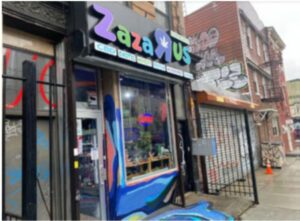
Cannabis companies, for some reason, seem to love clever names predicated on well-known brands. (See e.g. Zkittlez and Skittles or Bloom and Cool). More often than not, these companies end up in trouble. (See Major Food and Beverage Companies Call Out Marijuana Copycats). Although these companies may try a parody defense, it’s not so easy. On the heels of a Supreme Court argument in case involving the parody defense, TOYS R US has filed a federal lawsuit against an unlicensed Brooklyn, New York cannabis retailer ZAZA R US in the Eastern District of New York.

Unbeknownst to me, the term “ZAZA” apparently is a colloquial term that refers to high-grade strains of cannabis. (I guess “weed” and “grass” is outdated). TOYS R US alleges that ZAZA R US operates at least two brick-and-mortar stores with at least one store displaying the allegedly infringing signage seen above. TOYS R US claims this is a blatant and obvious bad-faith effort to trade on the goodwill and fame of TOYS R US.

TOYS R US pleads the usual assortment of claims for trademark dilution, trademark infringement, false designation of origin, and unfair competition under the federal Lanham Act, 15 U.S.C. § 1051 et seq., and New York state law. TOYS R US also seeks permanent injunctive relief to stop ZAZA R US from using TOYS R US’ intellectual property, as well as a significant award of damages that includes disgorgement by ZAZA R US  of any profits, actual damages to Toys R US, a royalty payment by ZAZA R US, attorneys’ fees, and costs of suit.

I suspect that whatever fun ZAZA R US was having with its branding is over in the face of an army of serious intellectual property lawyers. We will let you know what happens!

For more on cannabis and intellectual property, see:

The post Toys R Us Sues Unlicensed New York Cannabis Dispensary for Infringement appeared first on Harris Bricken Sliwoski LLP.


from Canna Law Blog™ https://ift.tt/7RJCAIZ
via IFTTT

Washington Bill Would Ban Pre-Employment Drug Testing for Cannabis

Washington state is poised to become the next state to ban most pre-employment drug tests for cannabis. As detection of THC is a poor way to measure impairment, given how long cannabis stays in the system, more states are dropping drug tests for cannabis.

A new bill could change the way drug tests screen for cannabis in the state. Senate Bill 5123, sponsored by Sen. Karen Keiser (D-Des Moines), will ban pre-employment cannabis tests.

“This is a victory against discrimination toward people who use cannabis,” said Keiser, who serves as chair of the Senate Labor & Commerce Committee. “For people using a legal substance—many of them for medical reasons—locking them out of jobs based on a pre-employment test is just plain unfair, and we are putting a stop to it.”

Lawmakers in the state are beginning to see how drug testing for cannabis is detrimental, when otherwise qualified job applicants are denied jobs.

“It makes no sense to limit our state’s workforce by deterring qualified job applicants, especially at a time when the number of unfilled positions is at historic highs,” Keiser continued. “This legislation opens doors for people who might otherwise not even put in an application—and that’s a win for workers and for employers.”

The bill would apply to pre-employment drugs testing only, meaning that employers could still maintain drug-free workplace policies for employees, such as random drug testing. 

It would not prohibit using drug tests to screen for other drugs, and it would not prohibit using cannabis tests after accidents or because of suspicion of impairment.

Sen. John Braun (R-Centralia) disagreed with the proposal and said the issue should be addressed by tweaking drug tests instead of introducing legislation to ban drug testing for cannabis.

“I acknowledge the problem,” Braun said. “I’m not sure this bill is the solution.”

An earlier version of the bill provided exemptions, such as applicants in the airline industry overs safety concerns, as well as federally regulated positions that typically require drug testing.

An amendment from Sen. Curtis King (R-Yakima) added more exemptions to the bill.

The bill wouldn’t apply to safety-sensitive jobs, of which impairment while working would risk death, which was amended instead of listing specific industries. Employers would need to tell applicants if they test positive for cannabis in pre-employment drug tests.

Are Drug Tests an Accurate Way of Determining Impairment in the Workplace?

The Spokesman-Review reports that cannabis metabolites can be detected long after impairment, lasting up to 30 days or more. But cognitive impairment can last from three to 10 hours, according to a 2021 study by the University of Sydney. Those researchers found that drug tests for cannabis are likely an inaccurate way of determining impairment.

Researchers wrote that “finding an objective measure of recent cannabis use that correlates with impairment has proven to be an elusive goal.” Some states have enacted laws that set legal limits on the amount of THC a driver may have in their blood, similar to the 0.08% blood alcohol concentration limit in effect nationwide.

“These findings provide further evidence that single measurements of specific delta-9-THC blood concentrations do not correlate with impairment, and that the use of per se legal limits for delta-9-THC is not scientifically justifiable at the present time,” reads the study published by the journal Scientific Reports.

The bill is making its way through the legislative process and will head to a House committee for a public hearing not yet scheduled. Then it will return to the Senate for a concurrence vote before going to the governor’s desk to be signed.

The post Washington Bill Would Ban Pre-Employment Drug Testing for Cannabis appeared first on High Times.


from The Latest Marijuana News Today | HighTimes Magazine https://ift.tt/lIHMLp1
via IFTTT

Saturday, April 1, 2023

Voices of cannabis: Tahir Johnson

This Trenton, NJ native is opening his town's first adult-use cannabis dispensary later this year.

The post Voices of cannabis: Tahir Johnson appeared first on Leafly.


from Leafly https://ift.tt/Wmts3Dq
via IFTTT