Friday, March 15, 2024

Washington May Raise the Minimum Age for High THC Cannabis Purchases

In several ways, the State of Washington is an absolute pioneer and innovator for the American cannabis industry. Today, the legislature is looking hard at a bill known as House Bill 2320, which would raise the minimum age of products containing 35% THC or more, to 25 years old.

Twelve years of legal cannabis in Washington

Washington was the first state to fully legalize cannabis for adult-use in 2012, when Initiative 502 passed by an 11 percent margin during the 2012 elections. At that time, Washington became an unofficial case study into what a fully legal cannabis marketplace would look like.

Since the passing of I502 over a decade ago, Washington cannabis has become a billion dollar industry. In 2023, in fact, the Washington cannabis industry recorded over $1.1 billion in licensed sales by November. Washington’s shortfall was considerably smaller than California or Oregon from 2022 to 2023. Additionally, Washington was one of, if not the very first state to implement proper social equity measures within their state’s cannabis industry with House Bill 2870, which passed in March 2020.

Washington cannabis today

The catalog of products offered at Washington dispensaries are diverse and as vast, as should be the case in a competitive cannabis industry. The approximately 600 dispensaries across the Evergreen State ensure that the state certainly lives up to its moniker. From every flavor of cannabis flower to every consistency and type of concentrate and enough edible cannabis candies to rival even Willie Wonka, Washington cannabis consumers have a plethora of products to pick from.

However, despite being as innovative and ahead of the nationally mainstream curb as the Washington cannabis industry has become, it’s not an infallible industry by any means. The tax rate for recreational cannabis sales in Washington is an astonishing 37 percent– a full 12 percent higher than tourism-driven Nevada and considerably higher than many other states. Elected state officials in Washington are also starting to reconsider the regulations behind how cannabis is sold in the state: one legislative proposal would dictate which products are allowed to be sold to people under the age of 25.

House Bill 2320 and age limits for products of 35% THC or more

If signed into law, the bipartisan House Bill 2320 would limit the types of cannabis products consumers can purchase in Washington, by prohibiting the sale of cannabis concentrate products and any products that test over 35 percent THC to anyone under the age of 25. If this bill becomes law, it would severely restrict the types of products that 21-24 years olds can purchase. Not only would all vape cartridges be off limits, but all forms of concentrates and infused pre-rolls would also be prohibited. Even the very rare flower batch that tests over 35 percent THC would be banned from being sold to consumers in this specific age range.

The bill was actually introduced by Democratic Rep. Lauren Davis:

“Today, there’s no legal limit on the potency of the psychoactive element, THC, in cannabis concentrates,” Davis explained in a press release on her website. “Cannabis vape oils, dabs and shatter are regularly sold with a THC potency of nearly 100 percent, a tenfold increase in potency from when cannabis was legalized in 2012. These concentrated products are different. And dangerous.”

“The cannabis industry has changed considerably since cannabis was legalized,” Dent said. “This legislation is needed to address the ever changing market and put some measures in place to protect cannabis users and our youth.”

Dent and Davis primarily reference the November 2020 report from the Washington State Prevention Research Subcommittee in their research. This report, conducted jointly by Washington State University and the University of Washington, provides analysis that often conflates correlation with causation.

The underlying premise for their study was the changes in cannabis potency and the availability of concentrates. This is also unfounded. Contrary to their claims, the potency of cannabis has not significantly increased; rather, many growers have learned to manipulate the testing system, and testing facilities often have conflicting interests. One testing facility claimed a concentrate had 103% THC! As for concentrates new found existence, they have been available before legalization, with a temporary decline in popularity following the 2019-2020 Vape Gate crisis.

Why I don’t like House Bill 2320

While it’s challenging to criticize well-intentioned efforts to reduce potential harms, it’s important to consider the broader context. If our goal is genuinely to protect youth from harm, as the study claims, we should prioritize examining issues such as alcohol consumption and unrestricted driver’s licenses, both of which pose actual, known significant risks and result in teen fatalities annually.

More to the point, if an eighteen-year-old can make decisions about going to war, purchasing a gun, and being held accountable for their actions as an adult, they should also have the autonomy to choose the type of cannabis they use. Otherwise, we need to reconsider the criteria for defining when a youth becomes an adult. As any cannabis retailer will tell you, a majority of consumers (including 18- to 25-year-olds) walk through the door asking for the highest THC at the lowest price.

It would be refreshing if the legislature would start looking at ways to promote and lift the cannabis industry up, the same way that they would any other major export, like apples, seafood, dairy, or wine. Cannabis companies are in partnership with the State and producers grow some of the best cannabis in the world. Processors, for example, are on the bleeding edge of creating some of the most unique concentrates in the United States. We need to find ways to work together to expand our industry, not restrict it.

As cannabis concentrates become increasingly popular, and politicians and researchers discover the existence of these products, discussion over the potency of high-THC products and when individuals can make their own decision will continue. In these discussions, it is essential to consider the broader context and ensure that regulations are balanced and informed by reliable research.

Ultimately, as discussions around cannabis potency and access evolve, the industry and policymakers must continue to prioritize evidence-based approaches that promote both public health and individual autonomy.

The post Washington May Raise the Minimum Age for High THC Cannabis Purchases appeared first on Harris Sliwoski LLP.


from Canna Law Blog™ https://ift.tt/wikD7XS
via IFTTT

Thursday, March 14, 2024

California Allows Cannabis Cultivators to Reduce License Sizes

The California Department of Cannabis Control (DCC) just published some new guidelines for cannabis cultivators following the passage of SB-833. Among other things, California will let cannabis cultivators reduce their canopy size and thereby reduce license costs. This will be a huge benefit. I write a lot about the woes that California’s cannabis industry faces – often due to overly burdensome regulation – but in this case, I think the DCC’s guidelines will have a positive impact on certain cannabis cultivators in the Golden State.

California has about a zillion different types of licenses for cannabis cultivators. They are based on size (specialty cottage, specialty, small, medium, and the relatively new large) and type (indoor, outdoor, or mixed-light). And there are separate licenses for nurseries and processors (you might think processing is manufacturing, because that would make sense, but you’d be wrong!).

Having more than a dozen different types of licenses guaranteed problems. One of those problems is that the state did not create a mechanism to easily change between license size. With the opening of large licensing in 2023, the state made it possible to go “up” in size, but not down. This was a big problem for a lot of folks in the industry.

Here’s an example: imagine a cultivator got a medium indoor license (which allowed for between 10,001 and 22,000 square feet of canopy). At the time of licensure the cultivator had enough built-out capacity to have 7,500 square feet of canopy, but expected to build out another room a few months down the line. For whatever reason, the cultivator didn’t have the means to complete the buildout and was stuck paying the medium indoor fee of $77,905 as opposed to the small indoor fee of $35,410.

Until recently, the cultivator’s only option would be to continue to pay double the annual licensing fee, or to submit a completely new application for the smaller license. This could be a cumbersome and costly process, even if it would lead to a better cost savings over time.

According to DCC’s new guidelines, cannabis cultivators will be able to request a reduced-size cultivation license either upon renewal or if they make a one-time change to their expiration date outside the renewal process. While we don’t have much data on how many licensees this will affect, it will hopefully help affected cannabis cultivators and reduce regulatory red tape.

The post California Allows Cannabis Cultivators to Reduce License Sizes appeared first on Harris Sliwoski LLP.


from Canna Law Blog™ https://ift.tt/IMpBRrc
via IFTTT

Wednesday, March 13, 2024

Banking for Cannabis Growers

If you own a cannabis business, a major consideration is where to keep your money. Though many business owners may find banking to be a headache regardless of industry, few business owners have more hurdles to deal with than cannabis growers and dispensaries. The current state of cannabis banking can have a significant impact on where cannabis business owners keep their money and whether they obtain cannabis loans.

With the curious legal status of cannabis at the federal and state level, cannabis banking can be complex. This is where a trusted cannabis lawyer at Harris Sliwoski can help.

Current State of Cannabis Banking

Currently, many states have legalized cannabis for medical use and some have legalized it for recreational use, but cannabis remains illegal at the federal level. Since the legality of cannabis varies at the state and federal levels, this has led to a lot of uncertainty in cannabis banking. While the industry is thriving because cannabis can be sold legally in various states, some financial institutions — including big banks — are hesitant to approve cannabis-related business accounts due to the federally illegal status of cannabis.

Financial institutions are concerned about facing repercussions from the federal government, which has forced many cannabis businesses into a cash-based economy. Without the ability to easily obtain reliable banking services while dealing with piles of cash, many cannabis businesses face increased security risks. When a business deals only in cash, it tends to be at a greater risk of robbery. This situation has elevated so much, in fact, that many dispensaries are hiring security guards and armored trucks to protect their money, and some have installed high-tech glass and security systems.

Cash businesses like those in the cannabis industry are also more often exploited for nefarious purposes like money laundering. Making tax payments can also be more challenging in a cash-only system. While it’s possible to pay taxes in cash, it’s less convenient. Fortunately, a burgeoning reform effort is gradually addressing the prohibition of cannabis at the federal level.

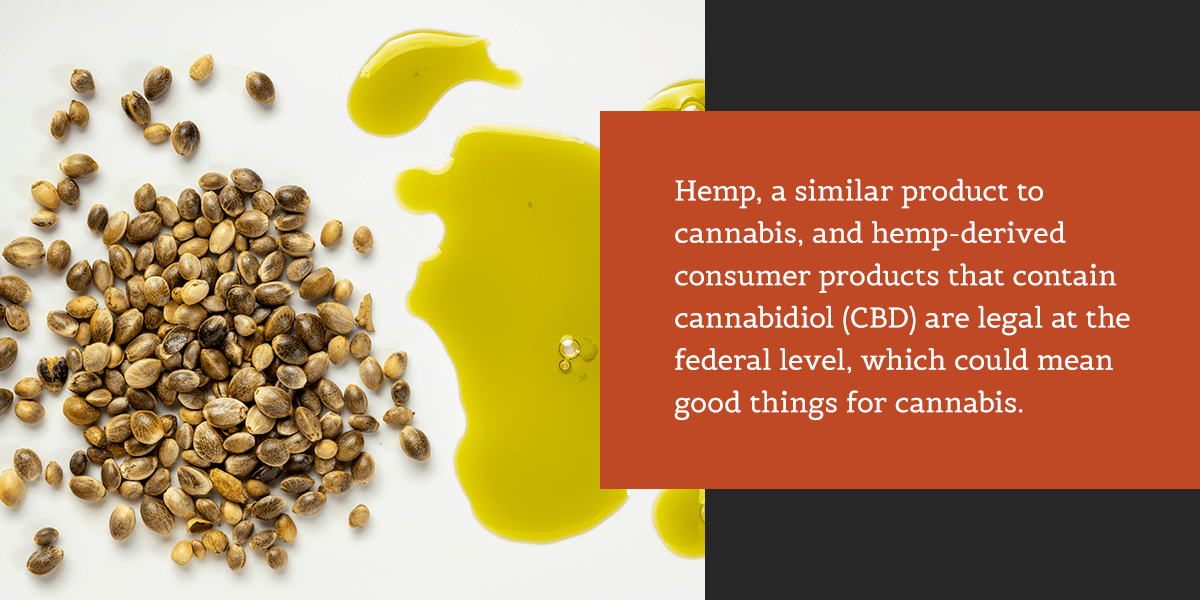
The SAFE Banking Act, for example, aims to prevent federal institutions from being penalized by federal banking regulators for associating with legitimate cannabis-related businesses. However, this act has failed to pass through Congress after several attempts, and under the current legal landscape, many banks and credit unions are continuing to stay away from cannabis-related businesses. Hemp, a similar product to cannabis, and hemp-derived consumer products that contain cannabidiol (CBD) are legal at the federal level, which could mean good things for cannabis, though there are still some legal restrictions on CBD products.

Hemp seeds and cbd oil with an informative text on the legality of hemp-derived products.

Tips on Banking for Cannabis Companies

Though there are no guarantees that you’ll be able to open a bank account for your cannabis business, you may be able to improve your odds of approval using the tips below:

  • Be honest: Be honest and transparent about your cannabis business. Misleading a financial institution can lead to account closure and even present a risk of fraud. A bank will perform due diligence, so we recommend disclosing your important information upfront. A past bankruptcy, for example, may affect the risk you present to the lender for loans. However, certain institutions may still allow you to open a bank account.
  • Consider fees: High-risk bank accounts tend to come with fees like monthly account maintenance, online banking, payroll and wires.
  • Review the fine print: Before you open an account with a bank, you should review the fine print so you know the capacity and limits relevant to your cannabis business account.
  • Gather documentation: Collect all of the documentation you’ll need, such as your permits, licenses, inventory logs, property deeds, sales records and Employer Identification Number (EIN). A financial institution will want to know the amount of money that may flow into the account, and they will want to review the source of your funds to avoid risking federal prosecution.
  • Maintain solid recordkeeping: Your recordkeeping needs to be precise and accurate. Track your inventory from the moment you place the order to the moment you sell the product. An added benefit of maintaining solid recordkeeping is that you’ll keep your business running smoother and identify any increases or drops in demand.
  • Brand your business carefully: Brand your business carefully, as your branding and your general reputation can affect your odds of opening a bank account. For example, avoid making direct references to cannabis in your business name, as this can grab a federal regulator’s attention. Make sure your website and social media accounts also demonstrate that your business is reputable.
  • Comply with state regulations: To operate legally, review and comply with state regulations, as the state is the entity that considers your cannabis business legal. In some states, your financial institution may request an on-site visit before approving your new bank account. Ensure you are maintaining state compliance to increase your chances of approval.
  • Establish a paper trail for funding: Every business needs initial funding to pay for equipment, staff and property. You should establish a paper trail that shows where the money came from, such as whether it was crowdfunded or borrowed from a particular person or source. If you make large deposits, you should also be able to show where these funds came from, such as in-store or online sales.
  • Find an experienced cannabis lawyer: A lawyer experienced in the cannabis industry can provide you with the guidance and legal support you need.

Legal support for the cannabis industry: gavel, magnifying glass, and cannabis leaf symbolize specialized legal services.

Banks That Accept Cannabis Businesses

While many larger banks are avoiding cannabis businesses, small banks are entering the space. The number of state-chartered banks and credit unions that have been venturing into the industry is rapidly increasing, creating more competition for cannabis businesses seeking bank accounts. These banks know that cannabis businesses have an attractive financial profile, and many owners of these businesses are high-net-worth individuals and entrepreneurs who have been successful in other areas.

Though some small banks are not advertising their participation, the recent growth may indicate that stigmas surrounding cannabis business may be starting to fade. We recommend looking for a bank or credit union that has experience in dealing with high-risk businesses.

Two professionals shaking hands in an office with legal scales and a gavel, symbolizing legal services for cannabis businesses.

When to Reach Out for Legal Advice

At Harris Sliwoski, we offer specialized legal help to businesses like yours. Our services for cannabis businesses include legal planning, corporate guidance, compliance strategies and regulatory support. We’ve been assisting cannabis businesses in navigating rapidly evolving policies and regulations since 2010. Depending on your needs, we can also help with:

We take on big international commercial litigation matters on a mixed fee basis — part hourly, part contingency. Contact us at Harris Sliwoski to learn more about cannabis banking.

The post Banking for Cannabis Growers appeared first on Harris Sliwoski LLP.


from Canna Law Blog™ https://ift.tt/bhu9qNi
via IFTTT

Quick Guide to Cannabis Business Opportunities

Although cannabis remains illegal at the federal level, many states and municipalities have loosened their regulations. As of early 2023, 37 states have approved medical cannabis use by qualified individuals, and 21 states have approved it for recreational use.

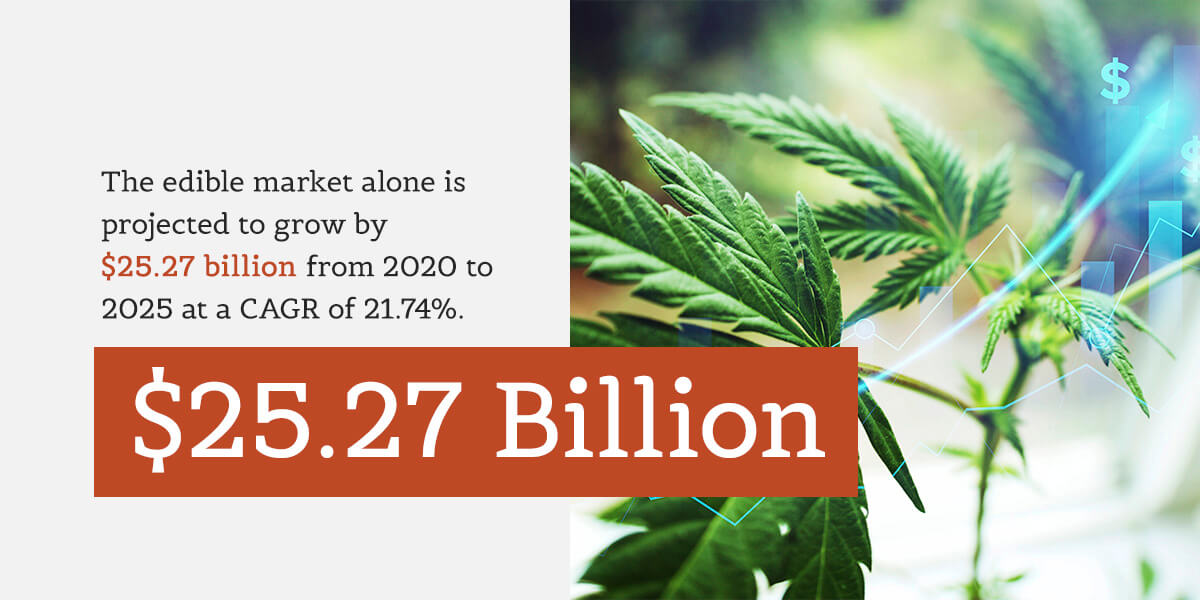
Projected growth of the edible cannabis market to $25.27 billion by 2025 with a cagr of 21.74%.

As a result, the cannabis industry is growing at breakneck speed, especially when it comes to refined cannabis products. The edible market alone is projected to grow by $25.27 billion from 2020 to 2025 at a CAGR of 21.74%.

While this kind of growth is promising, entrepreneurs looking to take advantage of these cannabis industry opportunities must be aware of their legal responsibilities before getting started.

Business Opportunities in the Cannabis Industry

There are two main categories of cannabis businesses — plant-touching and ancillary. The legal requirements for each type are different, so it’s essential to research the laws around the company you want to start.

Plant-Touching Businesses

As the name implies, plant-touching cannabis businesses deal directly with the cannabis plant from seed to dispensary shelf. All plant-touching businesses must apply for a license to operate legally, and the licensing requirements can vary by region.

Some examples of plant-touching businesses include:

  • Cultivation and breeding: Cultivators and breeders are essential parts of the industry. Note that licensing requirements for growing industrial hemp, which doesn’t contain significant concentrations of THC, are different from licensing requirements for THC-containing cannabis plants.
  • Edibles: Many people prefer to eat or drink their cannabis, which is why edible manufacturing is such a promising business opportunity. Bakeries, candy companies and beverage manufacturers can get in on the trend in states where adult-use cannabis is legal.

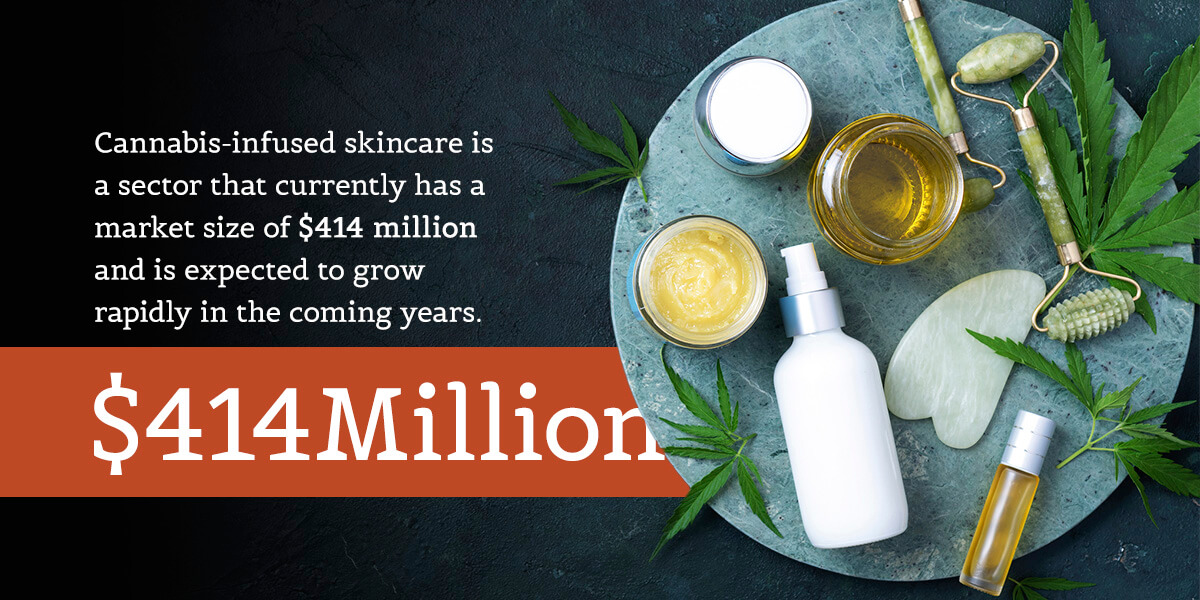
Cannabis-infused skincare products showcasing a market growth with a current value of $414 million.

  • CBD cosmetics: Cannabis-infused skincare is a sector that currently has a market size of $414 million and is expected to grow rapidly in the coming years. For states where recreational use is still illegal, industrial hemp is a suitable substitute.
  • Dispensaries: Dispensaries are the distribution hubs of the cannabis industry. Although each one has a different business model, they usually have a physical storefront where staff can assist customers in selecting products.
  • Transportation and delivery: Every cannabis company needs to move its products throughout the supply chain, and third-party business-to-business transportation companies can turn a decent profit from this venture. Direct-to-consumer delivery is also legal in some states.

Depending on your state, you may need to obtain a license for each specific link in the supply chain, or you may need a general license.

Ancillary Businesses

Ancillary cannabis businesses include everything that doesn’t directly deal with the plant. Because you’re not dealing with the plant itself, you don’t need a license like you would for a plant-touching business.

Some promising ancillary cannabis business examples include:

  • Cannabis accessories: You can produce or resell merchandise like bongs, pipes, apparel and other products to dispensaries or direct to consumers without a license.
  • Digital marketing: Many states and social media companies have issued restrictions on the ways cannabis companies can advertise, which is why digital marketers are in such high demand in the industry. Experts in techniques like email marketing, SEO and content creation can be helpful for new companies.
  • Consulting: Lots of people want to get into the industry, but few have the knowledge and expertise to be successful. That’s why consulting services can be incredibly helpful for aspiring cannabis entrepreneurs.

The Risks and Rewards of Starting a Cannabis Business

Some of the top risks involved with cannabis businesses include:

  • Product liabilities: Although the industry is heavily regulated, cannabis is still an agricultural product. Just like with any other crop, cannabis growers and manufacturers must be careful to prevent issues like mold and bacteria growth from tainting their products.
  • Supply chain: At the moment, cannabis companies can only transport products within their own states. Businesses are limited in their options for addressing product shortages and other supply chain issues.
  • Financing: Because cannabis is still illegal at the federal level, most banks won’t provide loans to cannabis companies. Businesses need to secure funding through alternative means like angel investors and venture capitalists.
  • Security: Due to its federal status, the cannabis industry is one of the few cash-only industries left in the United States. As a result, cannabis companies face an increased risk of theft.

For many, this risk is worth the reward due to the industry’s high potential for growth. Organizations that establish themselves now are likely to gain a competitive edge over later entrants.

Legal Considerations When Entering the Cannabis Industry

Here are some of the most important legal considerations you’ll need to make before starting your business.

Licensing

Before you can begin your business, you’ll need to get a license. Here are a few tips for finding licensing requirements in your state:

  • Cultivating: Check with your state’s Department of Agriculture for more information about your area’s licensing requirements. If you want to grow industrial hemp, the U.S. Department of Agriculture website has additional resources for getting started.
  • Manufacturing: Usually, you’ll need to obtain a manufacturing license to produce consumable products like cosmetics and edibles. These products must also comply with safety standards at the local and state levels. Checking your state’s Department of Health website is a good place to start.
  • Dispensary: You must apply for a dispensary license from your state. However, different departments handle licensing in each state. Your state government’s website should help you determine which department you’ll need to apply to.

It’s important to note that some states limit the number of cannabis licenses available — this can bar many late applicants from obtaining the necessary license to start their businesses.

Vertical Integration

Some states require cannabis businesses to vertically integrate to keep companies out of the black market and keep consumer prices low. For example, Colorado’s former 70/30 Rule required cannabis retailers to grow at least 70% of their product.

Others ban vertical integration and mandate specialized licenses for each business. In these states, a dispensary can’t also operate a cultivation facility — this restriction is intended to prevent monopolies from forming so business remains fair.

Social Perception

Although it’s not a legal matter, the cannabis industry faces significant stigma due to long-held stereotypes. Regardless of whether someone uses cannabis for medicinal or recreational purposes, much of society still perceives them as lazy, unsuccessful and uneducated.

This stigma can make it more difficult to establish a reliable reputation in some states, which can harm your business potential.

Evolving Rules

A gavel and cannabis leaf symbolizing legal considerations in the cannabis industry.

Because the cannabis industry is still relatively new in most areas, legislation is constantly changing. Working with an experienced cannabis attorney can help business owners anticipate future changes so they can remain compliant with local and state laws.

What’s the Big Takeaway?

Ultimately, if you’re looking to break into the cannabis industry, you have plenty of opportunities. Staying up-to-date with evolving regulations will be critical, so seeking legal assistance can be invaluable for small businesses and entrepreneurs.

If you’re in the cannabis industry, we’d like to hear from you — what has your experience been like?

The post Quick Guide to Cannabis Business Opportunities appeared first on Harris Sliwoski LLP.


from Canna Law Blog™ https://ift.tt/HucEwxC
via IFTTT

Best St. Patrick’s Day cannabis strains for 2024 and more

14 expert picks from across the US and Canada.

The post Best St. Patrick’s Day cannabis strains for 2024 and more appeared first on Leafly.


from Leafly https://ift.tt/FLZuzxE
via IFTTT

Indigenous Innovation in the Minnesota Cannabis Industry

A Tradition of Excellence

For thousands of years, Native tribes across North America have harnessed the benefits of the hemp and cannabis plants. These plants have held sacred and significant roles in many Indigenous cultures, deeply intertwined with spiritual practices, medicinal applications, and traditional ways of life.

It’s no wonder, then, that Indigenous people are emerging as leading entrepreneurs and innovators in the burgeoning cannabis industry. They are advancing the cannabis sector, guided by their rich cultural heritage and a commitment to sustainable practices. Today, tribes in Minnesota are poised for their turn.

Pioneering Tribal cannabis projects and organizations

Innovative endeavors like Nuwu’s Sky High Lounge in Las Vegas, Nevada, highlight the social and cultural dimensions of cannabis, offering a unique gathering space that celebrates Indigenous traditions and promotes responsible consumption. Meanwhile, groups such as the Indigenous Cannabis Industry Association underscore the blend of business savvy and creativity Indigenous people bring to the industry. These initiatives demonstrate a commitment to moving the cannabis industry forward, enriching it with cultural values, innovative business models, and a holistic approach to sustainable growth.

A milestone in Minnesota

Minnesota, a state newly legalizing recreational cannabis, has seen an Indigenous revolution within its cannabis sector, primarily on reservation lands. As the broader state awaits recreational cannabis frameworks and regulations, tribal lands operate under a different set of rules governed by tribal sovereignty. This unique status allowed the Red Lake Nation to open Minnesota’s first recreational cannabis dispensary, NativeCare, marking a historic moment for Indigenous participation in Minnesota’s cannabis industry.

Located in Minnesota’s remote northern region, the Red Lake Nation Reservation is one of 11 federally recognized Tribes in the state. Its dispensary attracts hundreds of visitors daily and plans expansion, showcasing the economic and social impact of these enterprises.

Expanding Tribal cannabis opportunities across Minnesota

Minnesota is home to 11 federally recognized tribes with reservation lands. This diversity presents multiple avenues for growth and development within the Minnesota cannabis industry, particularly before statewide regulations are finalized in 2025. As more tribes in Minnesota explore opportunities in this space, they can leverage their unique cultural perspectives and traditional knowledge to create innovative products and services, while also generating economic opportunities for their communities.

The Mille Lacs Band of Ojibwe’s visionary project

The Mille Lacs Band of Ojibwe, with its reservation land strategically located closer to the Twin Cities metropolitan area, announced an ambitious cannabis cultivation facility project. This 50,000 square-foot facility represents a significant investment in cannabis cultivation, and will likely provide considerable economic benefits to the region. Incorporating sustainable and environmentally friendly practices, the facility aims to showcase the tribe’s commitment to responsible stewardship of natural resources while meeting the growing demand for high-quality cannabis products.

While the facility itself will be located in Onamia, Tribal leadership sees this colossal facility as an operation that will benefit the fellow Native-owned cannabis businesses in Minnesota by selling their cultivated products to the Red Lake Nation and White Earth-owned stores, as well as whatever Native-owned cannabis retail businesses are created. The Leech Lake Band of Ojibwe also legalized the use of cannabis on their lands last August, so the framework for a successful cannabis business has already been somewhat planted.

Acknowledging the role of Indigenous peoples

Joe Nayquonabe, Jr., CEO of Mille Lacs Corporate Ventures (“MLCV”), highlighted the significant role Native Americans play in the cannabis industry and the potential of their cultivation facility. Expected to produce an impressive 1600 pounds of cannabis flower monthly, will no doubt leave a big mark. Nayquonabe emphasized the importance of respecting traditional values while embracing innovative business practices, stating, “Our ancestors have long understood the medicinal and spiritual properties of this plant. We are honored to continue this legacy while also creating economic opportunities for our people.”

Economic and regulatory considerations

The operation is being planned to produce an impressive 1600 pounds of cannabis flower monthly, and it will create 30-40 skilled jobs in Onamia, significantly impacting the local economy and providing employment opportunities for tribal members and the surrounding community. Furthermore, MLCV’s commitment to compliance with forthcoming state regulations demonstrates a proactive and responsible approach to cannabis cultivation and sale. This facility is poised to not only serve the local community but also support other Native-owned cannabis businesses across Minnesota, fostering a supportive network and supply chain within the industry.

National impact

The construction of this large-scale facility could be a watershed moment for Indigenous involvement in the cannabis industry, not just in Minnesota but across the United States. With the industry’s estimated sales reaching $1.5 billion by the end of the decade, Native-owned cannabis enterprises are well-positioned to thrive and expand, further embedding Indigenous innovation and leadership within the national cannabis landscape.

As more states legalize and regulate cannabis, the potential for Indigenous-led businesses to make their mark on the industry will only continue to grow, bringing unique perspectives, sustainable practices, and a deep reverence for the plant’s cultural significance.

________________________

Way back in 2015, Harris Sliwoski put on the First National Tribal Cannabis conference, in tandem with the Tulalip Tribe, and we have worked on Tribal cannabis matters ever since. Next stop: Minnesota.

The post Indigenous Innovation in the Minnesota Cannabis Industry appeared first on Harris Sliwoski LLP.


from Canna Law Blog™ https://ift.tt/gOLy7C8
via IFTTT

Tuesday, March 12, 2024

Common Pitfalls in Cannabis Brand License Agreements

Cannabis companies and (depending on the state) brands often use license agreements to grow their brands. If done correctly, they can be a huge driver of revenue for the brands and licensees, and can grow the good will of the brand across a particular territory. However, they are notoriously easy to botch. A bad license agreement can be devastating for a cannabis brand. In this post, I’ll examine some of the most common problems I’ve seen in license agreements across a host of different states.

It may help if I first explain what I mean by “license agreement.” I’m using the term loosely to refer to a situation where a company (a licensor) licenses its intellectual property (like its brand name) to a third party to use in a defined way. There are a million different ways license agreements can take shape.

One common example would be a license of IP to a cannabis company for purposes of manufacturing and selling the branded products. In general, this is the kind of license agreement I want to focus on in this post.

#1 Failure to consider regulatory impact

Cannabis is a highly regulated industry. So it should come as little surprise that regulators often care a lot about the types of people that licensed entities deal with. Intellectual property licensors are one such group. Many states put roadblocks in front of IP licensors, making it difficult or even impossible to do license agreements. Sometimes, regulations are so onerous that deals must be completely reformatted, at risk of great penalty to one or both parties.

I say this a lot here, but it’s really important to figure this out before paying an attorney to draft and negotiate a license agreement. Not only will parties potentially waste money by failing to do that, but they will also potentially put themselves at risk of regulatory penalties later down the road.

#2 Poorly defined payment terms

I’ve done more license agreements than I can count. Usually, they start with a client or opposing counsel relaying agreed-in-principle deal terms. And often, I hear something like “royalties will be X%.” My next question is always, “X% of what?” You’d probably be surprised how often I hear crickets in response.

It often takes a lot of handholding or wrangling to figure out the precise calculation of royalties. And that’s just one of myriad payment terms. Things like payment timing, expense payments, invoicing and fee disputes, credits, etc. all require additional thought and detail. Parties often don’t appreciate that a license agreement sets the state for a long-term, sometimes multi-year relationship, and so are very different from one-time purchase agreements. If parties execute license agreements with unclear or vague payment provisions, they should not be surprised when disputes inevitably arise.

#3 Unclear order process

While I spend a lot of time working my way through unclear payment terms, by far the most common issue I see in license agreements is an unclear order process. Sometimes, license agreements completely fail to say anything about the process for making and/or ordering goods. In an agreement where the whole purpose is the manufacture and sale of goods, this is… a problem. But it happens all the time.

To be fair, some license agreements may not require an order process to be spelled out in detail. If an unlicensed brand (in a state that permits it!) licenses IP to a cannabis company to make and sell products to whomever it can sell them, then that cannabis company may have discretion as to how and when to make products. But license agreements may not be as clear as that and you may see situations where both the licensor and licensee agree to market and sell products.

In these types of cases, the licensor will need some clarity about how it can order products, how much of a lead time there must be to do so, and so on. If it is not clear how the parties will dictate or request for these processes to happen, then things are bound to go south.

#4 Pricing problems

Let’s go back to the example of an unlicensed brand licensing its IP to a cannabis company for a full suite of manufacturing and distribution services. Chances are the brand will be paid a royalty that is some percentage of the sales price of each unit of product sold. So obviously, the brand will want the sales price to be as high as possible. There are a few potential things that brands can get really wrong here.

First, some license agreements may not say anything about sales prices. In an extreme case, the licensee could sell the products at such a low rate that the brand got little back. On the other hand, if a brand sets a minimum sales price too high, the licensee may not be able to sell any product and both parties are out of luck. I’ve seen companies on the verge of litigation over these issues. In my view, a lot of this is easily avoidable.

Savvy brands have a few options here. At the very least, they could include a contractual duty to use “best” or “commercially reasonable” efforts to sell the products for the highest possible price. But this is still pretty squishy and up for debate. Brands could also include “tiered” pricing options, setting a “target” price and a lower minimum price. That way the licensee would need to try for the target price, but could have wiggle room to lower it a bit. Or, the parties could agree on a price but opt to revisit it periodically depending on sales levels.

#5 Packaging and labeling fiascos

I’ve seen plenty of license agreements that give the licensor complete discretion over what goes on a product’s packaging or labeling. That may be fine for products that are not over-regulated, but it can be a problem for cannabis transactions. Cannabis label laws are notoriously complicated – so much so that I’ve had at least a few changes on 100 percent of the labels I’ve reviewed. For example, California has different sets of detailed requirements that apply to manufactured and non-manufactured products that are extremely technical and complicated down to things like font size and text placement.

Even putting regulations aside, a licensee probably wants at least some level of assurance that its licensor is not going to do something that brings an infringement case on the licensee (see here for some examples). So leaving a label up to a licensor, who may not even be a licensed company, is a major risk.

When I am representing the IP licensee, one of the first things I do is look at who makes the call on labeling content. I don’t see a ton of pushback when licensee clients ask for some approval rights over label content. In fact, we usually end up with a licensor creating the initial label and editing it based on inputs from the licensee. But as with anything else, it’s important to get this in the contract so that there are not disputes later down the road.

#6 No guardrails on marketing

Similarly, cannabis marketing laws are complicated. If a license agreement allows licensees to conduct marketing activities, the license agreement should at the very least obligate the licensee to comply with laws while doing so. But strong license agreements may take things further, and require the licensee to abide by certain standards or guidelines above and beyond what the rules require. After all, marketing materials can both comply with the law and cause harm to the reputation of the licensor or good will of the licensed brand.

#7 Failure to protect the licensor and brand

The final common problem I’ll address today is a license agreement’s failure to adequately protect the licensor or brand. With respect to brand protection, a good license agreement will include a laundry list of provisions restricting how the licensee can use, sublicense, or delegate the licensed IP, and will require the licensee to provide assistance in or participate in intellectual property disputes. Without locking a licensee’s use in place, the licensor could jeopardize legal protection for its brand. And this totally defeats the purpose of the license.

More broadly though, license agreements often fail to address potential harm to the licensor itself. In the example I’ve been using here – a brand licensed to a company for manufacture, distribution, and sales – the licensor would have no part in the manufacturing and distribution process. In that case, it would want to be shielded from liability to the maximum extent possible. There are several contractual provisions that the licensor could include to accomplish this, such as:

  • Contractual indemnity provisions, to require the licensee to cover the licensor’s costs should it be roped into a lawsuit as a result of the licensee’s conduct.
  • Requirements for the licensee to procure insurance with additional insured coverage for the licensor.
  • Liability limitations that would limit the licensee’s ability to recover from the licensor.
  • Covenants and other provisions that would make crystal clear that the licensee (and not the licensor) remained responsible for certain conduct.
  • Carveouts from indemnification or liability limitation provisions that benefit the licensee if the licensee engaged in prohibited conduct.

This last point bears a bit more explanation. License agreements often require the licensor to indemnify (i.e., cover costs) the licensee for certain things, like if the licensee gets sued by a third party because the licensor’s IP is allegedly infringing. But a licensor-friendly license agreement will often carve out obligations where the licensee itself did something wrong. So for example, if a licensee markets a licensor’s brand in a way that leads to a third-party infringement suit, then the licensee may not be entitled to indemnification.

Conclusion

The above issues are some of the more common ones I’ve seen crop up over the years I’ve reviewed, drafted, and negotiated license agreements. They are by no means exclusive and there can be many other problems, especially when you start getting into more “exotic” agreement types, like tri-party agreements.

If you’re interested in other important provision in license agreements or other kinds of B2B cannabis contracts, check out some of our other posts below:

The post Common Pitfalls in Cannabis Brand License Agreements appeared first on Harris Sliwoski LLP.


from Canna Law Blog™ https://ift.tt/CJvZolt
via IFTTT