Sunday, July 19, 2020

Jay-Z Has 99 Problems and ADA Compliance is One

jay z cannabis

Even before COVID-19 entered our lives, it was clear that more and more businesses were realizing the importance of engaging with consumers online. Now, as most are forced to limit their in-person activities or shut them down altogether, we are seeing an even sharper trend in businesses investing in their online presence – especially with the creation of new websites and social media platforms to communicate status updates and allow for online ordering.

What business owners may not be aware of, especially as they race to do what’s necessary to keep their businesses afloat in these unprecedented times, is that there is a growing trend of federal class action lawsuits claiming those websites and point-of-sale terminals violate Title III of the Americans with Disabilities Act (the “ADA”). The ADA requires all businesses to remove any obstacle that interferes with a disabled person’s ability to access their products or services online. If a claim is successful, the defendant can be required to pay the plaintiff’s attorneys’ fees and costs, and incur the cost of redesigning its website or point-of-sale system to comply. California also has its own, supplementary set of statutory law – the Unruh Civil Rights Act (“UCRA”), which mirrors the ADA but additionally opens the door to statutory damages.

These lawsuits have typically been brought by groups of visually-impaired consumers who claim that a certain website fails to accommodate their disability – and now, whether by valid plaintiffs or not, the cannabis industry is their next target. Cannabis company NC3 Systems, which operates as Caliva and is backed by Jay-Z, was sued on July 12 for “its failure to design, construct, maintain, and operate its website to be fully and equally accessible to and independently usable by [the p]laintiff and other blind or visually-impaired people.”

The class action alleges that the plaintiff, Bruce Begg, tried to access www.caliva.com as recently as January 2020 and “encountered multiple access barriers that denied him full and equal access to the facilities, goods and services” that Caliva offered to the public, including the ability to “learn about store locations and hours and contact information; make an online purchase, determine prices for and availability of certain products, and related goods and services available both online and in stores.”

Begg claims for all he can in damages under the ADA and UCRA:

  1. A declaratory judgment that NC3 Systems was in violation of the ADA and that it had taken no action that was reasonably calculated to ensure that caliva.com is fully accessible to, and independently usable by, individuals with visual disabilities;
  2. A preliminary and permanent injunction enjoining NC3 Systems from further violating the ADA and UCRA, and requiring it to take the steps necessary to make caliva.com readily accessible to and usable by visually-impaired individuals;
  3. An award of costs and expenses of this action;
  4. An award of attorneys’ fees and expenses; and
  5. An award of statutory minimum damages of $4,000 per offense per person pursuant to section 52(a) of the California Civil Code.

We’ll continue to follow this case and provide updates as we can. In the meantime, this case serves as a great reminder to all of our business owners that it’s absolutely essential to be proactive in ensuring your digital platforms are ADA-compliant – even if you haven’t received a complaint yet. As with Telephone Consumer Protection Act (TCPA) claims, we expect the industry to begin experiencing an aggressive wave of filings. Some complaints will be legitimate, but some won’t be as there will always be individuals looking for a quick payout from businesses who know that it makes more economic sense to pay a nominal amount in settlement than get tied up in expensive litigation or negative media attention. Don’t give them any more reason to target your business next.

The post Jay-Z Has 99 Problems and ADA Compliance is One appeared first on Harris Bricken.


from Canna Law Blog – Harris Bricken https://ift.tt/3hhfbRy
via IFTTT

Saturday, July 18, 2020

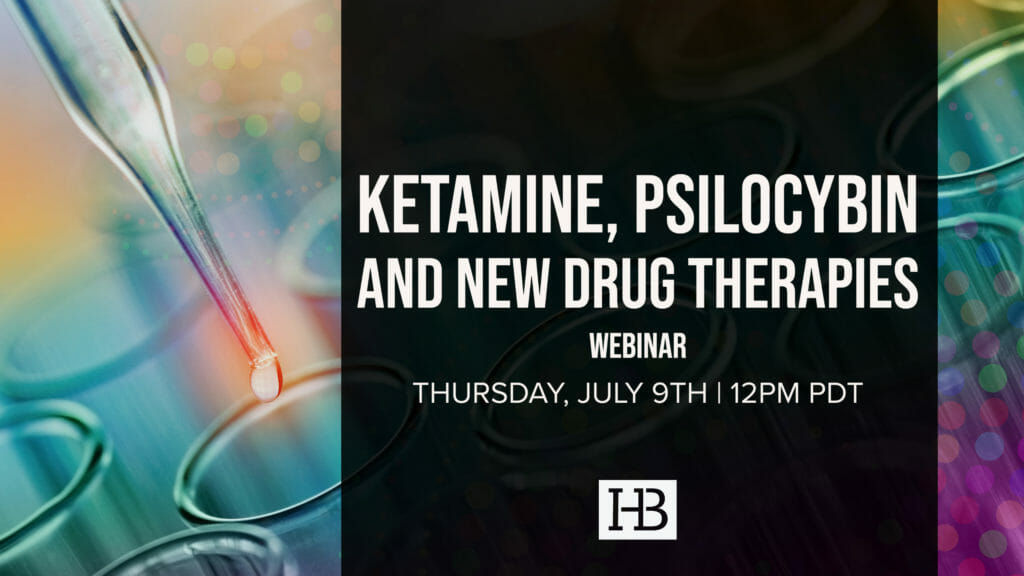
Ketamine, Psilocybin and New Drug Therapies: The Webinar Video Replay

Katamine Webinar

On July 9th, California psychedelic attorneys Hilary Bricken (Los Angeles), Griffen Thorne (Los Angeles), Vince Sliwoski (Portland) and Jesse Mondry (Portland) hosted an interactive webinar to answer questions on the future of legalization and regulation of new drug therapies and alternative medicine, including:

  • efforts to decriminalize and regulate psychedelics and other plant medicines
  • federal and state controlled substances laws and regulations
  • Drug Enforcement Administration regulation
  • corporate practice of medicine issues and medical ventures
  • intellectual property strategies, and
  • much more

In case you couldn’t join, or if you would like to revisit some of the information, you can stream the webinar below.

The post Ketamine, Psilocybin and New Drug Therapies: The Webinar Video Replay appeared first on Harris Bricken.


from Canna Law Blog – Harris Bricken https://ift.tt/2CK9oVy
via IFTTT

Friday, July 17, 2020

Survey Shows Cannabis Acceptance Is Growing In Australia

More Australians than ever are pro-cannabis.

from News – High Times https://ift.tt/2OA60iL
via IFTTT

California cannabis arrests down 27%, but racial disparities increase

California cops recorded the fewest cannabis arrests since 1954, but racial disparities actually grew worse.

The post California cannabis arrests down 27%, but racial disparities increase appeared first on Leafly.


from Leafly https://ift.tt/3h8yfBm
via IFTTT

Lindsey Graham Could Be Dethroned by Pro-Pot Contender Jaime Harrison

Cannabis policies could be a deciding factor for the fate of the next US senator from South Carolina.

from News – High Times https://ift.tt/3eAYe2N
via IFTTT

How to Study Schedule I Controlled Substances

fda dea schedule I controlled substance


Q:  I want to study schedule I controlled substances. I want to study marijuana (cannabis), peyote, MDMA, psilocybin, LSD, ayahuasca/DMT and ibogaine, to start.

A:  All of that is possible, but you should choose just one.

Q:  OK, I want to study cannabis.

A:  That’s actually one of the hardest. Please choose a better one.

Q:  What’s so hard about cannabis?

A:  Most cannabis research applications are ignored, or swatted away after being ignored and litigated and ignored some more. And if you somehow get approved, you will likely have to request the cannabis by and through the National Institute of Drug Abuse (NIDA), which provides all schedule I drugs. Here is a giant catalogue.

Q:  OK, can you just confirm that cannabis is in there?

A:  Yes. And I can tell you that cannabis is grown for NIDA on contract with the University of Mississippi. This is being done in violation of international law and the quality is famously poor, in any case (it’s more like hemp).

Q:  OK, I want to study psilocybin then.

A:  Good. People are doing that. And the Food and Drug Administration (FDA), for one, is really into it.

Q:  So it’s easy?

A:  No, it’s hard. The parts of the government that allow you to study these drugs doesn’t really care about what the FDA is into, at least to start. Remember, these are drugs with “no accepted medical use.”

Q:  So who do I talk to?

A:  You should start by getting drug study approval from an institutional review board (IRB). That’s where you demonstrate the public benefits of biomedical and behavioral research into e.g. psilocybin. By the way, are you a university? Or maybe a private lab?

Q:  No, I’m neither.

A:  Good. Most universities and labs don’t even bother because this process is so insufferable and expensive. You have to have lots of money.

Q:  I can raise lots of money. The idea here it to research psilocybin and develop a drug and bring it to market.

A:  You need a LOT of money to do that. In addition to proving drug efficacy and all.

Q:  Understood. Well maybe I’ll start with a grant.

A:  I’ll be impressed if you get a grant. Super impressed. The people who review these coveted grants typically don’t study schedule I drugs. They aren’t especially interested in anyone else studying them, either.

Q:  Well… is there any way around this IRB part?

A:  Not really. The IRB protocol was created in 1974 by Richard Nixon and friends under the National Research Act, after they rolled out the Controlled Substances Act. The idea was that these IRBs would protect people from atrocities like the Tuskegee syphilis experiment, which had been exposed just two years earlier.

Q:  Terrible.

A:  Really, really terrible. Anyway, the IRBs seem to have done well in protecting against amoral medical experiments, but for you they’re just a formidable administrative hurdle. And the approval letter is just one of many such formidable hurdles. Check out that catalogue I sent you.

Q:  Can you just summarize the process for me?

A:  OK, after your get the IRB approval letter, you need permission from the Drug Enforcement Agency (DEA)–

Q:  Hold on. I want to do medical research. Why do we need to involve law enforcement?

A:  Great question. It’s absurd! But it’s set up so that DEA works with FDA and its parent, the Department of Health and Human Services (HHS), to schedule and control all of these substances. It’s DEA that ultimately schedules the drugs and gives out the licenses and arrests the people without them. So you have to work within the statutory parameters, however odd and ill-conceived.

Q:  OK, jeez. How do I get DEA permission?

A:  It’s another application process.

Q:  Can you summarize it?

A: To start you’re going to have to get a schedule I license. That’s a fair bit of paperwork (and I hope you’ve never been arrested or anything). Beyond that, you fill out heaps of other paperwork documenting how and why you propose to study psilocybin–kind of like you did with the IRB–and how much psilocybin you will possess, how you will safely store it and protect it from diversion, etc. Somewhere in there, you apply separately to NIDA to get the actual drugs. All of this will take a few years and will culminate in a site visit by the federal law enforcement agency.

Q:  That sounds both tedious and sort of scary.

A:  It should be fine, so long as you are truly, safely storing the plutonium psilocybin. They will come and audit you from time to time without notice, just to be sure.

Q:  Thanks for the heads up. Where is the government getting the psilocybin, in the first place?

A:  Good question. Every drug is different. With cannabis, they have the lousy farm. With cocaine, NIDA gets it from DEA which confiscates it from criminals and purifies it. With psilocybin, it’s produced in a proper lab with a Schedule I license. The psilocybin labs are mostly in Europe right now.

Q:  OK. So where does FDA come in again?

A:  Like NIDA, FDA is an agency downstream from HHS. I assume you plan to use human subjects and not, say, octopuses in your psychedelic research? If so, you’ve got to work through FDA. You will apply with FDA for an Investigational New Drug (IND) number and you’ll work with FDA as you proceed with each phase of your study. Maybe, one day, you’ll win a drug approval, at which point DEA could amend the Controlled Substances Act schedules (on recommendation from FDA/HHS) just for you.

Q:  Is any of this getting any easier anytime soon?

A:  Maybe, but not by much. The DEA recently opened the door a crack on cannabis, and FDA has given “breakthrough therapy” status (basically, a fast track) to a trio of psilocybin and ketamine studies. But you should not bank on structural changes anytime soon.

Q:  What other options do I have?

A:  We have clients doing things in other places. In Canada for instance, DMT and psilocybin are on Schedule III, making them easier to study. Others are doing fun things like psychedelics studies down in Caribbean countries, where controls seem more lax. Or you could study another sexy plant like kratom, which isn’t scheduled federally. We can talk about those options some other time.

The post How to Study Schedule I Controlled Substances appeared first on Harris Bricken.


from Canna Law Blog – Harris Bricken https://ift.tt/2OMcdIF
via IFTTT