Tuesday, October 26, 2021

Lil’ Kim Enters Cannabis Space with superbad, CampNova Partnership

Hip-hop legend and fashion icon Lil’ Kim is the latest celebrity to enter the cannabis fray. Partnering with California pot brand superbad inc. and tech platform CampNova, the Brooklyn native joins the marketplace and a growing list of celebrity brands aiming to stake their claim in the booming cannabis game.

In addition to personal market success, Lil’ Kim and her business partners hope to inspire more Black and female entrepreneurs to join the industry as business leaders.

She spoke with High Times at the 2021 MJBizCon in Las Vegas, where all involved parties made the media rounds on its final day. Joined by superbad CEO Carlos Dew, Lil’ Kim said that the partnership comes after a lengthy but necessary process that involved market watching and a good deal of R&D from the Queen Bee. 

“We’d go back and forth throughout the years,” reported Dew, adding that they decided now was the time to move forward, with legislation and market developments trending upward.

Lil’ Kim, a 2017 headliner at the High Times Canada Cannabis Cup, agreed with Dew. The self-described hustler added that pot had always been a market she wanted to enter. She stated that other brands had approached her over the years, but she never felt ready to make a move on any opportunity. 

“I’ve been doing my homework and research on it,” said the artist and enthusiast.

She elaborated on why now was the time to get involved. “It’s the way of the world right now,” asking rhetorically, “Why not?” 

Product quality was just as important. Wanting to live up to the quality cannabis she’s been exposed to in Brooklyn and beyond, Kim said that the product had to be of the highest quality.

“I’m surrounded by cannabis smokers—everyone around me,” she stated. “I have expensive taste.” After sampling what superbad had to offer, Kim said she came across the gas she was looking to align with. 
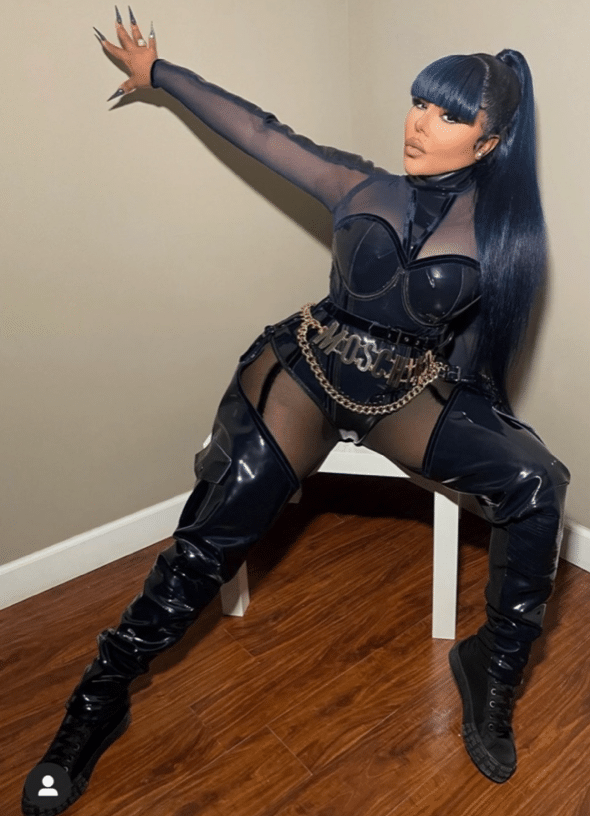
Courtesy of Lil’ Kim

What to Expect from Lil’ Kim in Cannabis

The trio focused on grander goals while saving product specifics for a later date.

Dew said that plans are in motion, but that they’d prefer to hold off on releasing any more information for now. “We’re going to do everything in phases; then it’s going to hit,” he stated. The trio did not announce when the next phase of news would roll out.

CampNova Co-founder Emery Morrison stated that Kim’s partnership would include promoting products through various video and audio efforts. CampNova is a tech e-commerce platform that he says is “socializing the process of ordering.”

In essence, Morrison stated that the platform functions like a combination of UberEats, Fashion Nova and Weedmaps, offering customers access to in-demand products through tiered membership. Customers can use the service for free or subscribe to monthly paid tiers for discounts and bonuses. 

Lil’ Kim joins a roster of notable partner brands in and out of cannabis, currently offering between 30 and 40 brands on the platform. The star joins a CampNova roster that includes 2 Chainz, Cann, Mickey Hart, Carlos Santana, Lamar Odom, Jay-Z, Ricky Williams, Mike Tyson, Jerry Garcia and several others.

The company is also involved in the branding and product selection side, depending on the brand’s preferred sales and marketing plan. CampNova’s recent efforts include online social media promotion as well as physical activations.

In August 2021, the company linked up with Lil Wayne’s GKUA brand, giving free VIP livestream access to his show at the Los Angeles Memorial Coliseum with every purchase of GKUA’s Ultra Premium product made through CampNova. 

The group did not expand on what activations Lil’ Kim would be involved in. Offering a top-level overview, Dew stated that customers could expect an offering that equals Lil’ Kim’s status as a fashion and music icon. 

With hope, Lil’ Kim will continue to push the California-based brand into iconic status as well. The premium millennial-focused indoor line is currently sold in four Southern California counties, offering flower, pre-roll joints and badder. Officially launched in October 2020, the L.A.-based superbad touts itself as “the brand of the culture,” asking consumers, “How bad are you?”

The cannabis brand’s desire to be “the perfect accent” to a modern lifestyle fits right in with Lil’ Kim’s brand. Dew discussed how his company’s vision aligned with Lil’ Kim and CampNova. 

“Our whole thing is quality. So, Kim is going to bring a super quality,” he stated. 

Kim elaborated, stating that she opted to partner with superbad after determining the brand was “sophisticated, classy and well-thought-out.” She added that she didn’t intend to slap her name on a brand, a move that often seems to be the case with specific celebrity endorsers. 
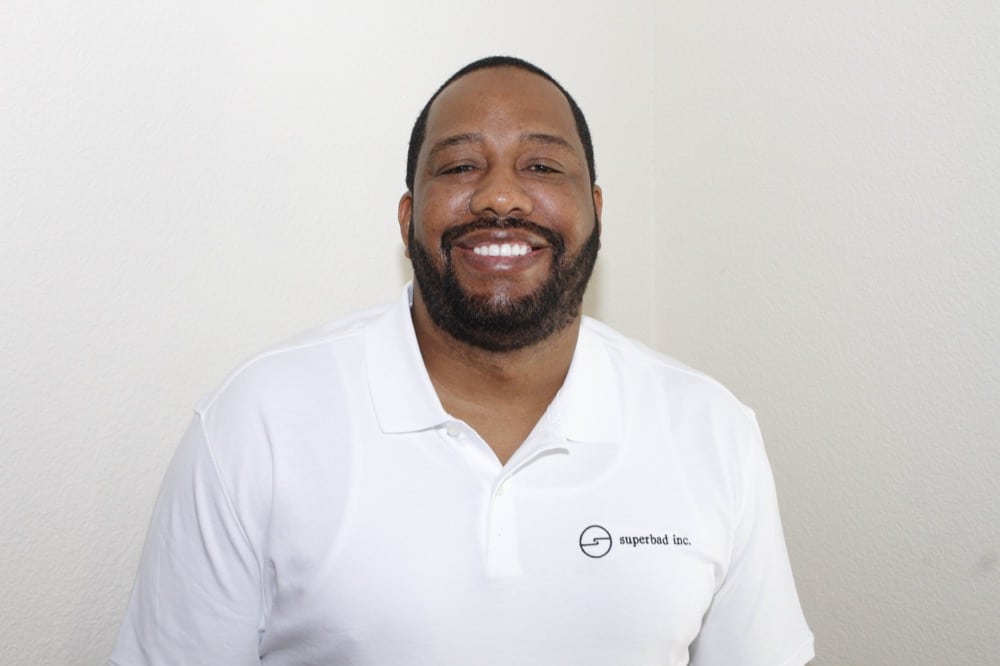
Carlos Dew, Founder & CEO of superbad inc. – Courtesy of superbad inc.

Influencing Other Women and Girls to Become Business Leaders

The partnership between Lil’ Kim, superbad and CampNova carries additional significance, with all principles involved being Black entrepreneurs. 

Morrison, whose background is in marketing and branding, working with top names like T Mobile and Monster Audio, highlighted the collaborative partnership between the three. 

He said all parties are committed to ensuring each brand sees continued success, a strategy CampNova applies to each partnership. Doubling down, Morrison said it’s essential to support a project highlighted by a high-profile Black female hip-hop artist. 

“There’s no other brand out there like that,” he stated. 

If the venture does succeed, Morrison sees it creating an influence on other young Black girls, including his three daughters.

“I want them to see someone that’s a Black woman handling her thing so that they can dream,” he explained. 

Dew offered a similarly optimistic view on Lil’ Kim’s potential impact. He stated, “I think she should be able to show the path forward for how women can start getting into the cannabis community and build their own businesses.” 

Lil’ Kim delved into a similar ideal outcome. “I want to empower women to get more involved.” More specifically, she emphasized that she wants to let women know that they can do anything. 

The Queen Bee Enters Cannabis 

Small in stature and enormous in presence, Lil’ Kim has been a fixture in the entertainment and fashion worlds for decades. With explicit lyrics and a persona dripping in sex appeal, Lil’ Kim was one of the early female rap artists to help push and normalize female written sexually charged lyrics to a level where men often went with much less criticism. 

Her debut album Hard Core went double platinum in the U.S., helping propel a career that includes a collaboration with Missy Elliot, Pink, Christina Aguilera, and Mýa on “Lady Marmalade,” and five studio albums. She has sold over 15 million albums and 30 million in singles throughout her career. 

The Bedford-Stuyvesant, Brooklyn native was also part of the famed Junior M.A.F.I.A trio consisting of her, Lil Cease and the legendary Notorious B.I.G., who discovered Lil’ Kim in 1994. Lil’ Kim joins a cannabis market that includes B.I.G.’s son, C.J. Wallace, who launched his cannabis brand Think BIG in 2019. 

The post Lil’ Kim Enters Cannabis Space with superbad, CampNova Partnership appeared first on High Times.


from News – High Times https://ift.tt/3nyM6Wk
via IFTTT

Pitbull Announces First Tango with CBD Industry with Columbia Care

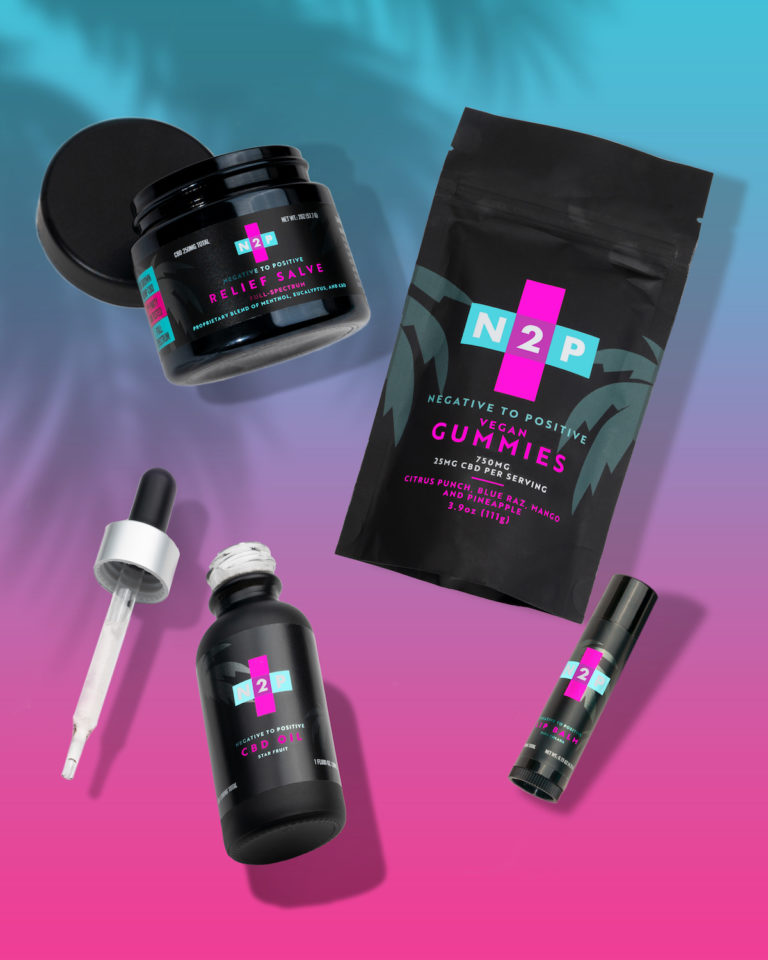
Columbia Care and international superstar Pitbull announced the launch of N2P—a new line of high quality, full spectrum CBD products for those seeking to revamp their health and wellness routines. 

According to a press release published yesterday, N2P stands for “Negative to Positive” with the goal to change the negative perception of CBD products and to shine a positive light on the potential of these products.

“I’m honored to partner with Columbia Care to announce our new CBD line N2P (Negative to Positive),” said Armando Christian Pérez aka Pitbull. “N2P is an all-natural, high-quality product directed at the therapeutic benefits of CBD. It’s designed to help customers stay focused, positive and feeling their best. It’s our goal to change the perception about the health and wellness benefits of CBD products. We look forward to sharing N2P with fans around the world, Dale!”

With servings of full-spectrum CBD ranging from 25-50mg in each dose, the products offer more than enough of the compound. Full-spectrum CBD is believed to have a more potent effect than CBD distillates. 

The initial N2P line includes the following products:

  • 3-pack of Pina Colada Lip Balms (150mg CBD, 50mg per balm)
  • 2oz Relief Salve (250mg CBD)
  • 1oz Star Fruit Tincture (1,000mg CBD, 33.3mg CBD per serving)
  • 30ct. Gummies (750mg CBD, 25mg per gummy)

“We are committed to changing the conversation around CBD and providing a line of products that people can trust and expect that they’ll receive the best experience possible,” said Jesse Channon, Chief Growth Officer of Columbia Care. “We’ve partnered with Pitbull because of his passion for CBD and high-quality excellence. Together, we’re working to introduce premium, full spectrum CBD products for customers who are enthusiastic about health and wellness, but also for those who are curious about CBD and have been hesitant to try it—we want everyone to be able to change a negative to a positive.”

Photo courtesy of Columbia Care.

Columbia Care operates 130 facilities including 99 dispensaries and 31 cultivation and manufacturing facilities spanning 18 jurisdictions.

N2P products will be available in select states for purchase online at www.n2pwellness.com and in select Columbia Care dispensaries located in Delaware, Maryland and New York. They will also be available at The Green Solution dispensaries in Colorado later this year.

Pitbull and Cannabis

Pitbull’s introduction to the cannabis industry might be through his frequent collaborators. While Pitbull began as “Mr. 305,” emerging from the reggaeton/Cuban-American scene in Miami, he reinvented himself as a pop artist in the dance music scene as “Mr. International” or “Mr. Worldwide.” 

Pitbull has been clear from day one that he’s all about making money—something he does not view as a negative aspect. He’s peddled everything from Dr. Pepper and Bud Light to Voli Vodka, according to the Miami New Times. “I like to make money at the end of the day,” Pitbull said.

In 2011, Pitbull released “Sticky Icky” on his third album featuring vocals from rapper Jim Jones. Jim Jones recently released his own cannabis product, the CAPO Blunt with Saucey Farms and Extracts. The CAPO Blunt is designed to exude luxury, containing isolates of CBD, CBN and CBG.

Pitbul joins the roster of rappers and artists to release cannabis or CBD lines including Jay-Z, Lil Wayne, Too $hort, Snoop Dogg, Wiz Khalifa, DJ Khaled, as well as Latinx celebrity endorsements from Cheech Marin, Baby Bash and Carlos Santana, to name a few.

The post Pitbull Announces First Tango with CBD Industry with Columbia Care appeared first on High Times.


from News – High Times https://ift.tt/3mdLpCw
via IFTTT

Find CBD you love with a little help from Hempcy

It's not hard to find CBD products. It is, however, hard to find reliable brands with CBD products that actually work for you. Hempcy is here to fix that.

The post Find CBD you love with a little help from Hempcy appeared first on Leafly.


from Leafly https://ift.tt/3vPCRFc
via IFTTT

6 California weed brands that go the extra mile with merch and accessories

Find out which California weed brands have the best merch and accessories - straight from the budtender's mouth.

The post 6 California weed brands that go the extra mile with merch and accessories appeared first on Leafly.


from Leafly https://ift.tt/2ZjywxI
via IFTTT

Texas Hemp Companies Fight Delta-8 THC Ban

Hemp companies in Texas are vowing to fight a ruling that health officials announced last week, declaring that delta-8 THC is a Schedule I controlled substance under state law. Regulators with the Texas Department of State Health Services (DSHS) noted that while hemp products and extracts with less than 0.3 percent delta-9 THC were legalized by the 2018 Farm Bill, the cannabinoid and its variants are still tightly controlled under state rules.

“DSHS posted the clarification below on our website in response to recent requests from hemp growers who said that there was confusion in the industry about what was allowed in consumable hemp products,” Lara Anton, a spokesperson for the agency told the Texas Tribune.

The agency wrote online that consumable hemp products containing amounts of THC consistent with federal law are also legal under House Bill 1325, which was passed by state lawmakers in 2019 to regulate the Texas hemp industry. However, “All other forms of THC, including Delta-8 in any concentration and Delta-9 exceeding 0.3 percent, are considered Schedule I controlled substances,” the DSHS wrote on its website.

Delta-8 THC Ban Catches Retailers Off Guard

The announcement from health officials has come as a surprise to many companies that manufacture or retail products made from hemp, including independent operators of CBD stores and vape shops. Ashley Flood, the owner of a CBD American Shaman franchise in Allen, Texas, says that they were never properly notified of the decision to ban delta-8 THC, which officials say was made last year by DSHS Commissioner John Hellerstedt.

“We didn’t find out from the state; we didn’t find out from law enforcement; we didn’t find out via letter, email—nothing. We found out from one of our suppliers,” Flood said after finding out about the change to the DSHS website.

Ben Meggs, the CEO and cofounder of Houston-based Bayou City Hemp Company, says that the DSHS has exceeded its authority and “failed to abide by state law by banning delta-8 THC products, noting that state lawmakers declined to do so when they had the chance.

“The Texas legislature had an opportunity to pass laws that would have likely banned delta-8 THC and would have provided for less ambiguity, but lacked bipartisan support to get this passed, so it is confusing for consumers and businesses to understand the how the current legal status could have changed,” Meggs wrote in an email to High Times.

“It is our belief that a blank statement surrounding the legal status of delta-8 is not only inaccurate, but irresponsible and short-sighted,” Meggs added. “Not only does DSHS interpretation completely contradict both the Federal Farm Bill and HB1325, we all know that outright bans to anything only further drive the industry underground with less oversight, and we lose the ability to pass fair and balanced regulations.”

CBD Company Files Suit to Block Ban

Hemp products operators including Sky Marketing Corp., the operator of the CBD retailer Hometown Hero, are taking legal action to fight the Texas ban of Delta-8 THC. In a suit filed in state district court, Sky Marketing asked for a temporary restraining order blocking the DSHS from taking any “enforcement action” against companies selling low-THC hemp products. 

The company argued in a court filing that state officials did not give proper notice of the proposed rule, and that the ban would create a financial hardship for companies selling delta-8 THC products.

“After operating legally and consistent with Texas law for several years, Plaintiff and other similarly situated businesses and individuals now find themselves in potentially legal jeopardy, and their businesses and livelihood with an uncertain future,” the lawsuit states.

Sky Marketing was not successful in its attempt to block the DSHS from enforcing the ban, however. In his ruling denying the action released on Friday, Judge Gary D. Harger of the 126th Judicial District in Travis County wrote that the plaintiff had “not met the requirements of a temporary restraining order.”

Meggs, whose company was not involved in the legal action, said that he was “surprised” by the judge’s ruling and vowed to file a new suit “so we can protect the rights and safety of Texans.” He added that regulating the hemp industry, including firms offering delta-8 THC products, will protect the consumers and allow legitimate companies to operate openly and transparently.

“The true concern I have with this decision are the effects it has on farmers, businesses and consumers whose livelihood and well-being depend on it,” Meggs said. “Prohibition doesn’t work; we know that. Banning delta-8 creates a black market with less checks and balances in which the cannabinoid will still be sold underground by bad parties in the industry.”

The post Texas Hemp Companies Fight Delta-8 THC Ban appeared first on High Times.


from News – High Times https://ift.tt/3Cohihu
via IFTTT

Ketamine Clinics and Joint Ventures: The Office of Inspector’s Concerns

As the economy continues to flourish, there is a proliferation of merger and acquisition activity in the healthcare space. We continue to see a rise in ketamine clinic acquisitions as well as investors who are starting management services organizations (“MSO”) to assist such clinics with their administrative burden. Likewise, we have seen an increase in joint venture activity between ketamine clinics and MSOs. For those clinics that receive any kind of federal reimbursement (e.g., Medicare, Medicaid, the VA, etc.), the federal anti-kickback (“AKS”) statute applies – and the AKS has criminal penalties, including jail time.

We have previously written about the AKS and how it applies to ketamine clinics (click here to review). In general, the AKS prohibits anyone from receiving or paying any form of remuneration for the referral patients who are covered by federal reimbursement (and some state laws prohibit the same for private insurance and self-pay patients).

The primary investigative arm for federal reimbursement fraud and abuse activity is the Office of Inspector General (“OIG”) which is housed in the U.S. Department of Health & Human Services. Among other things, the OIG provides guidance to the healthcare industry in a variety of ways, including fraud alerts, opinion letters, and compliance guidance. Healthcare lawyers should be well aware of the OIG and the importance of any guidance it promulgates.

Fraud Alerts by the OIG

The OIG has published two special alerts for joint venture activity – the first in 1994 (click here to review) and the second in 2003 (click here to review). Before we discuss some of the important factors to consider for joint ventures, it is important to stress the underlying issues for the AKS. As the OIG summarized in the 2003 fraud alert – kickbacks are harmful because they can (1) distort medical decision-making, (2) cause overutilization, (3) increase costs to the federal health care programs, and (4) result in unfair competition by freezing out competitors unwilling to pay kickbacks. Any time there is a healthcare transaction, you should always keep those four factors in mind. If any part of the transaction triggers one of the foregoing issues (and there is federal reimbursement involved), you should dive into the AKS to see if there is a possible violation and to review the safe harbors under the AKS.

Factors to Consider

The OIG, in its 2003 fraud alert, provided a list of suspect contractual joint venture characteristics. As the OIG noted, this list is illustrative, not exhaustive. Below, we have reproduced the list (with minor edits). However, it is important to note that the OIG focused on business lines and joint ventures where both parties are healthcare providers. In the typical MSO arrangement, the MSO is not itself a healthcare provider nor is it owned by healthcare providers. While this helps to reduce certain risks, it does not ameliorate all risks under the AKS.

New Line of Business. The Owner typically seeks to expand into a health care service that can be provided to the Owner’s existing patients. Examples include, but are not limited to, hospitals expanding into DME services, DME companies expanding into the nebulizer pharmacy business, or nephrologists expanding into the home dialysis supply business.

Captive Referral Base. The newly-created business predominantly or exclusively serves the Owner’s existing patient base (or patients under the control or influence of the Owner). The Owner typically does not intend to expand the business to serve new customers (i.e., customers not already served in its main business) and, therefore, makes no or few bona fide efforts to do so.

Little or No Bona Fide Business Risk. The Owner’s primary contribution to the venture is referrals; it makes little or no financial or other investment in the business, delegating the entire operation to the Manager/Supplier, while retaining profits generated from its captive referral base. Residual business risks, such as nonpayment for services, are relatively ascertainable based on historical activity.

Status of the Manager/Supplier. The Manager/Supplier is a would-be competitor of the Owner’s new line of business and would normally compete for the captive referrals. It has the capacity to provide virtually identical services in its own right and bill insurers and patients for them in its own name.

Scope of Services Provided by the Manager/Supplier. The Manager/Supplier provides all, or many, of the following key services:

  • day-to-day management;
  • billing services;
  • equipment;
  • personnel and related services;
  • office space;
  • training;
  • health care items, supplies, and services.

In general, the greater the scope of services provided by the Manager/Supplier, the greater the likelihood that the arrangement is a contractual joint venture.

Remuneration. The practical effect of the arrangement, viewed in its entirety, is to provide the Owner the opportunity to bill insurers and patients for business otherwise provided by the Manager/Supplier. The remuneration from the venture to the Owner (i.e., the profits of the venture) takes into account the value and volume of business the Owner generates.

Exclusivity. The parties may agree to a non-compete clause, barring the Owner from providing items or services to any patients other than those coming from Owner and/or barring the Manager/Supplier from providing services in its own right to the Owner’s patients.

Concluding Remarks

While the foregoing factors primarily apply when there are two healthcare providers involved in a contractual joint venture, there are certain factors that would apply to MSOs too. It is vitally important to always remember the underlying purposes of the AKS, as outlined above. Any time those factors are implicated, you need to consider whether the AKS will be triggered and/or violated.

One of the foregoing issues that will always apply is whether the remuneration from the venture to the healthcare provider (i.e., the profits of the venture) takes into account the value and volume of business the healthcare provider generates. If this is prevalent, you need to step back and restructure the compensation so as not to take into account the value or volume of business generated by the provider.

As we have said before in prior posts, healthcare is a very complex area of the law. Every transaction is different, yet oftentimes, AKS issues are prevalent in one form or another. Given the severe consequences of violating the AKS, it is imperative to do things the right way.

The post Ketamine Clinics and Joint Ventures: The Office of Inspector’s Concerns appeared first on Harris Bricken.


from Canna Law Blog – Harris Bricken https://ift.tt/3vJxRlg
via IFTTT

Monday, October 25, 2021

Leafly’s top cannabis strains deserve glass that does them justice

Searching for the dankest bud around & glass to do it justice? See what Hemper glass makes the perfect pairings with Leafly's top cannabis strains.

The post Leafly’s top cannabis strains deserve glass that does them justice appeared first on Leafly.


from Leafly https://ift.tt/3b7LSzI
via IFTTT